
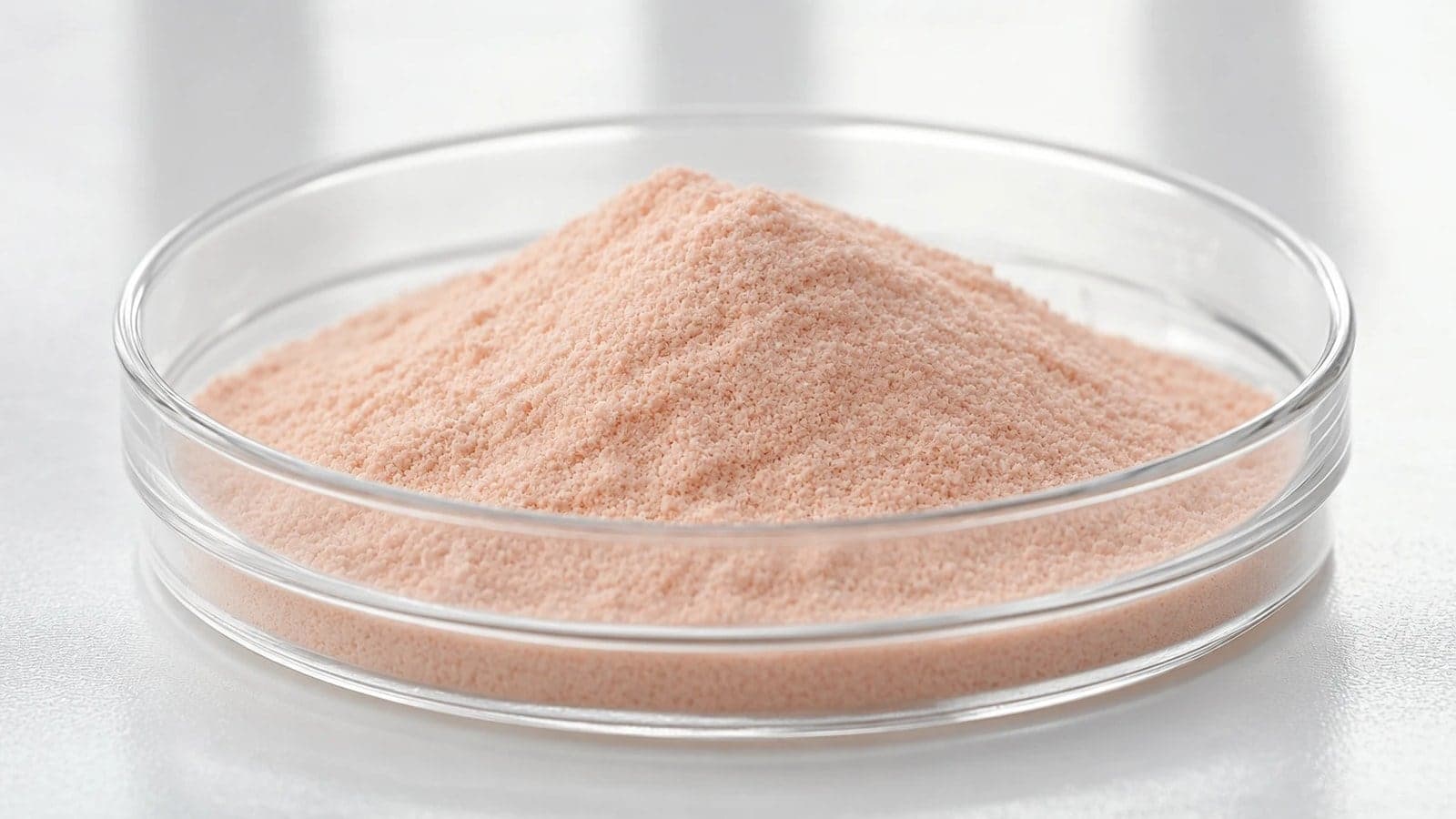
 示意圖,僅供參考,商品以實物為準
PALCAM Agar Base
PALCAM 李斯特菌選擇性瓊脂基礎培養基
別名與縮寫:PALCAM · PALCAM Listeria Selective Agar Base · PALCAM Medium · Polymyxin Acriflavine Lithium Chloride Ceftazidime Aesculin Mannitol Agar · PALCAM 洋菜 · 李斯特菌選擇性培養基
For the selective isolation and differentiation of Listeria species from food and environmental samples, following the addition of PALCAM Selective Supplement.
- 類別
- 粉末培養基
- 每公升溶解量
- 68.88 g
- 包裝規格
- 500 g · 5 kg · 25 kg
資料更新:2026-11-06
產品說明
PALCAM Agar Base(PALCAM 李斯特菌選擇性培養基基礎)是李斯特菌的選擇性鑑別分離平板:氯化鋰與使用前加入的抗生素補充物(多粘桿菌素 B、吖啶黃、頭孢他啶)抑制雜菌,水楊苷、七葉苷與檸檬酸鐵銨讓李斯特菌長成帶黑色暈環的灰綠色菌落,甘露醇與酚紅則把發酵甘露醇的腸球菌、葡萄球菌染成黃色以區別。台灣食藥署「食品中單核球增多性李斯特菌之檢驗」把它與牛津培養基、改良式牛津培養基並列為可擇一選用的分離平板,ISO 11290 也列為第二分離平板。基礎配方,補充物依方法添加。
原理
PALCAM Agar was developed by van Netten and co-workers for the selective isolation and differentiation of Listeria species from foods.¹ Peptone and yeast extract supply nitrogen, amino acids, vitamins, and growth factors, glucose provides an energy source, and starch absorbs toxic metabolites. Sodium chloride maintains the osmotic equilibrium. Selectivity is provided by lithium chloride in the base, together with polymyxin B, which inhibits Gram-negative bacteria, and acriflavine and ceftazidime, which suppress Gram-positive and other competing organisms. Two indicator systems allow differentiation. Listeria species hydrolyse esculin to esculetin, which reacts with ferric ions to form a black complex around the colonies. Listeria species do not ferment mannitol, whereas contaminants such as enterococci and staphylococci that do so lower the pH and turn the phenol red indicator yellow. Typical Listeria colonies are grey-green, 1.5-2 mm in diameter, with a sunken black centre and a surrounding black halo.²
配製與使用
Suspend 68.88 g of powder in 1 L of purified water. Heat with continuous stirring and bring to the boil for 1 minute. Sterilize by autoclaving at 121°C for 15 minutes. Cool to 45-50°C and aseptically add PALCAM Selective Supplement to give final concentrations of 10 mg/L polymyxin B sulphate, 5 mg/L acriflavine hydrochloride, and 20 mg/L ceftazidime. Mix well and pour into sterile Petri plates. Test the finished medium for performance using stable, standard control cultures.
產品特色
- 依標準配方製造,每公升溶解量 68.88 g
- 500 g / 5 kg / 25 kg 三種以上包裝,研究室到工業規模都適用
- 可提供 COA、規格書與技術資料表,支援樣品申請
- 台灣製造,供貨穩定
台灣公告檢驗方法
這支產品對應台灣公告檢驗方法中點名的培養基:食藥署「食品微生物之檢驗方法」與「化粧品中微生物之檢驗方法」、環境部水質微生物檢測方法(NIEA)、中華藥典。方法內容以各機關現行公告版本為準。
- 食品微生物之檢驗方法-食品中單核球增多性李斯特菌之檢驗MOHWM0029.00分離平板方法原文名稱:帕爾康李斯特菌選擇性培養基(PALCAM)基礎
各機關公告的是檢驗方法,不認證培養基品牌;方法要求的蛋黃、血液、抗生素等補充物請依方法添加。
常見問題
01這支培養基符合台灣公告的檢驗方法嗎?
各機關公告的是檢驗方法,不認證培養基品牌。本產品對應下列公告方法中點名的培養基:食品微生物之檢驗方法-食品中單核球增多性李斯特菌之檢驗(MOHWM0029.00):分離平板。依方法原文的標準配方製造,每批附 COA;方法要求的蛋黃、血液、抗生素等補充物請依方法添加,方法內容以各機關現行公告版本為準。
02每公升要加多少克粉末?
每公升去離子水加 68.88 g;配製與滅菌條件依規格書。
03適用哪些菌種?
病原菌、革蘭氏陽性菌、李斯特菌。詳見培養性能表與規格書。
04這個產品要怎麼配製?
Suspend 68.88 g of powder in 1 L of purified water. Heat with continuous stirring and bring to the boil for 1 minute. Sterilize by autoclaving at 121°C for 15 minutes. Cool to 45-50°C and aseptically add PALCAM Selective Supplement to give final concentrations of 10 mg/L polymyxin B sulphate, 5 mg/L acriflavine hydrochloride, and 20 mg/L ceftazidime. Mix well and pour into sterile Petri plates. Test the finished medium for performance using stable, standard control cultures.
05大量採購如何詢價?可以提供 COA 嗎?
可以。本產品提供 500 g、5 kg、25 kg 等包裝規格,請於詢價時說明應用場景與用量,一個工作天內回覆,並可提供 COA、規格書與技術資料表。
06台灣有現貨嗎?交期多久?
本產品在新北市汐止的自有工廠生產、台灣出貨,不需進口與清關。交期依庫存與包裝規格而定,詢價時告知品項與用量,我們會一併回覆現貨狀況與交期;急件請在詢價單註明。
07可以開立統一發票嗎?學校與研究機構可以請購嗎?
可以。我們開立台灣統一發票(含營業稅),學校、研究機構與公家單位可依請購流程先索取報價單再下單;小包裝與樣品申請都接受。
08有中文版的 SDS 與規格書嗎?
有。規格書(TDS)與 SDS 以英文版為標準文件,登入後可在產品頁下載;中文版 SDS 依需求提供,請在詢價單或聯絡表單註明品項與用途,我們會隨報價寄出。每批出貨附 COA。
延伸閱讀
參考文獻
- 1. van Netten P., Perales I., van de Moosdijk A., Curtis G. D. W. and Mossel D. A. A., 1989. Liquid and solid selective differential media for the detection and enumeration of L. monocytogenes and other Listeria spp. Int. J. Food Microbiol., 8:299-316.
- 2. ISO 11290-1, Microbiology of the food chain — Horizontal method for the detection and enumeration of Listeria monocytogenes and of Listeria spp. — Part 1: Detection method, International Organization for Standardization, Geneva.