
CHO cells: monoclonal antibody and recombinant protein production
Peptide supplementation in serum-free CHO processes to support cell density and protein expression
THE SITUATION AND THE PAIN POINTS
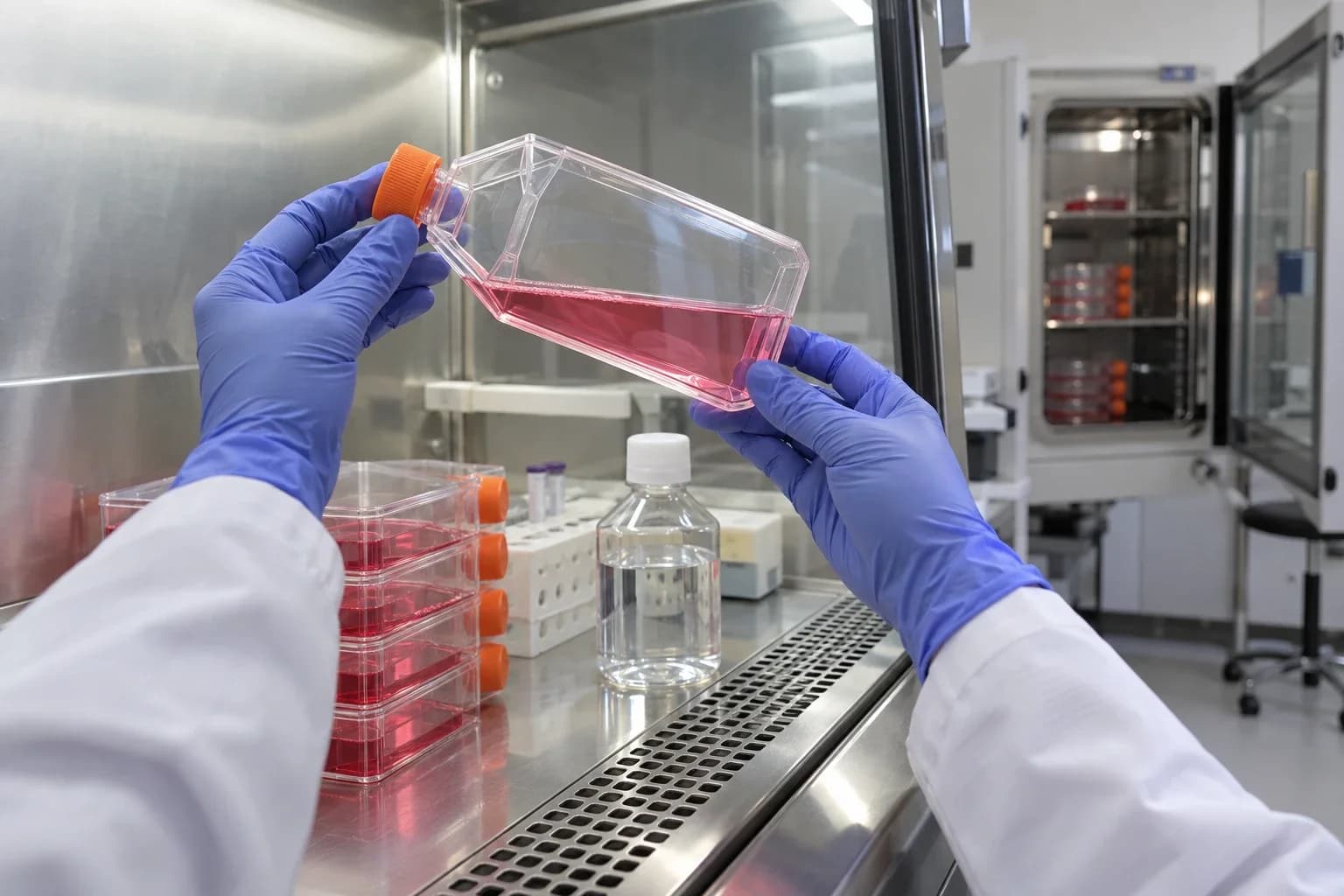
Most monoclonal antibodies and recombinant proteins are produced in CHO cells, and processes have largely moved to serum-free, chemically defined media. Fully defined media often run short of nutrients at high density or late in the run, so viability drops and titre plateaus; adding an ordinary peptone instead risks endotoxin, batch variation or animal-derived material that complicates regulatory filings.
OUR APPROACH
Small additions of ultrafiltered, low-endotoxin plant or yeast hydrolysates supply peptides, amino acids and growth factors. The C-Cell range is validated mainly on CHO: soy S104, S146B and S186 for proliferation and expression, with S146B and S186 supporting partial FBS replacement; pea P112, broad bean F120 and rice R116 and R123 as soy-free options; yeast Y109 and Y121 for vitamins and nucleotides. Each batch has a COA with endotoxin data.
- Cell-culture-grade hydrolysates validated mainly on CHO
- Ultrafiltered and low in endotoxin, with endotoxin data on every COA
- Soy, pea, broad bean, rice and yeast grades to avoid specific allergens
- Samples and a trial protocol to verify in your own process
Recommended products
Listed automatically from product tags; open a product to add it to a quote request.
Frequently asked questions
01Should it go in the basal medium or the feed?
Both are used. First find an effective level in the basal medium at small scale, then assess adding it to the feed to extend late-stage viability. Start with the suspension-cell dose range on the sample trial protocol page.
02Will it affect downstream purification?
Ultrafiltered hydrolysates consist mainly of small peptides and usually do not interfere with affinity chromatography, but confirm in your own purification train. The manufacturer can provide molecular weight distribution and process information.