
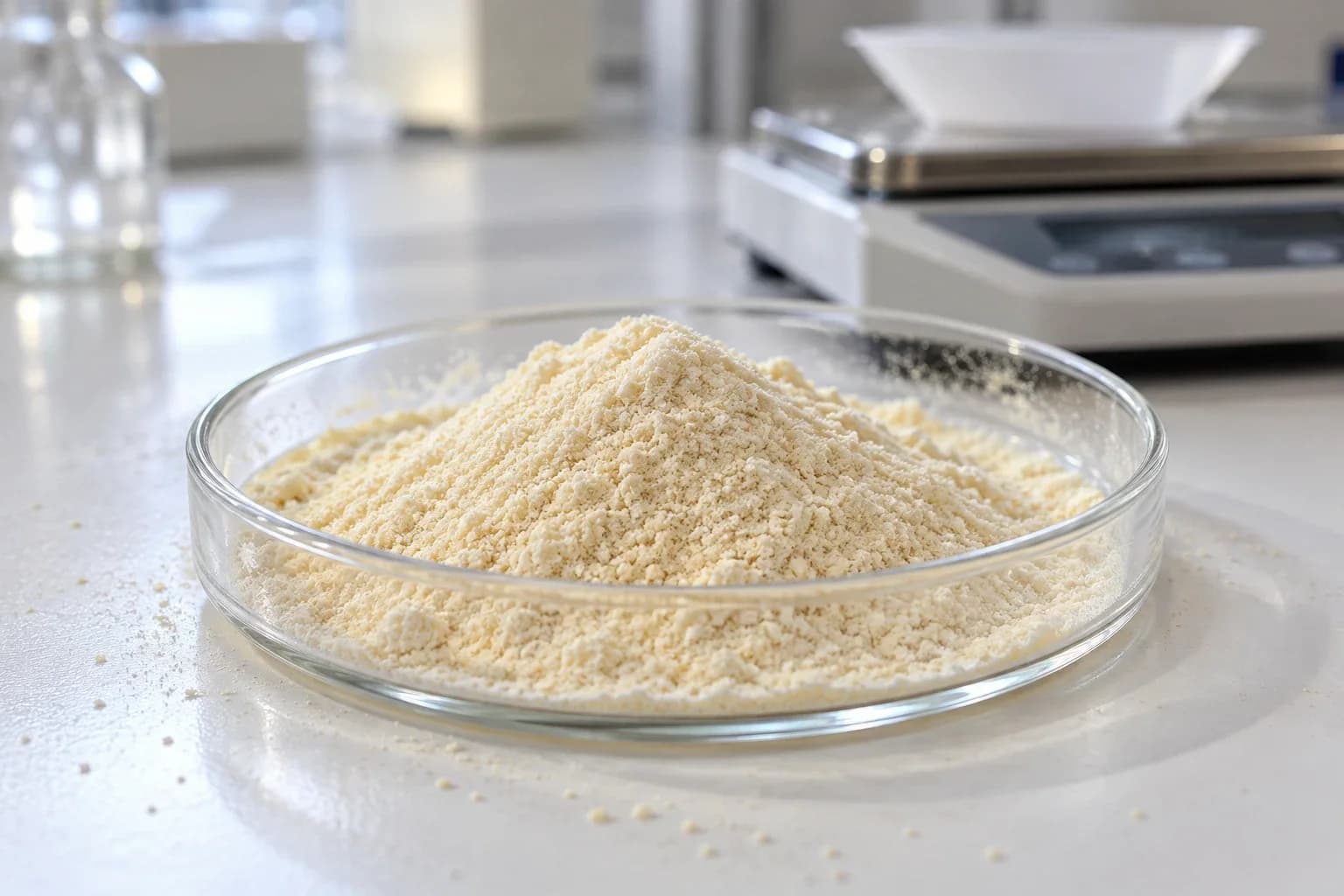
 Illustrative image only. Actual product may vary.
Broad Bean C-Cell F120
Nitrogen source for cell culture media, supporting CHO cell proliferation; also suitable for the growth of fastidious bacterial strains.
- Category
- Peptones & Protein Hydrolysates
- Pack sizes
- 100 g · 500 g · 5 kg · 25 kg
- Raw material
- Other plant
Data updated:2026-11-06
- Storage
- Store at 10–30 °C in sealed, dry, clean conditions. Hygroscopic: keep the container tightly closed when not in use.
Overview
Ultrafiltered peptone obtained by controlled hydrolysis of broad bean protein with microbial enzymes; low in endotoxin. Fine beige powder, soluble in water, containing a mixture of peptides and free amino acids. Certified non-allergenic. Non-GMO in accordance with Regulations (EC) No 1829/2003 and 1830/2003.
Choosing a plant peptone by raw material
Plant peptones contain no animal components, which suits Halal, vegetarian and animal-free formulations; raw materials differ in amino acid profile and allergens. Rice peptone carries a low allergen risk and suits gluten-free and hypoallergenic formulations. Pea and mung bean peptones contain no soy or gluten and often replace soy peptone. Wheat peptone is naturally rich in glutamine but contains gluten. Guar peptone is common in industrial fermentation. Plant peptone blends combine several raw materials designed for a given use. To avoid a particular allergen, check the allergen field on the product page first.
Product highlights
- Ultrafiltered (UF), Low endotoxin, Non-GMO
- Available in 100 g / 500 g / 5 kg / 25 kg, from laboratory to industrial scale
- COA, specification sheet, and technical data sheet available; samples on request
- Shipped from Taiwan with reliable supply
Frequently asked questions
01Which cell lines is this C-Cell grade validated on?
Used on CHO in manufacturer data and research reports. Broad bean hydrolysate for CHO cell proliferation. For other cell lines, start with a sample trial.
02What dose, and how is it added to the medium?
It varies with the cell type and culture mode: published studies used 0.5 g per litre for adherent Vero and 5 g per litre for suspension HEK293. Prepare a 30 g per litre stock directly in culture medium, filter through 0.2 µm and dilute in; trial three levels between 0.25 and 5 g per litre and read cell density and product.
03Can plant peptones fully replace animal peptones?
In most fermentation and cell culture it can, but it needs verifying. Animal peptones have an amino acid profile closer to microbial needs, and a single plant source may run low in some amino acids; the usual approach is to combine two plant peptones (pea with rice, for example) or use a plant peptone blend. Trial and compare growth curves and product.
04Is the raw material non-GMO?
Yes. The raw material is non-GMO; the supplier declaration can be provided with the COA.
05How should it be stored, and what is the shelf life?
Store at 10–30 °C in sealed, dry, clean conditions. Hygroscopic: keep the container tightly closed when not in use.
06How do I request a bulk quotation, and can you provide a COA?
Yes. This product is available in 100 g, 500 g, 5 kg, 25 kg. Tell us your application and volume when requesting a quotation; we reply within one working day and can supply the COA, specification sheet, and technical data sheet.
Used in these applications
- CHO cells: monoclonal antibody and recombinant protein productionPeptide supplementation in serum-free CHO processes to support cell density and protein expression
- Serum-free and serum-reduced cell culture: cultivated meat, vaccines, and recombinant proteinsPlant- and yeast-derived cell-grade hydrolysates in place of part of the serum
- Recombinant Protein Expression Nutrient SeriesAmino acids, peptides and growth factors that support recombinant protein expression and soluble protein yield. For recombinant E. coli, vaccine antigens, industrial enzymes and biopharmaceutical production.