
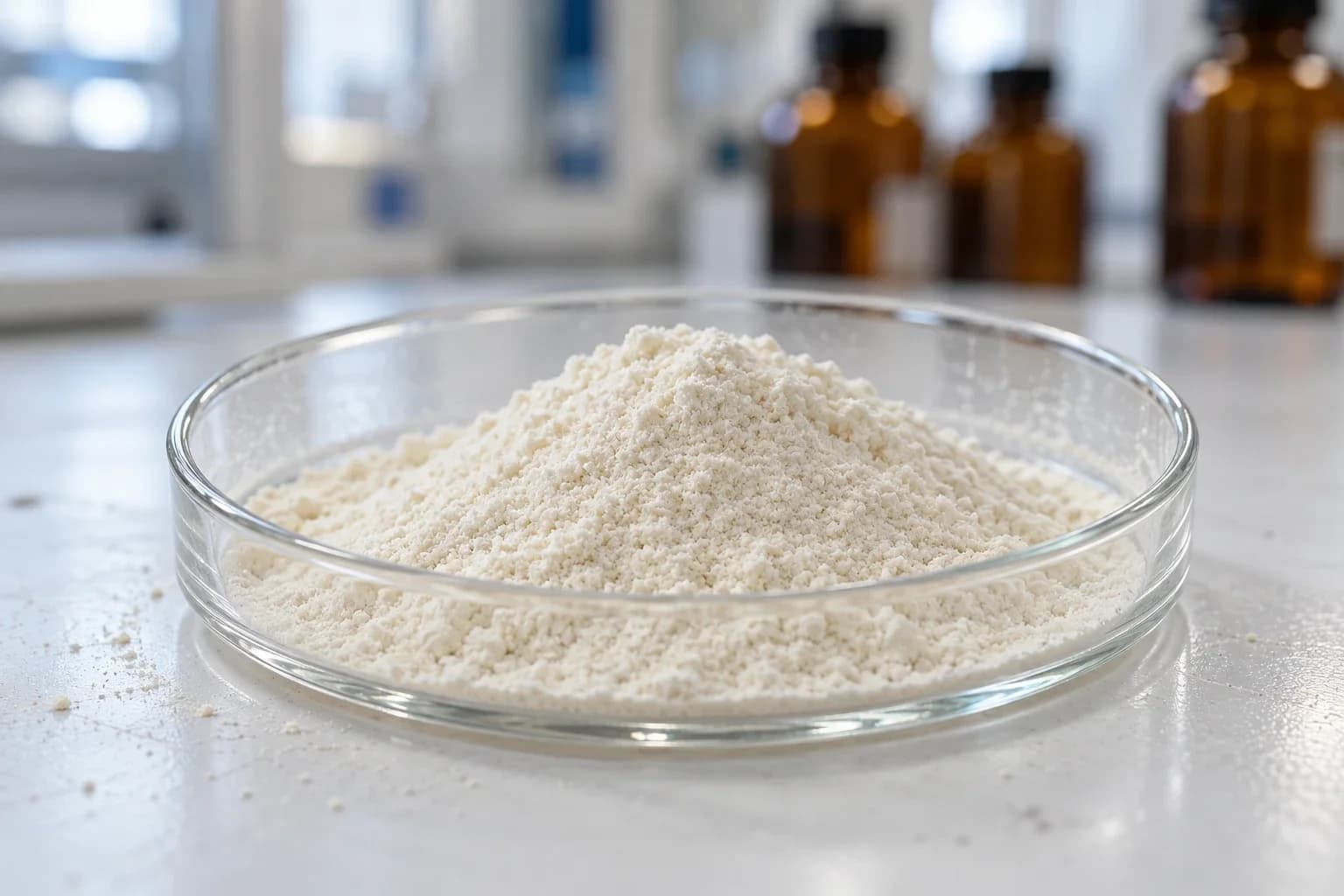
Beef Extract
Beef Extract primarily serves as a source of nitrogen, vitamins, and minerals in fermentation, supporting efficient microbial growth and metabolism. It is an indispensable component in many industrial fermentations, food fermentations, and laboratory media.
- Category
- Peptones & Protein Hydrolysates
- Pack sizes
- 500 g · 5 kg · 25 kg
- Raw material
- Meat
- Certifications
- ISO 22000
Data updated:2026-11-06
Overview
Beef Extract is manufactured by a controlled enzymatic hydrolysis of animal tissues. It contains a mix of peptides, free amino acids, and other growth factors.
Beef peptone or beef extract
Beef peptone is enzymatically hydrolysed meat protein, mainly peptides, and the main nitrogen source in nutrient media. Beef extract is the water-soluble extract of meat, naturally containing vitamins, minerals and small nitrogenous molecules; it is used in small amounts mainly for growth factors. Fastidious organisms and nutrient media often use both. Where Halal or bovine-free material is required, look at soy, yeast or plant peptones instead.
Product highlights
- Food-grade raw materials, produced in an ISO 22000 certified facility
- Available in 500 g / 5 kg / 25 kg, from laboratory to industrial scale
- COA, specification sheet, and technical data sheet available; samples on request
- Manufactured in Taiwan with reliable supply
Food grade versus laboratory grade
Most culture media suppliers use laboratory-grade raw materials, which are held to lower standards for heavy metal residues, microbial contamination control, and traceability. That is adequate for pure research but not for applications with stricter raw-material requirements. STBIO manufactures with food-grade raw materials throughout, in a facility certified to ISO 22000 food safety management.
- Food microbiology laboratories working to ISO 17025 or equivalent requirements
- Biotech manufacturers exporting fermentation products and needing full raw-material traceability
- Organisations with ESG or compliance audit requirements across their supply chain
- Companies sourcing both Halal and non-Halal products who need one consistent material grade
Frequently asked questions
01Which organisms is it suitable for?
Yeast. See the cultural response table and the specification sheet.
02Can it be used for food-grade applications?
Yes. It is made from food-grade raw materials in an ISO 22000 certified facility and is suitable for culturing starters for fermented products that are consumed directly.
03How do I request a bulk quotation, and can you provide a COA?
Yes. This product is available in 500 g, 5 kg, 25 kg. Tell us your application and volume when requesting a quotation; we reply within one working day and can supply the COA, specification sheet, and technical data sheet.
Used in these applications
Further reading
- What Is Peptone? Definition, Types, How It Is Made and How to ChoosePeptone is a mixture of peptides and amino acids made by hydrolysing protein, and the main nitrogen source in culture media. How it is made, the main types, tryptone versus peptone, and how to pick one for your organism.
- How do I choose a nitrogen source for fermentation? Peptone, yeast extract or soy peptone?Ask three things: what the organism needs (amino acids, vitamins, growth factors), what the process needs (fast growth or secondary metabolites) and what the product needs (plant-based, Halal, cost). Most processes combine two nitrogen sources.
- Why Are There So Many Different Types of Peptones?Different microorganisms need different nutrients, so peptones are made from animal, plant and yeast sources with enzymatic or acid hydrolysis. How the source and process change growth, yield and compliance, and how to choose.