
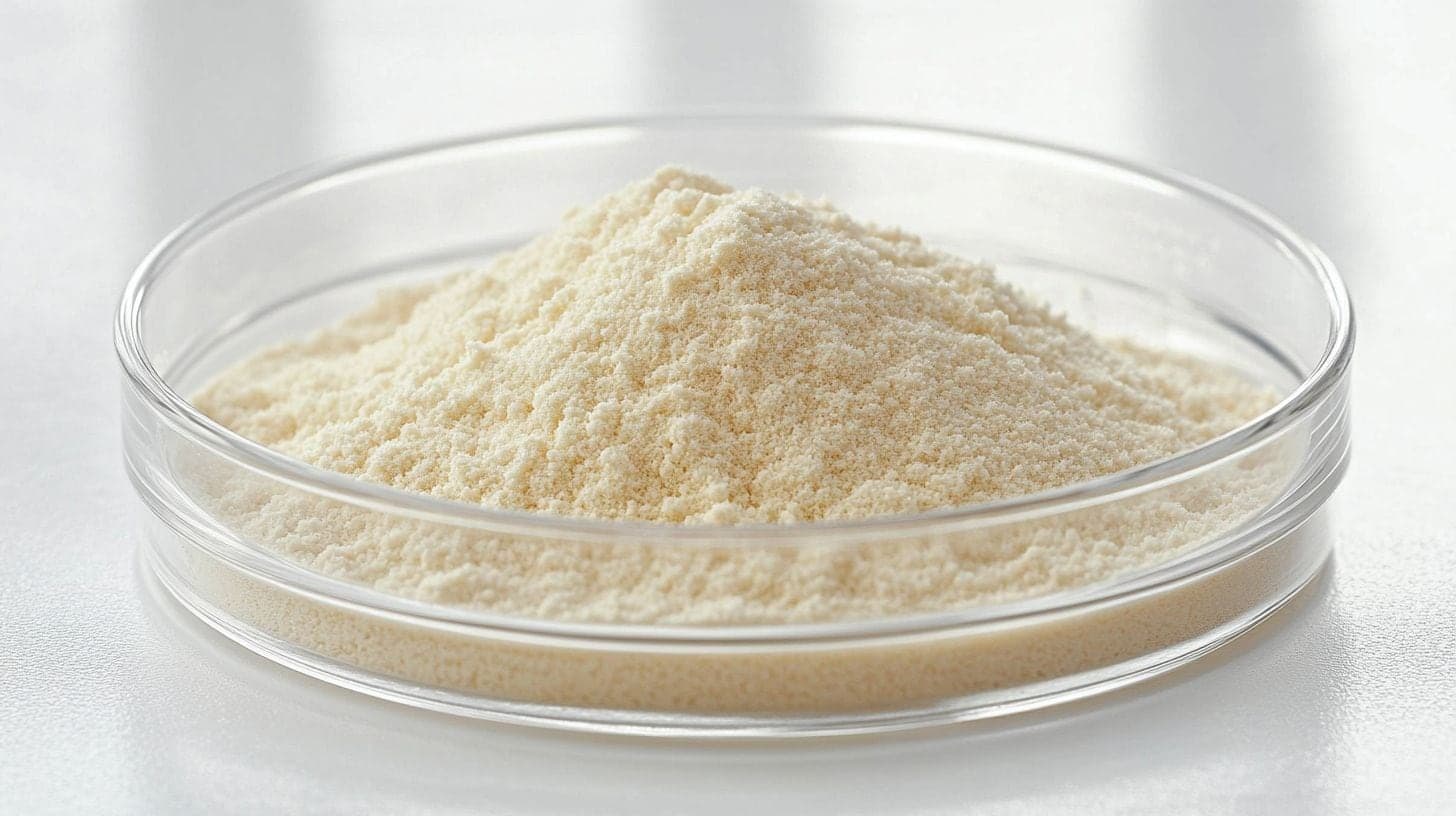
Tryptic Soy Agar
Also known as:TSA · Soybean-Casein Digest Agar · Casein Soya Bean Digest Agar · Trypticase Soy Agar · SCDA
Tryptic Soy Agar is a medium with very rich in nutrients used for the isolation and cultivation of non-fastidious and fastidious microorganisms.
- Category
- Dehydrated Culture Media
- Dissolve per litre
- 40 g
- Pack sizes
- 500 g · 5 kg · 25 kg
- Certifications
- ISO 22000 · Non-GMO
- Standard methods
- USP <61> / <62>·EP 2.6.12·ISO 14698 (environmental monitoring)
Data updated:2026-11-06
Brand cross-reference:BD Difco Tryptic Soy Agar (BBL Trypticase Soy Agar) · Oxoid Tryptone Soya Agar (TSA) · Merck CASO Agar(USP <61> / <62>、EP 2.6.12、ISO 14698 (environmental monitoring)) Brand cross-reference
Overview
Tryptic Soy Agar (TSA) is the solid form of TSB: rich in nutrients and free of inhibitors, it is the most common general-purpose plate for environmental monitoring in pharmaceutical and food plants (settle plates, contact plates, swabs), and for isolating, counting and maintaining bacteria in general. With 5% blood added it becomes blood agar for observing haemolysis.
Principle
Tryptic Soy Agar, described in the pharmacopoeias as Soybean-Casein Digest Agar, is a general-purpose medium that supports the growth of a wide range of aerobic and facultatively anaerobic bacteria and fungi.¹ Pancreatic digest of casein and papaic digest of soybean meal supply nitrogen, amino acids, and peptides, with the soybean digest contributing natural carbohydrates. Sodium chloride maintains the osmotic equilibrium, and agar acts as the solidifying agent. The absence of selective agents and fermentable sugar makes the medium suitable for the total aerobic microbial count in non-sterile products and for environmental monitoring by settle, contact, and air-sampling plates. Supplemented with 5% defibrinated sheep blood, it serves as a base for the cultivation of fastidious organisms and the observation of haemolytic reactions.²
Choosing a general-purpose or enumeration medium
Plate Count Agar is used for total viable counts in food, water, and environmental samples. Nutrient Broth and Tryptic Soy media are the general-purpose choices for non-fastidious bacteria, with the latter richer and also used for sterility testing and environmental monitoring. Brain Heart Infusion is the richest of the three and suits fastidious organisms such as streptococci. Use the agar form for enumeration and the broth for propagation.
Directions
Suspend 40 g of powder in 1 L of purified water. Heat with continuous stirring and bring to the boil for 1 minute. Sterilize by autoclaving at 121°C for 15 minutes. Cool to 45-50°C. Mix well and pour into sterile Petri plates. Test the finished medium for performance using stable, standard control cultures.
Cultural response
| Test organism | ATCC | Growth |
|---|---|---|
| Escherichia coli | 25922 | Good |
| Neisseria meningitidis | 13090 | Good |
| Staphylococcus aureus | 25923 | Good |
| Streptococcus pneumoniae | 6305 | Good |
| Streptococcus pyogenes | 19615 | Good |
| Aspergillus brasiliensis (niger)* | 16404 | Growth |
| Bacillus subtilis* | 6633 | Growth |
| Candida albicans* | 10231 | Growth |
| Escherichia coli* | 8739 | Growth |
| Pseudomonas aeruginosa* | 9027 | Growth |
| Salmonella enterica subsp. enterica serotype Typhimurium* | 14028 | Growth |
| Staphylococcus aureus* | 6538 | Growth |
Product highlights
- Food-grade raw materials, produced in an ISO 22000 certified facility
- Manufactured to the standard formulation, 40 g per litre
- Performance verified against standard control strains before release (Escherichia coli, Neisseria meningitidis, Staphylococcus aureus, Streptococcus pneumoniae, Streptococcus pyogenes, Aspergillus brasiliensis (niger), Bacillus subtilis, Candida albicans, Escherichia coli, Pseudomonas aeruginosa, Salmonella enterica subsp. enterica serotype Typhimurium, Staphylococcus aureus*)
- Non-GMO
- Available in 500 g / 5 kg / 25 kg, from laboratory to industrial scale
- COA, specification sheet, and technical data sheet available; samples on request
- Manufactured in Taiwan with reliable supply
Food grade versus laboratory grade
Most culture media suppliers use laboratory-grade raw materials, which are held to lower standards for heavy metal residues, microbial contamination control, and traceability. That is adequate for pure research but not for applications with stricter raw-material requirements. STBIO manufactures with food-grade raw materials throughout, in a facility certified to ISO 22000 food safety management.
- Food microbiology laboratories working to ISO 17025 or equivalent requirements
- Biotech manufacturers exporting fermentation products and needing full raw-material traceability
- Organisations with ESG or compliance audit requirements across their supply chain
- Companies sourcing both Halal and non-Halal products who need one consistent material grade
FDA BAM methods
This product corresponds to a medium used in the chapters of the US FDA Bacteriological Analytical Manual (BAM), the reference methods for FDA regulatory testing. Follow the current online edition of each chapter.
- FDA BAM Chapter 9: VibrioBAM Chapter 9Base mediumNamed in the method as:Trypticase soy agar with 2% or 3% NaCl (base)
- FDA BAM Chapter 10: Listeria monocytogenesBAM Chapter 10Confirmation / biochemicalNamed in the method as:Trypticase soy agar with 0.6% yeast extract (TSAYE)
- FDA BAM Chapter 12: Staphylococcus aureusBAM Chapter 12Confirmation / biochemicalNamed in the method as:Trypticase soy agar (TSA)
- FDA BAM Chapter 14: Bacillus cereusBAM Chapter 14Base mediumNamed in the method as:Trypticase soy-sheep blood agar (base)
- FDA BAM Chapter 29: CronobacterBAM Chapter 29Confirmation / biochemicalNamed in the method as:Trypticase soy agar (TSA)
BAM specifies methods and media formulations; it does not certify brands. Add supplements as the chapter requires, and verify media against reference strains under your quality system.
Frequently asked questions
01Does this medium meet FDA BAM methods?
BAM specifies methods and formulations, not brands. This product corresponds to a medium used in: FDA BAM Chapter 9: Vibrio(BAM Chapter 9): Base medium; FDA BAM Chapter 10: Listeria monocytogenes(BAM Chapter 10): Confirmation / biochemical; FDA BAM Chapter 12: Staphylococcus aureus(BAM Chapter 12): Confirmation / biochemical; FDA BAM Chapter 14: Bacillus cereus(BAM Chapter 14): Base medium; FDA BAM Chapter 29: Cronobacter(BAM Chapter 29): Confirmation / biochemical. It is manufactured to the standard formulation and ships with a COA per batch; add supplements as the chapter requires and follow the current online edition.
02Which medium should I use for total viable counts?
Total viable counts in food and water normally use Plate Count Agar with the pour-plate method at 30 °C. Follow the incubation conditions specified by the method you are working to.
03How much powder per litre?
Use 40 g per litre of deionised water; preparation and sterilisation conditions are given on the specification sheet.
04Which organisms is it suitable for?
Total Plate Count, Aerobes, Yeast, Mold, Environmental monitoring, Escherichia coli, Neisseria meningitidis, Staphylococcus aureus, Streptococcus pneumoniae, Streptococcus pyogenes, Aspergillus brasiliensis (niger), Bacillus subtilis. See the cultural response table and the specification sheet.
05What are the equivalent brand products and standard methods?
Cross-reference: BD Difco Tryptic Soy Agar (BBL Trypticase Soy Agar), Oxoid Tryptone Soya Agar (TSA), Merck CASO Agar. Standard methods: USP <61> / <62>, EP 2.6.12, ISO 14698 (environmental monitoring). Formulations may differ slightly between makers; refer to the specification sheet.
06Is the raw material non-GMO?
Yes. The raw material is non-GMO; the supplier declaration can be provided with the COA.
07Can it be used for food-grade applications?
Yes. It is made from food-grade raw materials in an ISO 22000 certified facility and is suitable for culturing starters for fermented products that are consumed directly.
08How is this product prepared?
Suspend 40 g of powder in 1 L of purified water. Heat with continuous stirring and bring to the boil for 1 minute. Sterilize by autoclaving at 121°C for 15 minutes. Cool to 45-50°C. Mix well and pour into sterile Petri plates. Test the finished medium for performance using stable, standard control cultures.
09Is there a Halal certified version of this product?
Yes. This is the standard version; a Halal certified version is also produced from food-grade raw materials with Halal documentation, for compliant sourcing in Malaysia, Indonesia, and the Middle East.
10How do I request a bulk quotation, and can you provide a COA?
Yes. This product is available in 500 g, 5 kg, 25 kg. Tell us your application and volume when requesting a quotation; we reply within one working day and can supply the COA, specification sheet, and technical data sheet.
Academic citation
Products from this range have been cited as the culture media source in a peer-reviewed study by a National Taiwan University research team:
Chan et al. (2024). Single-strain probiotics enhance growth, anti-pathogen immunity, and resistance to Nocardia seriolae in grey mullet (Mugil cephalus) via gut microbiota modulation. Animal Microbiome, 6, 67. Springer Nature.
Media attribution: Tryptone Soy Broth, MRS medium, LB broth, beef extract, peptone, yeast extract, agar (STBIO, New Taipei, Taiwan)
Read the full paperUsed in these applications
- Yeast and filamentous fungal fermentationCultivation and maintenance of brewer's yeast, koji, Monascus, and enzyme-producing fungi
- Sterility testingThioglycollate and Tryptic Soy media for pharmacopoeial sterility testing
- Cleanroom and production environment monitoringMedia for settle plates, contact plates, and surface sampling
- Total plate countRoutine QC of food, drinking water, and environmental samples
Used in published research and patents
- Spatial microbiome and synthetic community analyses reveal Trinickia sclerotiorum sp. nov. promotes sclerotia mortality of Sclerotinia sclerotiorumThe ISME Journal 2026 · National Taiwan UniversityPotato Dextrose Agar used to culture Sclerotinia sclerotiorum and induce sclerotia; Tryptic Soy Agar used to isolate soil bacteria.
- Colonization compatibility with Bacillus altitudinis confers soybean seed rot resistanceThe ISME Journal 2024 · National Taiwan UniversityTryptic Soy Agar plates used to isolate seed-associated bacteria and confirm their elimination after antibiotic treatment.
- Publications
Further reading
- FDA BAM Culture Media Cross-Reference: Which Media Each BAM Chapter Uses and the STBIO EquivalentAerobic plate count, coliforms and E. coli, Salmonella, Listeria monocytogenes, Staphylococcus aureus, Bacillus cereus, Vibrio, Clostridium perfringens, yeasts and moulds and Cronobacter: the media named in each FDA Bacteriological Analytical Manual chapter, matched to Taiwan-made dehydrated media for US laboratories qualifying a second source.
- Which Culture Media Do Taiwan FDA Food Microbiology Methods Specify? Cross-Reference for 21 Announced MethodsAerobic plate count, coliforms, E. coli, Enterobacteriaceae, Salmonella, Staphylococcus aureus, Listeria monocytogenes, lactic acid bacteria, yeasts and moulds, Bacillus cereus, Vibrio parahaemolyticus, Clostridium perfringens and Cronobacter: the media named in each Taiwan FDA (TFDA) announced method, matched to Taiwan-made products.
- Soy Peptone (Soytone) Guide: How It Is Made, Non-GMO, Filtered Grades and UsesSoy peptone is a plant nitrogen source made by enzymatic hydrolysis of soybean protein, also known as Soytone or papaic digest of soybean meal. Its composition, non-GMO and animal-origin-free claims, filtered versus non-filtered grades, and its use in TSB, lactic acid bacteria and industrial fermentation.
References
- 1. United States Pharmacopeia, current edition. Chapter <61> Microbiological Examination of Nonsterile Products: Microbial Enumeration Tests, USP-NF, Rockville, MD.
- 2. MacFaddin J. F., 1985. Media for Isolation-Cultivation-Identification-Maintenance of Medical Bacteria, Williams & Wilkins, Baltimore.