
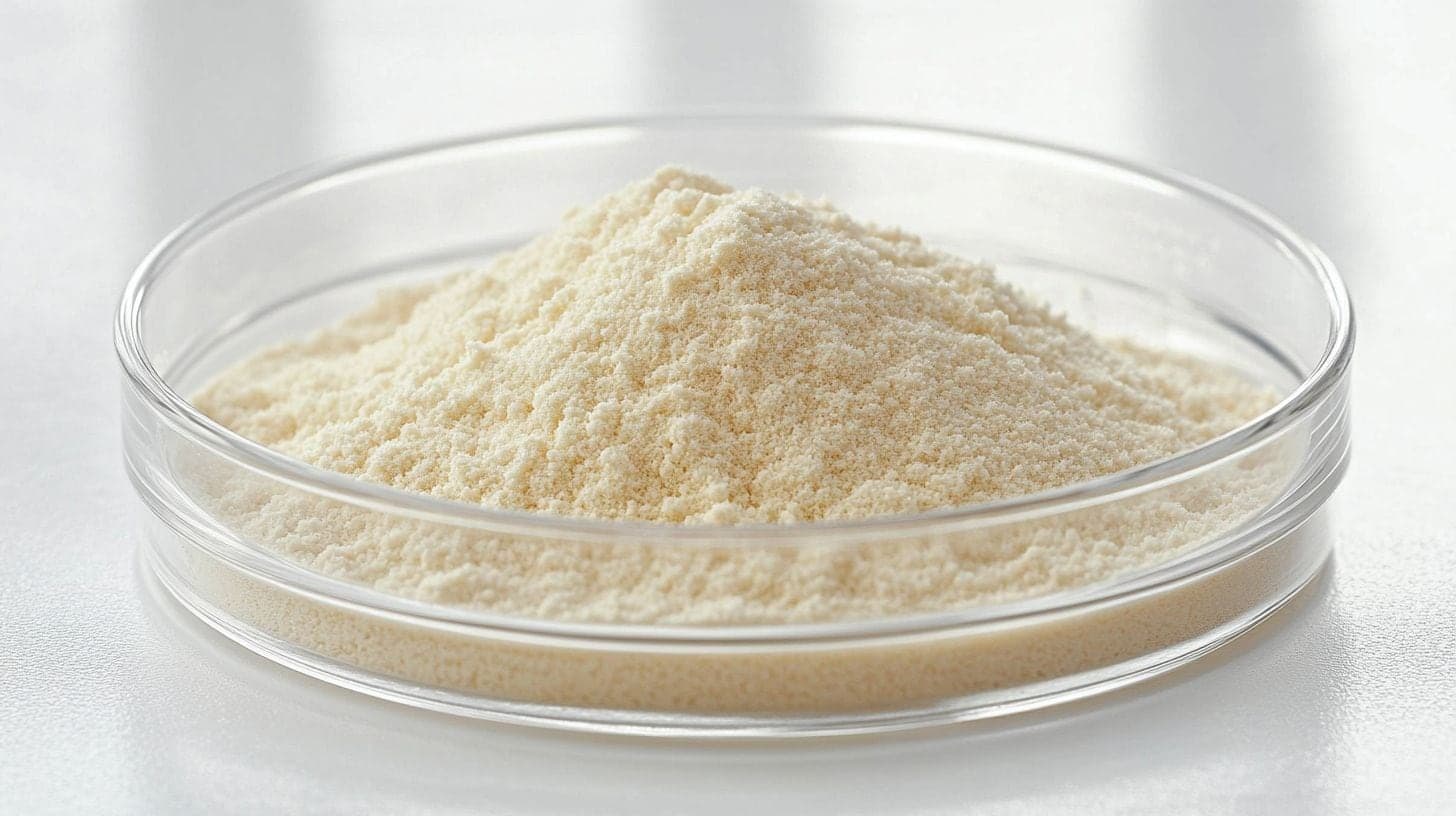
Sabouraud Dextrose Agar H
Also known as:SDA · SDA H · Sabouraud Dextrose Agar (Halal) · Sabouraud Dextrose Agar · Sabouraud Glucose Agar · Sabouraud Agar
For the cultivation and enumeration of yeasts and moulds, including use in microbial limit testing in accordance with the harmonized pharmacopoeias.
- Category
- Dehydrated Culture Media
- Dissolve per litre
- 65 g
- Pack sizes
- 500 g · 5 kg · 25 kg
- Certifications
- Halal
- Standard methods
- USP <61> / <62>·EP 2.6.12 / 2.6.13
Data updated:2026-11-07
Brand cross-reference:BD Difco Sabouraud Dextrose Agar · Oxoid Sabouraud Dextrose Agar · Merck Sabouraud 4% Dextrose Agar(USP <61> / <62>、EP 2.6.12 / 2.6.13) Brand cross-reference
Overview
Sabouraud Dextrose Agar H is the Halal-certified version of SDA: a high glucose level and slightly acidic pH favour yeasts and moulds while suppressing bacteria, for isolating, cultivating and maintaining fungi and for total yeast and mould counts in pharmacopoeial microbial limit tests. Made from food-grade raw materials with Halal documentation.
Principle
Sabouraud Dextrose Agar derives from the medium described by Sabouraud for the cultivation of dermatophytes and other fungi.¹ The peptic digest of animal tissue and pancreatic digest of casein supply nitrogen, amino acids, and growth factors, and the high concentration of dextrose provides an abundant carbon and energy source. The high sugar content and acidic pH favour the growth of yeasts and moulds while restricting many bacteria. The medium is specified in the harmonized pharmacopoeias for the total yeast and mould count and for the detection of Candida albicans in non-sterile products.²
Choosing a medium for yeasts and moulds
Potato Dextrose Agar and Sabouraud Dextrose Agar are the two general-purpose media most often used for yeasts and moulds. The former promotes mycelial growth and sporulation for morphological work; the latter's low pH itself suppresses bacteria. Malt-based media suit the cultivation and maintenance of yeasts, while the Czapek range is used for the taxonomy of filamentous fungi such as Aspergillus. Broths are for propagation, agars for enumeration and isolation.
Directions
Suspend 65 g of powder in 1 L of purified water. Heat with continuous stirring and bring to the boil for 1 minute. Sterilize by autoclaving at 121°C for 15 minutes. Avoid overheating. Cool to 45-50°C. Mix well and pour into sterile Petri plates. Test the finished medium for performance using stable, standard control cultures.
Cultural response
| Test organism | ATCC | Growth |
|---|---|---|
| Candida albicans | 10231 | good-luxuriant |
| Aspergillus brasiliensis | 16404 | good-luxuriant |
| Saccharomyces cerevisiae | 9763 | good-luxuriant |
Product highlights
- Halal certified, suitable for the Malaysian, Indonesian, and Middle Eastern markets
- Manufactured to the standard formulation, 65 g per litre
- Performance verified against standard control strains before release (Candida albicans, Aspergillus brasiliensis, Saccharomyces cerevisiae)
- Available in 500 g / 5 kg / 25 kg, from laboratory to industrial scale
- COA, specification sheet, and technical data sheet available; samples on request
- Manufactured in Taiwan with reliable supply
Frequently asked questions
01Do I need to suppress bacterial growth in fungal testing?
It depends on the sample. For foods or environmental samples with high bacterial loads, the pH is usually lowered or antibiotics are added to suppress bacteria. Follow the requirements of your chosen method; we are happy to advise.
02How much powder per litre?
Use 65 g per litre of deionised water; preparation and sterilisation conditions are given on the specification sheet.
03Which organisms is it suitable for?
Yeast & Mold, Yeast, Mold, Candida, Aspergillus, Penicillium, Candida albicans, Aspergillus brasiliensis, Saccharomyces cerevisiae. See the cultural response table and the specification sheet.
04What are the equivalent brand products and standard methods?
Cross-reference: BD Difco Sabouraud Dextrose Agar, Oxoid Sabouraud Dextrose Agar, Merck Sabouraud 4% Dextrose Agar. Standard methods: USP <61> / <62>, EP 2.6.12 / 2.6.13. Formulations may differ slightly between makers; refer to the specification sheet.
05How is this product prepared?
Suspend 65 g of powder in 1 L of purified water. Heat with continuous stirring and bring to the boil for 1 minute. Sterilize by autoclaving at 121°C for 15 minutes. Avoid overheating. Cool to 45-50°C. Mix well and pour into sterile Petri plates. Test the finished medium for performance using stable, standard control cultures.
06Is there a non-Halal version?
Yes. This is the Halal certified version; an equivalent standard version is also available.
07How do I request a bulk quotation, and can you provide a COA?
Yes. This product is available in 500 g, 5 kg, 25 kg. Tell us your application and volume when requesting a quotation; we reply within one working day and can supply the COA, specification sheet, and technical data sheet.
Used in these applications
- Yeast and filamentous fungal fermentationCultivation and maintenance of brewer's yeast, koji, Monascus, and enzyme-producing fungi
- Cleanroom and production environment monitoringMedia for settle plates, contact plates, and surface sampling
- Yeast and mould countFungal testing of food, dairy, and cosmetics
- Cleanroom and ultrapure water microbial monitoring: settle plates, surfaces and water systemsStandard media for ISO 14698, USP <1231> and USP <61> monitoring
References
- 1. Sabouraud R., 1892. Contribution à l'étude de la trichophytie humaine. Ann. Dermatol. Syphiligr., 3:1061-1087.
- 2. United States Pharmacopeia, current edition. Chapter <62> Microbiological Examination of Nonsterile Products: Tests for Specified Microorganisms, USP-NF, Rockville, MD.