
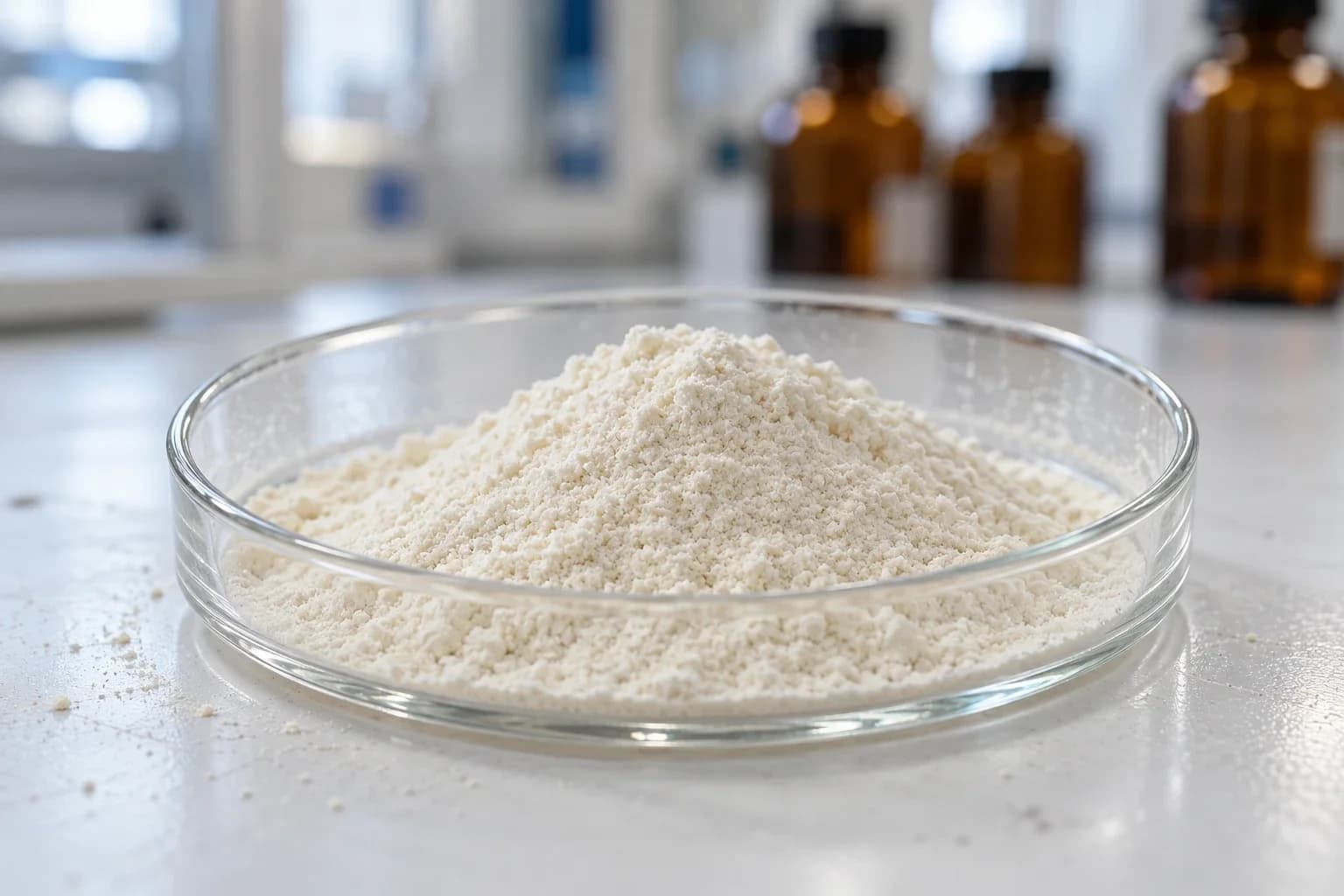
 Illustrative image only. Actual product may vary.
Casamino Acids
- Category
- Peptones & Protein Hydrolysates
- Pack sizes
- 500 g · 5 kg · 25 kg
- Raw material
- Casein
Data updated:2026-11-06
Overview
Casamino Acids is a casein-derived protein hydrolysate, used as a nitrogen and growth-factor source in culture media. It is suited to the cultivation of lactic acid bacteria. Contains milk allergen. Supplied by STBIO MEDIA with a COA for every batch; samples and specifications are available on request.
Choosing between tryptone, casein peptone and casamino acids
All three come from casein; the difference is the hydrolysis. Tryptone is digested with trypsin, giving abundant peptides and high tryptophan, and is the nitrogen source specified in LB, TSB and similar formulations. Casein peptone is the general term for casein hydrolysed with other enzymes, with a peptide profile that varies by product. Casamino acids are acid-hydrolysed, almost entirely free amino acids with no tryptophan, for semi-defined media that need a known composition. When a formulation says tryptone, use tryptone rather than substituting the other two. For cell culture, choose a clear, low-endotoxin grade such as Tryptone N1.
Product highlights
- Available in 500 g / 5 kg / 25 kg, from laboratory to industrial scale
- COA, specification sheet, and technical data sheet available; samples on request
- Manufactured in Taiwan with reliable supply
Frequently asked questions
01What is the difference between tryptone and peptone?
Peptone is the general term for protein hydrolysates; tryptone is one specific kind, made from casein with trypsin, so its peptide profile and tryptophan content are more defined. When a formulation specifies tryptone, do not substitute another peptone directly, as growth and yield may differ.
02Can I make LB medium from tryptone myself?
Yes. Standard LB Miller is 10 g tryptone, 5 g yeast extract and 10 g sodium chloride per litre; Lennox reduces sodium chloride to 5 g. Adjust to pH 7.0 and autoclave. To save preparation time or ensure batch consistency, use our ready-made LB Broth powder instead.
03Why is tryptone used for the indole test?
The indole test checks whether a bacterium can break tryptophan down to indole. Tryptone is high in tryptophan compared with other peptones, so tryptone water or tryptone broth made from it supplies enough substrate for a clear reaction, which is why it is the standard nitrogen source for this test.
04Does tryptone contain allergens? Can it be used in vegetarian or Halal formulations?
Tryptone is derived from milk casein, so it is a milk allergen and must be declared. It contains no meat, but as a dairy derivative it is not vegan; use soy or plant peptones for vegan formulations. For Halal requirements choose the certified version whose code ends in H.
05Which organisms is it suitable for?
Lactic acid bacteria. See the cultural response table and the specification sheet.
06Is there a Halal certified version of this product?
Yes. This is the standard version; a Halal certified version is also produced from food-grade raw materials with Halal documentation, for compliant sourcing in Malaysia, Indonesia, and the Middle East.
07How do I request a bulk quotation, and can you provide a COA?
Yes. This product is available in 500 g, 5 kg, 25 kg. Tell us your application and volume when requesting a quotation; we reply within one working day and can supply the COA, specification sheet, and technical data sheet.
Further reading
- What Are Casamino Acids? Casamino Acids vs Tryptone vs Casein PeptoneCasamino acids are casein hydrolysed completely with hydrochloric acid, consisting almost entirely of free amino acids. How they differ from tryptone and enzymatic casein peptone in hydrolysis, tryptophan, salt and use.
- Tryptose vs Tryptone: One Letter Apart, Different JobsTryptose is an enzymatic digest of mixed casein and meat protein used in media for fastidious organisms such as Brucella and Listeria. Tryptone is a pancreatic digest of casein alone, used in LB and TSB. Raw material, hydrolysis, specification and the formulations that call for each.
- What Is Peptone? Definition, Types, How It Is Made and How to ChoosePeptone is a mixture of peptides and amino acids made by hydrolysing protein, and the main nitrogen source in culture media. How it is made, the main types, tryptone versus peptone, and how to pick one for your organism.