
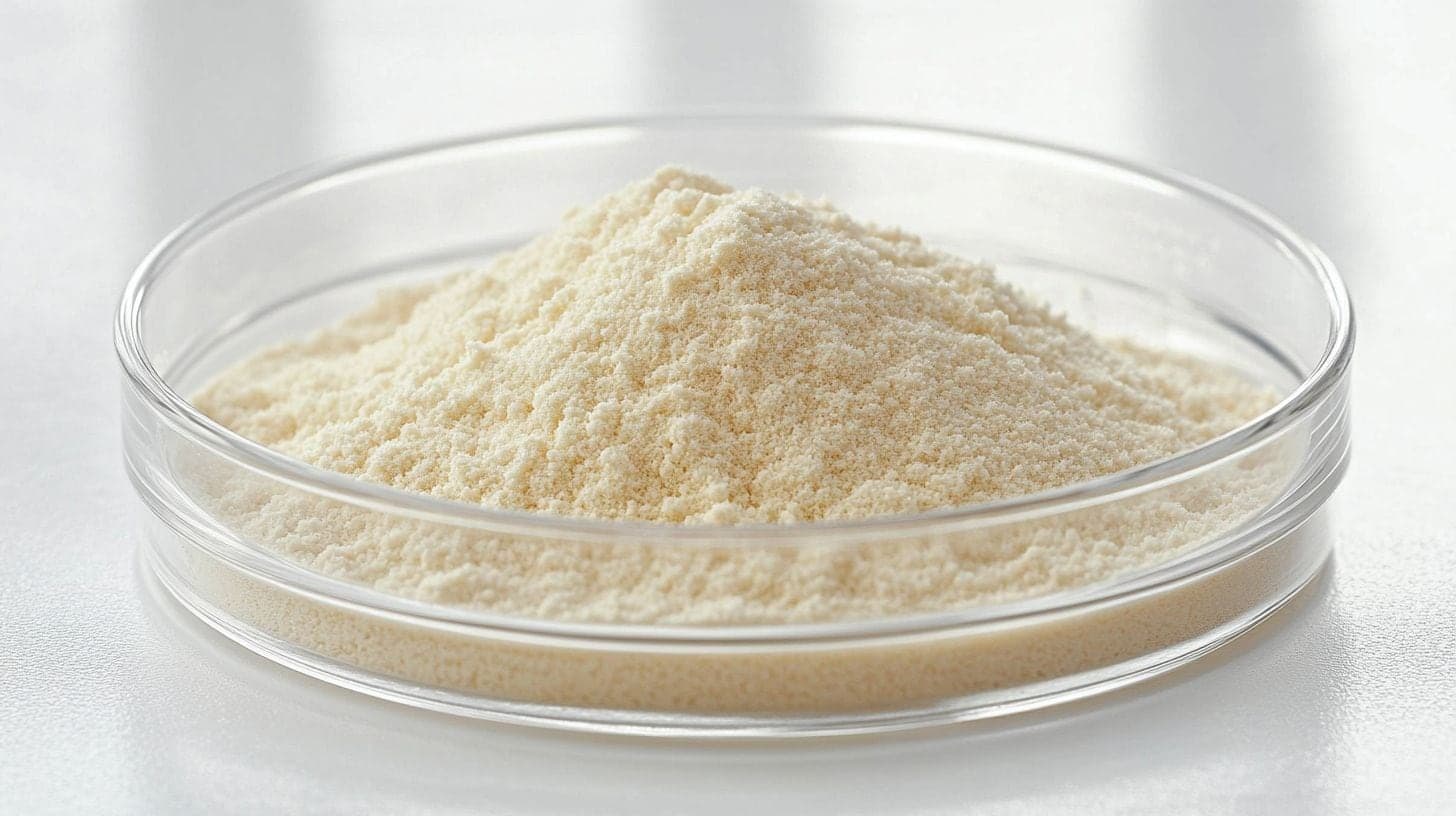
 Illustrative image only. Actual product may vary.
Dichloran Rose Bengal Chloramphenicol Agar Base
Also known as:DRBC Agar Base · DRBC Agar · Dichloran Rose-Bengal Chloramphenicol Agar
For the enumeration of yeasts and moulds in food and animal feed, following the addition of chloramphenicol.
- Category
- Dehydrated Culture Media
- Dissolve per litre
- 31.53 g
- Pack sizes
- 500 g · 5 kg · 25 kg
Data updated:2026-11-25
Overview
Dichloran Rose Bengal Chloramphenicol Agar Base is a base medium to which supplements are added per the method, a standard formulation for cultivating yeasts and moulds. STBIO manufactures it from food-grade raw materials in an ISO 22000 certified facility, with a COA for every batch.
Principle
DRBC Agar was developed by King and co-workers for the enumeration of yeasts and moulds in foods.¹ Peptone supplies nitrogen and growth factors, glucose provides the carbon and energy source, and the phosphate and magnesium salts supply essential minerals. Chloramphenicol is a broad-spectrum antibacterial agent that suppresses bacterial growth. Rose bengal is taken up by fungal colonies and restricts the spread of rapidly growing moulds, while dichloran further limits colony size and spreading, so that colonies remain discrete and countable and slower-growing species are not overgrown. The medium is specified for the enumeration of yeasts and moulds in products with a water activity above 0.95.²
Choosing a medium for yeasts and moulds
Potato Dextrose Agar and Sabouraud Dextrose Agar are the two general-purpose media most often used for yeasts and moulds. The former promotes mycelial growth and sporulation for morphological work; the latter's low pH itself suppresses bacteria. Malt-based media suit the cultivation and maintenance of yeasts, while the Czapek range is used for the taxonomy of filamentous fungi such as Aspergillus. Broths are for propagation, agars for enumeration and isolation.
Directions
Suspend 31.53 g of powder in 1 L of purified water and add 100 mg of chloramphenicol. Heat with continuous stirring and bring to the boil for 1 minute. Sterilize by autoclaving at 121°C for 15 minutes. Avoid overheating. Cool to 45-50°C, protecting the medium from light. Mix well and pour into sterile Petri plates. Test the finished medium for performance using stable, standard control cultures.
Cultural response
| Test organism | ATCC | Growth |
|---|---|---|
| Candida albicans | 10231 | good-luxuriant |
| Saccharomyces cerevisiae | 9763 | good-luxuriant |
| Aspergillus brasiliensis | 16404 | good-luxuriant |
| Escherichia coli | 25922 | inhibited |
Product highlights
- Manufactured to the standard formulation, 31.53 g per litre
- Performance verified against standard control strains before release (Candida albicans, Saccharomyces cerevisiae, Aspergillus brasiliensis, Escherichia coli)
- Available in 500 g / 5 kg / 25 kg, from laboratory to industrial scale
- COA, specification sheet, and technical data sheet available; samples on request
- Manufactured in Taiwan with reliable supply
Frequently asked questions
01Do I need to suppress bacterial growth in fungal testing?
It depends on the sample. For foods or environmental samples with high bacterial loads, the pH is usually lowered or antibiotics are added to suppress bacteria. Follow the requirements of your chosen method; we are happy to advise.
02How much powder per litre?
Use 31.53 g per litre of deionised water; preparation and sterilisation conditions are given on the specification sheet.
03Which organisms is it suitable for?
Yeast & Mold, Yeast, Mold, Candida, Aspergillus, Penicillium, Candida albicans, Saccharomyces cerevisiae, Aspergillus brasiliensis, Escherichia coli. See the cultural response table and the specification sheet.
04How is this product prepared?
Suspend 31.53 g of powder in 1 L of purified water and add 100 mg of chloramphenicol. Heat with continuous stirring and bring to the boil for 1 minute. Sterilize by autoclaving at 121°C for 15 minutes. Avoid overheating. Cool to 45-50°C, protecting the medium from light. Mix well and pour into sterile Petri plates. Test the finished medium for performance using stable, standard control cultures.
05How do I request a bulk quotation, and can you provide a COA?
Yes. This product is available in 500 g, 5 kg, 25 kg. Tell us your application and volume when requesting a quotation; we reply within one working day and can supply the COA, specification sheet, and technical data sheet.
References
- 1. King A. D., Hocking A. D. and Pitt J. I., 1979. Dichloran-rose bengal medium for enumeration and isolation of molds from foods. Appl. Environ. Microbiol., 37:959-964.
- 2. ISO 21527-1, Microbiology of food and animal feeding stuffs — Horizontal method for the enumeration of yeasts and moulds — Part 1: Colony count technique in products with water activity greater than 0,95, International Organization for Standardization, Geneva.