
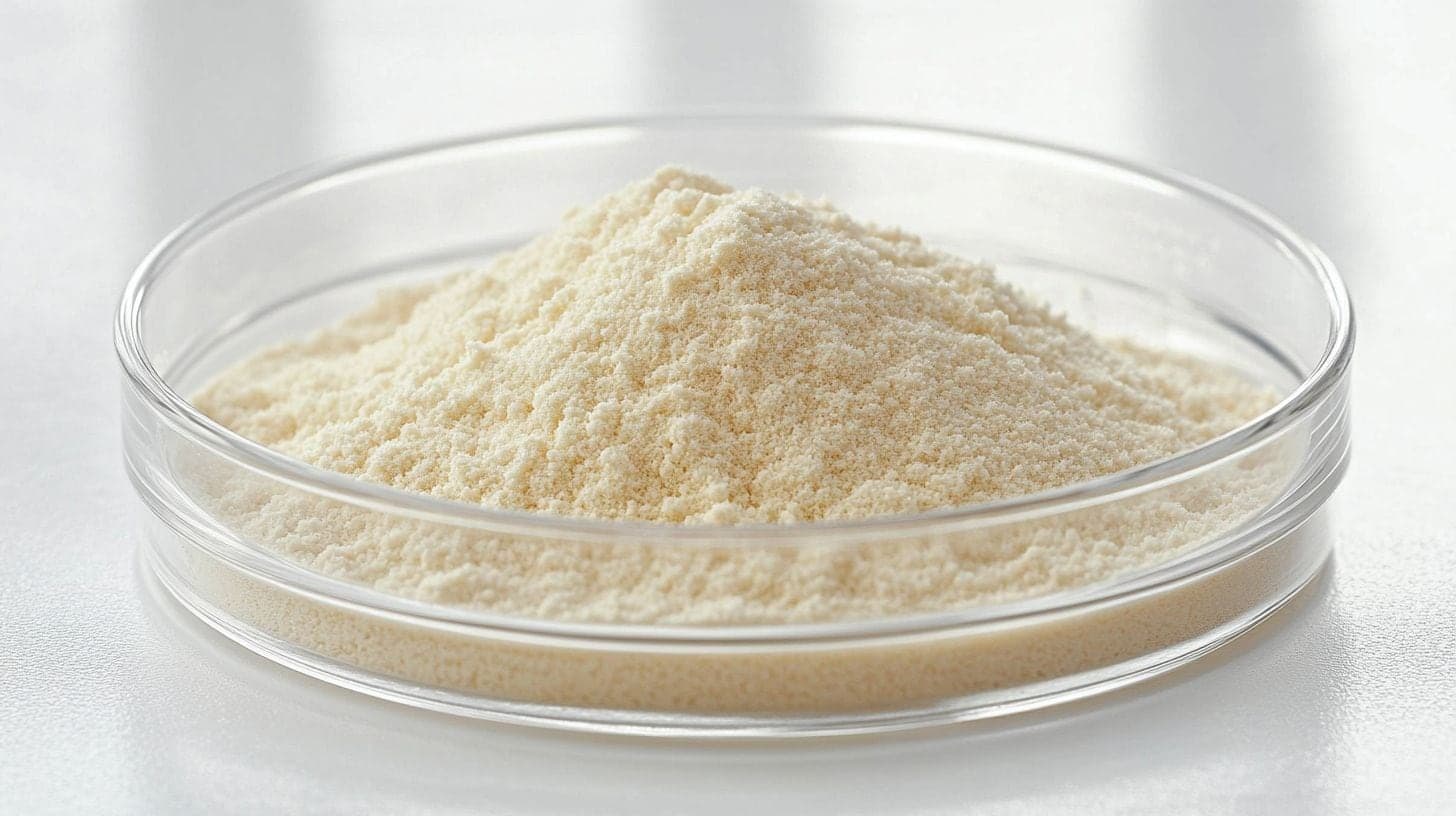
Acetobacter Agar H (Mannitol)
Acetobacter Agar H (Mannitol) is used for maintenance of mannitol positive ACETOBACTER species. Peptone and yeast extract provide nitrogen, vitamins and minerals necessary to support bacterial growth. Mannitol acts as an energy source. Calcium carbonate can be added as a buffer.
- Category
- Dehydrated Culture Media
- Dissolve per litre
- 48 g
- pH (25 °C)
- 6.0± 1.0
- Pack sizes
- 500 g · 5 kg · 25 kg
- Certifications
- Halal
Data updated:2026-11-07
- Storage
- Store at 10–30°C, sealed, in a dry place, away from direct sunlight.
- Shelf life
- 36 months from manufacture date when stored as directed.
Overview
Acetobacter Agar H (Mannitol) is used to isolate, cultivate and maintain acetic acid bacteria, especially mannitol-utilising Acetobacter strains. Mannitol is the carbon source; peptone and yeast extract supply nitrogen and vitamins. It suits strain management for vinegar, kombucha and fruit-vinegar fermentations, and for checking acetic acid bacteria during the process. Halal-certified and made from food-grade raw materials, from the laboratory to the production floor.
Principle
Acetic acid bacteria occur naturally on fruits with a high carbohydrate content, where yeasts produce ethanol that serves as the substrate for the oxidative metabolism of these organisms.¹ Acetobacter Agar (Mannitol) is used for the cultivation and maintenance of Acetobacter species that utilize mannitol.² Peptone and yeast extract provide the nitrogen, vitamins, amino acids, and minerals required for growth, while mannitol serves as the carbon and energy source. The medium supports the propagation and routine subculture of acetic acid bacteria.
Specifications
| Parameter | Specification |
|---|---|
| pH (at 25°C) | 6.0± 1.0 |
Release specifications. Actual values are reported on the COA supplied with each batch.
Directions
Suspend 48 g of powder in 1 L of purified water. Heat with continuous stirring and bring to the boil for 1 minute. Sterilize by autoclaving at 121°C for 15 minutes. Cool to 45-50°C. Mix well and pour into sterile Petri plates. Test the finished medium for performance using stable, standard control cultures. Adjust to the final pH with sterile acid or alkali, if necessary
Cultural response
| Test organism | ATCC | Growth |
|---|---|---|
| Acetobacter hansenii | 35959 | Good |
| Acetobacter pasteurianus | 6033 | Good |
Product highlights
- Halal certified, suitable for the Malaysian, Indonesian, and Middle Eastern markets
- Manufactured to the standard formulation, 48 g per litre, pH 6.0± 1.0
- Performance verified against standard control strains before release (Acetobacter hansenii, Acetobacter pasteurianus)
- Available in 500 g / 5 kg / 25 kg, from laboratory to industrial scale
- COA, specification sheet, and technical data sheet available; samples on request
- Manufactured in Taiwan with reliable supply
Frequently asked questions
01How much powder per litre?
Use 48 g per litre of deionised water; pH after sterilisation 6.0± 1.0. Preparation and sterilisation conditions are given on the specification sheet.
02Which organisms is it suitable for?
Acetobacter hansenii, Acetobacter pasteurianus. See the cultural response table and the specification sheet.
03How is this product prepared?
Suspend 48 g of powder in 1 L of purified water. Heat with continuous stirring and bring to the boil for 1 minute. Sterilize by autoclaving at 121°C for 15 minutes. Cool to 45-50°C. Mix well and pour into sterile Petri plates. Test the finished medium for performance using stable, standard control cultures. Adjust to the final pH with sterile acid or alkali, if necessary
04How should it be stored, and what is the shelf life?
Store at 10–30°C, sealed, in a dry place, away from direct sunlight. 36 months from manufacture date when stored as directed.
05How do I request a bulk quotation, and can you provide a COA?
Yes. This product is available in 500 g, 5 kg, 25 kg. Tell us your application and volume when requesting a quotation; we reply within one working day and can supply the COA, specification sheet, and technical data sheet.
Used in these applications
References
- 1. De Ley J., Gillis M. and Swings J., 1984. Family Acetobacteraceae, in Bergey's Manual of Systematic Bacteriology, Vol. 1, Williams & Wilkins, Baltimore.
- 2. Atlas R. M., 2010. Handbook of Microbiological Media, 4th Ed., CRC Press, Boca Raton.