
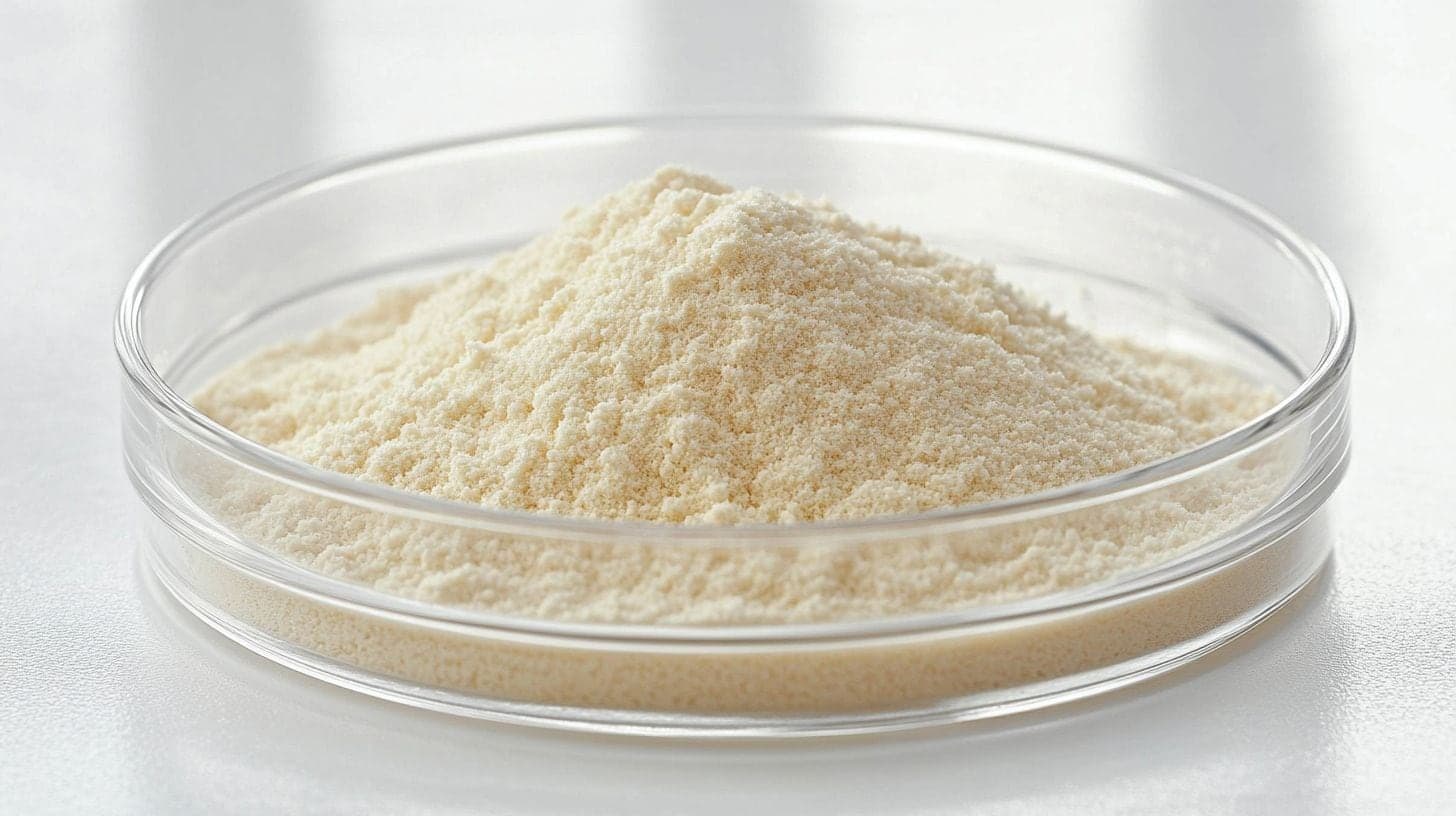
 Illustrative image only. Actual product may vary.
GYC Agar
Also known as:Glucose Yeast Extract Calcium Carbonate Agar · GYC Medium · Calcium Carbonate Agar for Acetic Acid Bacteria
For the isolation and detection of acetic acid bacteria, including Acetobacter and Gluconobacter species, in beverages and fermentation samples.
- Category
- Dehydrated Culture Media
- Dissolve per litre
- 65 g
- Pack sizes
- 500 g · 5 kg · 25 kg
Data updated:2026-11-24
Overview
Principle
GYC Agar is the classical medium for the detection of acetic acid bacteria, which are important spoilage organisms in wine, beer, cider, and soft drinks, and are also used industrially in vinegar and gluconic acid production.¹ Dextrose serves as the carbon and energy source, and yeast extract supplies nitrogen, B-group vitamins, and growth factors. Calcium carbonate is suspended in the medium, giving opaque white plates. Acetic acid bacteria oxidise glucose to gluconic acid and ethanol to acetic acid; the acid produced dissolves the calcium carbonate around the colonies, forming a clear halo against the opaque background. Colonies surrounded by a clear zone are presumptive acetic acid bacteria.²
Directions
Suspend 65 g of powder in 1 L of purified water. Heat with continuous stirring and bring to the boil for 1 minute. Sterilize by autoclaving at 121°C for 15 minutes. Avoid overheating. Cool to 45-50°C, mix well to resuspend the calcium carbonate, and pour into sterile Petri plates. Test the finished medium for performance using stable, standard control cultures.
Cultural response
| Test organism | ATCC | Growth |
|---|---|---|
| Acetobacter aceti | 15973 | good-luxuriant |
| Gluconobacter oxydans | 19357 | good-luxuriant |
| Saccharomyces cerevisiae | 9763 | good |
Product highlights
- Manufactured to the standard formulation, 65 g per litre
- Performance verified against standard control strains before release (Acetobacter aceti, Gluconobacter oxydans, Saccharomyces cerevisiae)
- Available in 500 g / 5 kg / 25 kg, from laboratory to industrial scale
- COA, specification sheet, and technical data sheet available; samples on request
- Manufactured in Taiwan with reliable supply
Frequently asked questions
01How much powder per litre?
Use 65 g per litre of deionised water; preparation and sterilisation conditions are given on the specification sheet.
02Which organisms is it suitable for?
Gram-negative, Aerobes, Acetobacter aceti, Gluconobacter oxydans, Saccharomyces cerevisiae. See the cultural response table and the specification sheet.
03How is this product prepared?
Suspend 65 g of powder in 1 L of purified water. Heat with continuous stirring and bring to the boil for 1 minute. Sterilize by autoclaving at 121°C for 15 minutes. Avoid overheating. Cool to 45-50°C, mix well to resuspend the calcium carbonate, and pour into sterile Petri plates. Test the finished medium for performance using stable, standard control cultures.
04How do I request a bulk quotation, and can you provide a COA?
Yes. This product is available in 500 g, 5 kg, 25 kg. Tell us your application and volume when requesting a quotation; we reply within one working day and can supply the COA, specification sheet, and technical data sheet.
References
- 1. Atlas R. M., 2010. Handbook of Microbiological Media, 4th Ed., CRC Press, Boca Raton.
- 2. De Ley J., Gillis M. and Swings J., 1984. Family VI. Acetobacteraceae. In: Bergey's Manual of Systematic Bacteriology, Vol. 1, Williams & Wilkins, Baltimore.