
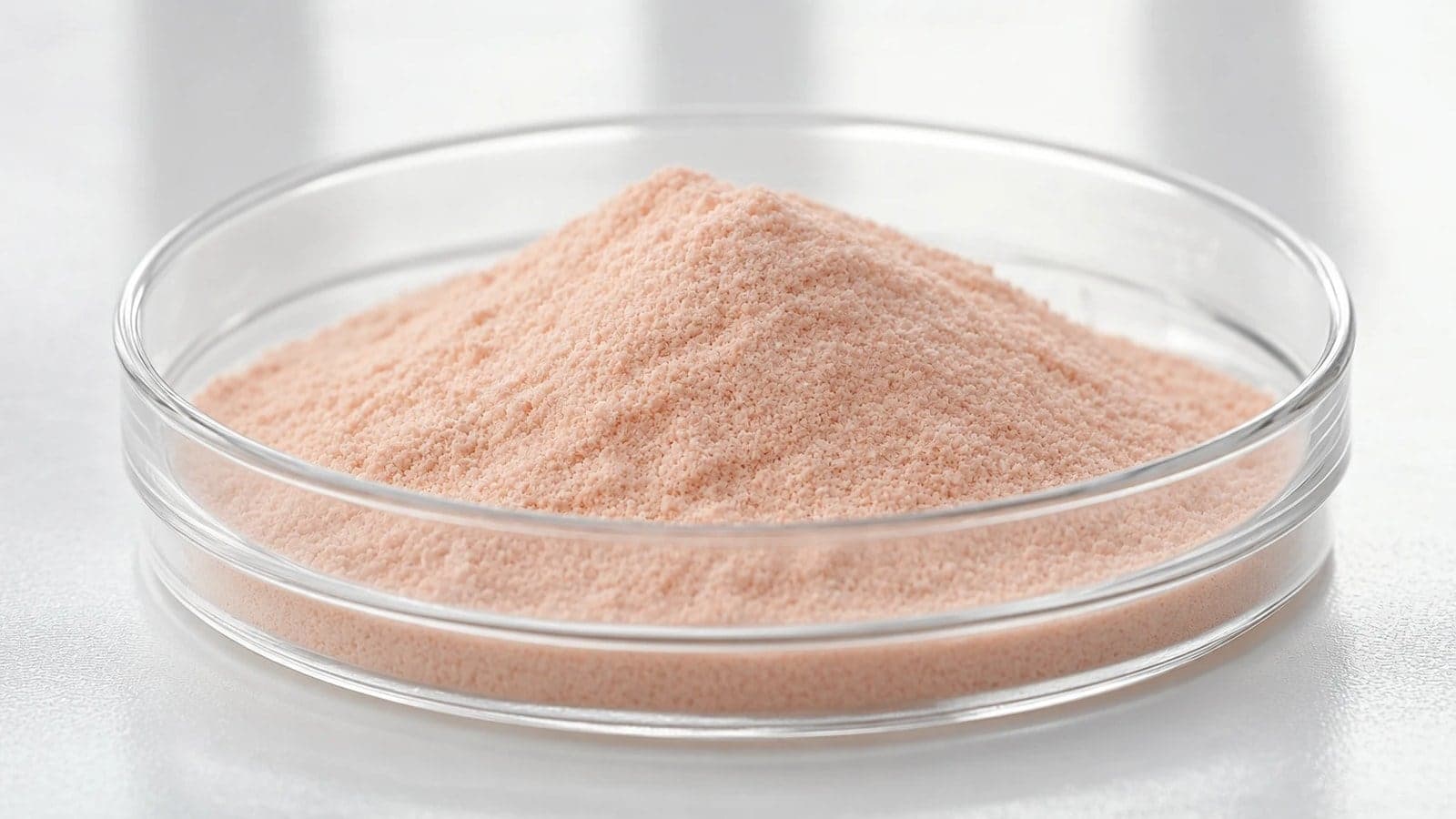
 Illustrative image only. Actual product may vary.
DHL Agar
Also known as:Desoxycholate Hydrogen Sulfide Lactose Agar · Deoxycholate Hydrogen Sulphide Lactose Agar · DHL Medium
For the selective isolation and differentiation of Salmonella and Shigella species from food, water, and other materials.
- Category
- Dehydrated Culture Media
- Dissolve per litre
- 63.33 g
- Pack sizes
- 500 g · 5 kg · 25 kg
Data updated:2026-11-23
Overview
Principle
DHL Agar is a moderately selective plating medium developed in Japan for the isolation of Salmonella and Shigella from faecal and food samples.¹ Proteose peptone and meat extract supply nitrogen, amino acids, vitamins, and growth factors. Sodium deoxycholate and sodium citrate inhibit Gram-positive bacteria and restrict the growth of coliforms, while the relatively low concentration of deoxycholate makes the medium less inhibitory than more strongly selective media such as SS Agar. Lactose and sucrose are the fermentable carbohydrates, and neutral red serves as the pH indicator. Lactose- or sucrose-fermenting organisms produce acid and form pink to red colonies, whereas Salmonella and Shigella, which ferment neither, form colourless to pale colonies. Sodium thiosulphate and ferric ammonium citrate detect hydrogen sulphide, so that Salmonella and other H2S-producing organisms form colonies with black centres. Presumptive colonies require biochemical and serological confirmation.²
Directions
Suspend 63.33 g of powder in 1 L of purified water. Heat with continuous stirring and bring to the boil for 1 minute. DO NOT AUTOCLAVE. Cool to 45-50°C. Mix well and pour into sterile Petri plates. Test the finished medium for performance using stable, standard control cultures.
Cultural response
| Test organism | ATCC | Growth |
|---|---|---|
| Salmonella enterica ser. Typhimurium | 14028 | good-luxuriant |
| Shigella flexneri | 12022 | good |
| Escherichia coli | 25922 | partially inhibited red, bile precipitate |
| Enterococcus faecalis | 29212 | inhibited |
Product highlights
- Manufactured to the standard formulation, 63.33 g per litre
- Performance verified against standard control strains before release (Salmonella enterica ser. Typhimurium, Shigella flexneri, Escherichia coli, Enterococcus faecalis)
- Available in 500 g / 5 kg / 25 kg, from laboratory to industrial scale
- COA, specification sheet, and technical data sheet available; samples on request
- Manufactured in Taiwan with reliable supply
Frequently asked questions
01How much powder per litre?
Use 63.33 g per litre of deionised water; preparation and sterilisation conditions are given on the specification sheet.
02Which organisms is it suitable for?
Enterobacteriaceae, Gram-negative, Pathogens, Salmonella, Shigella, Salmonella enterica ser. Typhimurium, Shigella flexneri, Escherichia coli, Enterococcus faecalis. See the cultural response table and the specification sheet.
03How is this product prepared?
Suspend 63.33 g of powder in 1 L of purified water. Heat with continuous stirring and bring to the boil for 1 minute. DO NOT AUTOCLAVE. Cool to 45-50°C. Mix well and pour into sterile Petri plates. Test the finished medium for performance using stable, standard control cultures.
04How do I request a bulk quotation, and can you provide a COA?
Yes. This product is available in 500 g, 5 kg, 25 kg. Tell us your application and volume when requesting a quotation; we reply within one working day and can supply the COA, specification sheet, and technical data sheet.
References
- 1. Japanese Pharmacopoeia, current edition. Microbiological Examination of Non-sterile Products, Society of Japanese Pharmacopoeia, Tokyo.
- 2. Atlas R. M., 2010. Handbook of Microbiological Media, 4th Ed., CRC Press, Boca Raton.