
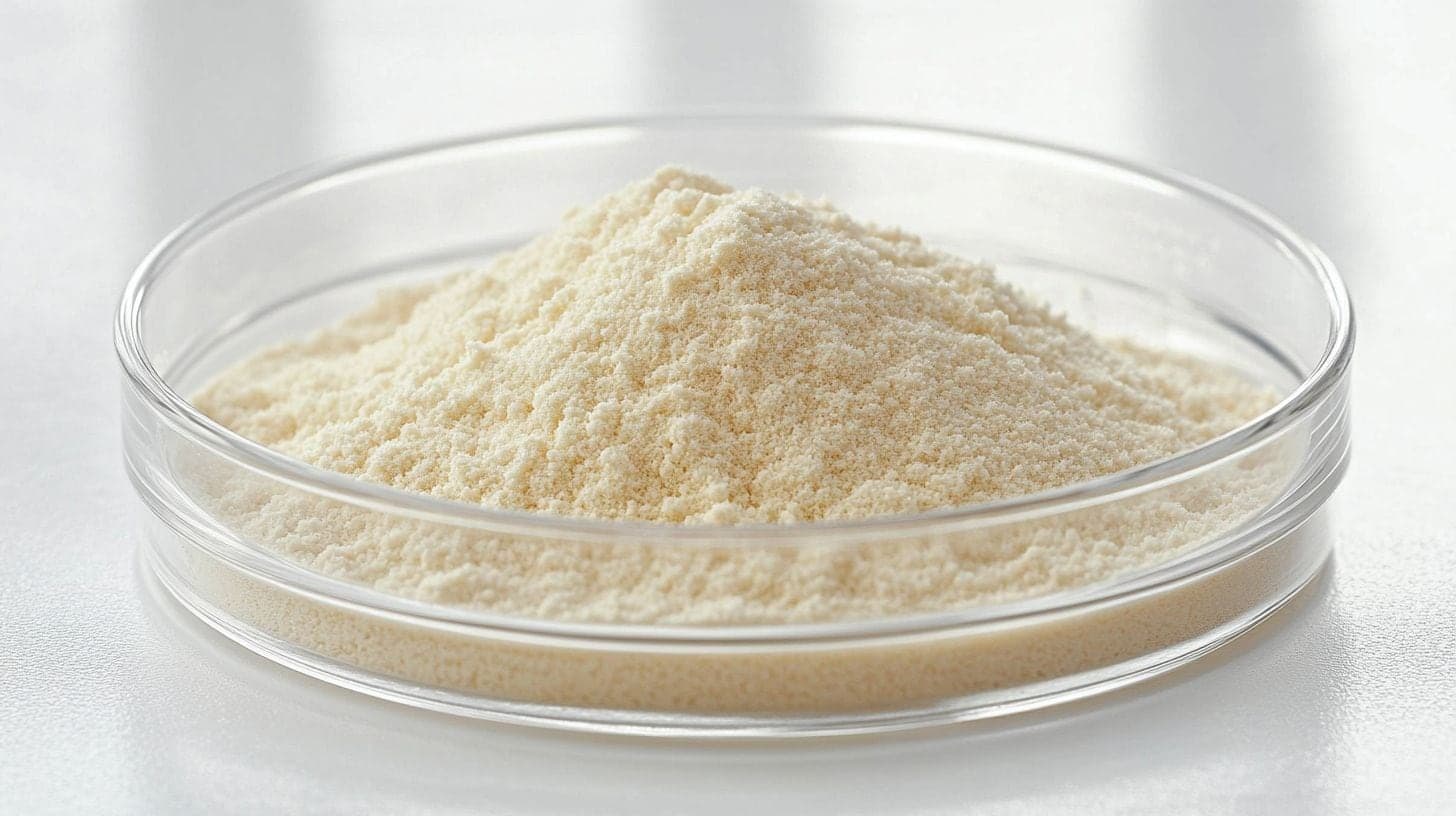
 Illustrative image only. Actual product may vary.
Wort Agar
Also known as:Malt Wort Agar · Brewer's Wort Agar · Wort Agar (Parfitt)
For the cultivation and enumeration of yeasts and moulds, particularly in brewing, dairy, and other fermentation industries.
- Category
- Dehydrated Culture Media
- Dissolve per litre
- 50.63 g
- Pack sizes
- 500 g · 5 kg · 25 kg
Data updated:2026-11-06
Overview
Principle
Wort Agar reproduces the carbohydrate composition of brewer's wort and was applied by Parfitt to the yeast and mould count of dairy products.¹ Malt extract, maltose, and dextrin provide a mixture of carbohydrates resembling those of wort, together with vitamins and growth factors, and glycerol serves as an additional carbon source. Peptone and ammonium chloride supply nitrogen, and dipotassium hydrogen phosphate buffers the medium. The acidic reaction of the medium favours yeasts and moulds while restricting the growth of many bacteria. Where bacterial contamination is heavy, the medium may be further acidified with lactic acid; because acid hydrolyses the agar, the acidified medium must not be reheated. The medium is widely used for the cultivation and maintenance of brewing and baking yeasts and for monitoring fermentation processes.²
Directions
Suspend 50.63 g of powder in 1 L of purified water. Heat with continuous stirring and bring to the boil for 1 minute. Sterilize by autoclaving at 121°C for 15 minutes. Avoid overheating. Cool to 45-50°C. Where greater selectivity is required, acidify the cooled medium with sterile lactic acid; do not reheat the medium after acidification. Mix well and pour into sterile Petri plates. Test the finished medium for performance using stable, standard control cultures.
Cultural response
| Test organism | ATCC | Growth |
|---|---|---|
| Saccharomyces cerevisiae | 9763 | good-luxuriant |
| Candida albicans | 10231 | good-luxuriant |
| Aspergillus brasiliensis | 16404 | good-luxuriant |
| Escherichia coli | 25922 | inhibited-partial |
Product highlights
- Manufactured to the standard formulation, 50.63 g per litre
- Performance verified against standard control strains before release (Saccharomyces cerevisiae, Candida albicans, Aspergillus brasiliensis, Escherichia coli)
- Available in 500 g / 5 kg / 25 kg, from laboratory to industrial scale
- COA, specification sheet, and technical data sheet available; samples on request
- Manufactured in Taiwan with reliable supply
Frequently asked questions
01How much powder per litre?
Use 50.63 g per litre of deionised water; preparation and sterilisation conditions are given on the specification sheet.
02Which organisms is it suitable for?
Yeast, Mold, S. cerevisiae, Saccharomyces cerevisiae, Candida albicans, Aspergillus brasiliensis, Escherichia coli. See the cultural response table and the specification sheet.
03How is this product prepared?
Suspend 50.63 g of powder in 1 L of purified water. Heat with continuous stirring and bring to the boil for 1 minute. Sterilize by autoclaving at 121°C for 15 minutes. Avoid overheating. Cool to 45-50°C. Where greater selectivity is required, acidify the cooled medium with sterile lactic acid; do not reheat the medium after acidification. Mix well and pour into sterile Petri plates. Test the finished medium for performance using stable, standard control cultures.
04How do I request a bulk quotation, and can you provide a COA?
Yes. This product is available in 500 g, 5 kg, 25 kg. Tell us your application and volume when requesting a quotation; we reply within one working day and can supply the COA, specification sheet, and technical data sheet.
References
- 1. Parfitt E. H., 1933. The influence of media upon the yeast and mold count of butter. J. Dairy Sci., 16:141-147.
- 2. Atlas R. M., 2010. Handbook of Microbiological Media, 4th Ed., CRC Press, Boca Raton.