
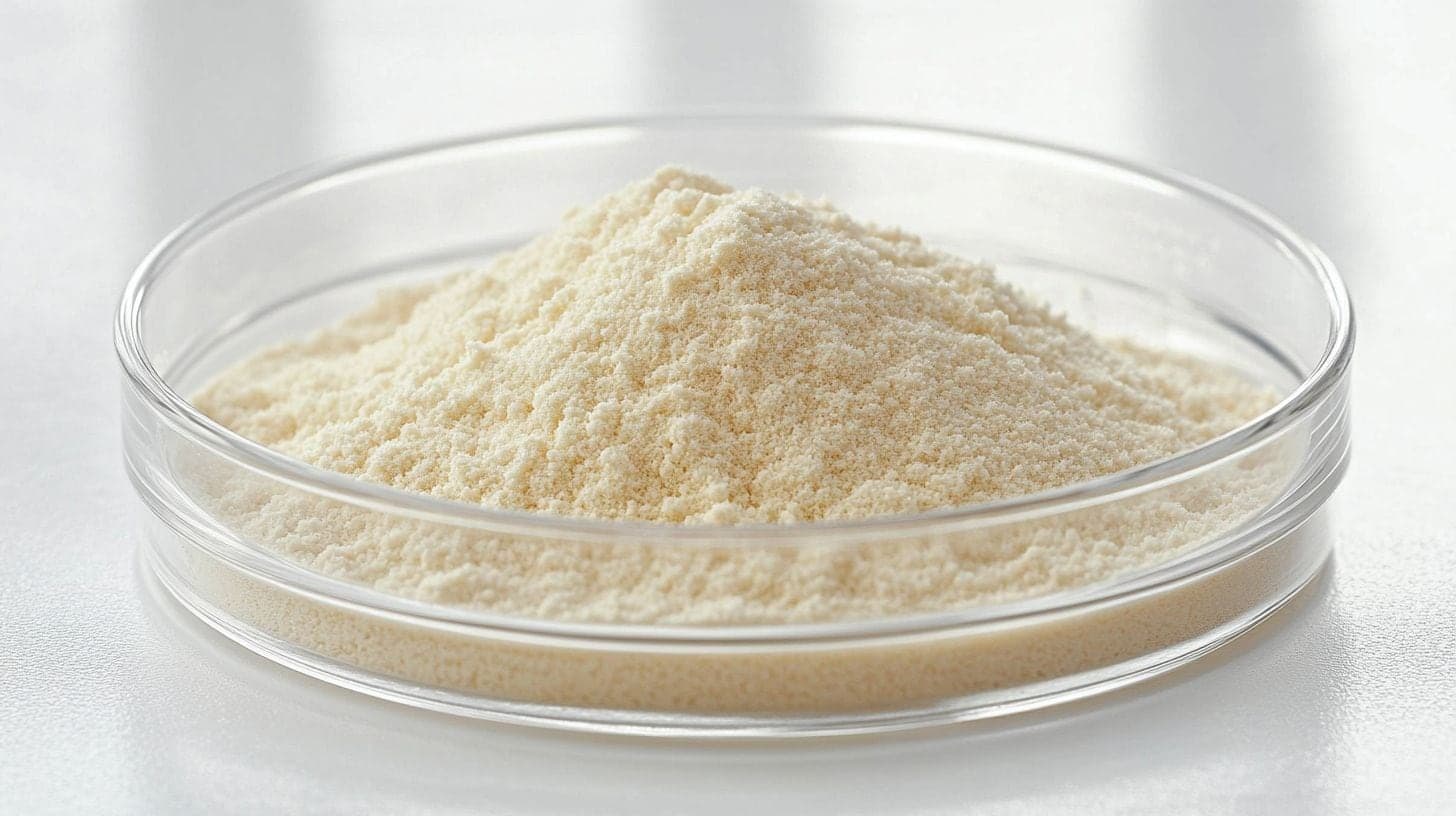
 Illustrative image only. Actual product may vary.
WL Nutrient Agar
Also known as:WLN
For the cultivation and differentiation of yeasts and other microorganisms in brewing, winemaking, and other fermentation processes.
- Category
- Dehydrated Culture Media
- Dissolve per litre
- 80.25 g
- Pack sizes
- 500 g · 5 kg · 25 kg
Data updated:2026-11-06
Overview
WL Nutrient Agar is an agar (solid) medium, a standard general-purpose and enumeration formulation. It is used to cultivate, count and maintain non-fastidious bacteria; the most basic solid medium in the laboratory. STBIO manufactures it from food-grade raw materials in an ISO 22000 certified facility, with a COA for every batch.
Principle
WL Nutrient Agar was developed by Green and Gray at the Wallerstein Laboratories for the microbiological control of brewing and other fermentation processes.¹ Yeast extract and pancreatic digest of casein supply nitrogen, amino acids, vitamins, and growth factors, and dextrose serves as the carbon and energy source. The mineral salts provide the ions required by yeasts and other fermentation organisms, and potassium dihydrogen phosphate buffers the medium. Bromocresol green acts as a pH indicator and is taken up by colonies to differing degrees, so that organisms develop characteristic colours, ranging from white and cream to various shades of green, together with distinctive colony morphologies. These differences allow culture yeasts to be distinguished from wild yeasts and other contaminants. The medium supports both yeasts and bacteria; for the enumeration of bacteria in the presence of yeasts, WL Differential Agar, which contains cycloheximide, is used.²
Choosing a general-purpose or enumeration medium
Plate Count Agar is used for total viable counts in food, water, and environmental samples. Nutrient Broth and Tryptic Soy media are the general-purpose choices for non-fastidious bacteria, with the latter richer and also used for sterility testing and environmental monitoring. Brain Heart Infusion is the richest of the three and suits fastidious organisms such as streptococci. Use the agar form for enumeration and the broth for propagation.
Directions
Suspend 80.252 g of powder in 1 L of purified water. Heat with continuous stirring and bring to the boil for 1 minute. Sterilize by autoclaving at 121°C for 15 minutes. Avoid overheating. Cool to 45-50°C. Mix well and pour into sterile Petri plates. Test the finished medium for performance using stable, standard control cultures.
Cultural response
| Test organism | ATCC | Growth |
|---|---|---|
| Saccharomyces cerevisiae | 9763 | good-luxuriant |
| Saccharomyces pastorianus | 9080 | good-luxuriant |
| Lactiplantibacillus plantarum | 8014 | good |
Product highlights
- Manufactured to the standard formulation, 80.25 g per litre
- Performance verified against standard control strains before release (Saccharomyces cerevisiae, Saccharomyces pastorianus, Lactiplantibacillus plantarum)
- Available in 500 g / 5 kg / 25 kg, from laboratory to industrial scale
- COA, specification sheet, and technical data sheet available; samples on request
- Manufactured in Taiwan with reliable supply
Frequently asked questions
01Which medium should I use for total viable counts?
Total viable counts in food and water normally use Plate Count Agar with the pour-plate method at 30 °C. Follow the incubation conditions specified by the method you are working to.
02How much powder per litre?
Use 80.25 g per litre of deionised water; preparation and sterilisation conditions are given on the specification sheet.
03Which organisms is it suitable for?
Yeast, Lactic acid bacteria, S. cerevisiae, Lactobacillus, Saccharomyces cerevisiae, Saccharomyces pastorianus, Lactiplantibacillus plantarum. See the cultural response table and the specification sheet.
04How is this product prepared?
Suspend 80.252 g of powder in 1 L of purified water. Heat with continuous stirring and bring to the boil for 1 minute. Sterilize by autoclaving at 121°C for 15 minutes. Avoid overheating. Cool to 45-50°C. Mix well and pour into sterile Petri plates. Test the finished medium for performance using stable, standard control cultures.
05How do I request a bulk quotation, and can you provide a COA?
Yes. This product is available in 500 g, 5 kg, 25 kg. Tell us your application and volume when requesting a quotation; we reply within one working day and can supply the COA, specification sheet, and technical data sheet.
Academic citation
Products from this range have been cited as the culture media source in a peer-reviewed study by a National Taiwan University research team:
Chan et al. (2024). Single-strain probiotics enhance growth, anti-pathogen immunity, and resistance to Nocardia seriolae in grey mullet (Mugil cephalus) via gut microbiota modulation. Animal Microbiome, 6, 67. Springer Nature.
Media attribution: Tryptone Soy Broth, MRS medium, LB broth, beef extract, peptone, yeast extract, agar (STBIO, New Taipei, Taiwan)
Read the full paperReferences
- 1. Green S. R. and Gray P. P., 1950. A differential procedure applicable to bacteriological investigation in brewing. Wallerstein Lab. Commun., 13:357-366.
- 2. American Society of Brewing Chemists, Methods of Analysis, Microbiological Control, ASBC, St. Paul, MN.