
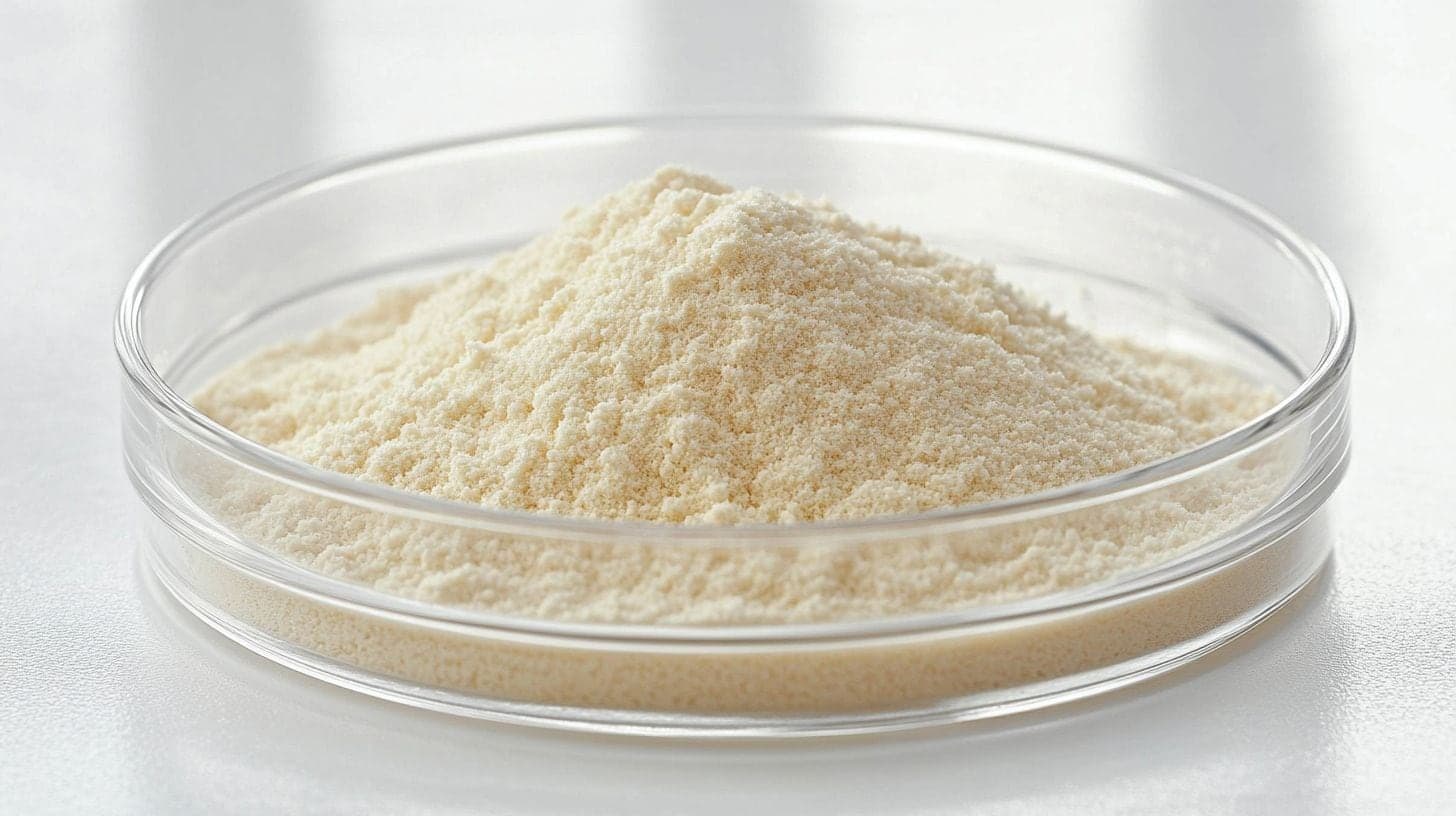
 Illustrative image only. Actual product may vary.
Milk Plate Count Agar
Also known as:MPCA · Plate Count Skim Milk Agar · Plate Count Agar with Skimmed Milk · PCA with Skim Milk
For the enumeration of aerobic mesophilic microorganisms in milk and dairy products, containing antibiotic-free skimmed milk.
- Category
- Dehydrated Culture Media
- Dissolve per litre
- 19.5 g
- Pack sizes
- 500 g · 5 kg · 25 kg
Data updated:2026-11-06
Overview
Milk Plate Count Agar is the dedicated plate for total viable counts in milk and dairy products: skim milk powder is added to the Plate Count Agar formulation so the medium better matches the nutritional needs of dairy microflora, giving fuller colony development from raw milk, pasteurised milk and milk powder. Used in ISO 4833-related dairy methods and British dairy standards, and a staple for routine dairy plant quality control and raw milk acceptance. Food-grade raw materials.
Principle
Milk Plate Count Agar is Plate Count Agar supplemented with skimmed milk powder, specified for the colony count of microorganisms in milk and milk products.¹ Tryptone supplies nitrogen, amino acids, and peptides, yeast extract provides B-group vitamins and growth factors, and glucose serves as the carbon and energy source. The skimmed milk powder contributes lactose, casein, and other milk constituents that improve the recovery of organisms adapted to the dairy environment. The skimmed milk powder is certified free of antibiotic residues; residual antibiotics from treated animals would inhibit sensitive organisms and lead to falsely low counts. The medium contains no selective agents and supports a broad range of aerobic mesophilic bacteria.²
Choosing a general-purpose or enumeration medium
Plate Count Agar is used for total viable counts in food, water, and environmental samples. Nutrient Broth and Tryptic Soy media are the general-purpose choices for non-fastidious bacteria, with the latter richer and also used for sterility testing and environmental monitoring. Brain Heart Infusion is the richest of the three and suits fastidious organisms such as streptococci. Use the agar form for enumeration and the broth for propagation.
Directions
Suspend 19.5 g of powder in 1 L of purified water. Heat with continuous stirring and bring to the boil for 1 minute. Sterilize by autoclaving at 121°C for 15 minutes. Avoid overheating. Cool to 45-50°C and use for the pour plate technique. Test the finished medium for performance using stable, standard control cultures.
Product highlights
- Manufactured to the standard formulation, 19.5 g per litre
- Available in 500 g / 5 kg / 25 kg, from laboratory to industrial scale
- COA, specification sheet, and technical data sheet available; samples on request
- Manufactured in Taiwan with reliable supply
Frequently asked questions
01Which medium should I use for total viable counts?
Total viable counts in food and water normally use Plate Count Agar with the pour-plate method at 30 °C. Follow the incubation conditions specified by the method you are working to.
02How much powder per litre?
Use 19.5 g per litre of deionised water; preparation and sterilisation conditions are given on the specification sheet.
03Which organisms is it suitable for?
Total Plate Count, Aerobes. See the cultural response table and the specification sheet.
04How is this product prepared?
Suspend 19.5 g of powder in 1 L of purified water. Heat with continuous stirring and bring to the boil for 1 minute. Sterilize by autoclaving at 121°C for 15 minutes. Avoid overheating. Cool to 45-50°C and use for the pour plate technique. Test the finished medium for performance using stable, standard control cultures.
05How do I request a bulk quotation, and can you provide a COA?
Yes. This product is available in 500 g, 5 kg, 25 kg. Tell us your application and volume when requesting a quotation; we reply within one working day and can supply the COA, specification sheet, and technical data sheet.
References
- 1. ISO 4833-1, Microbiology of the food chain — Horizontal method for the enumeration of microorganisms — Part 1: Colony count at 30°C by the pour plate technique, International Organization for Standardization, Geneva.
- 2. American Public Health Association, Standard Methods for the Examination of Dairy Products, current edition, APHA Press, Washington, D.C.