
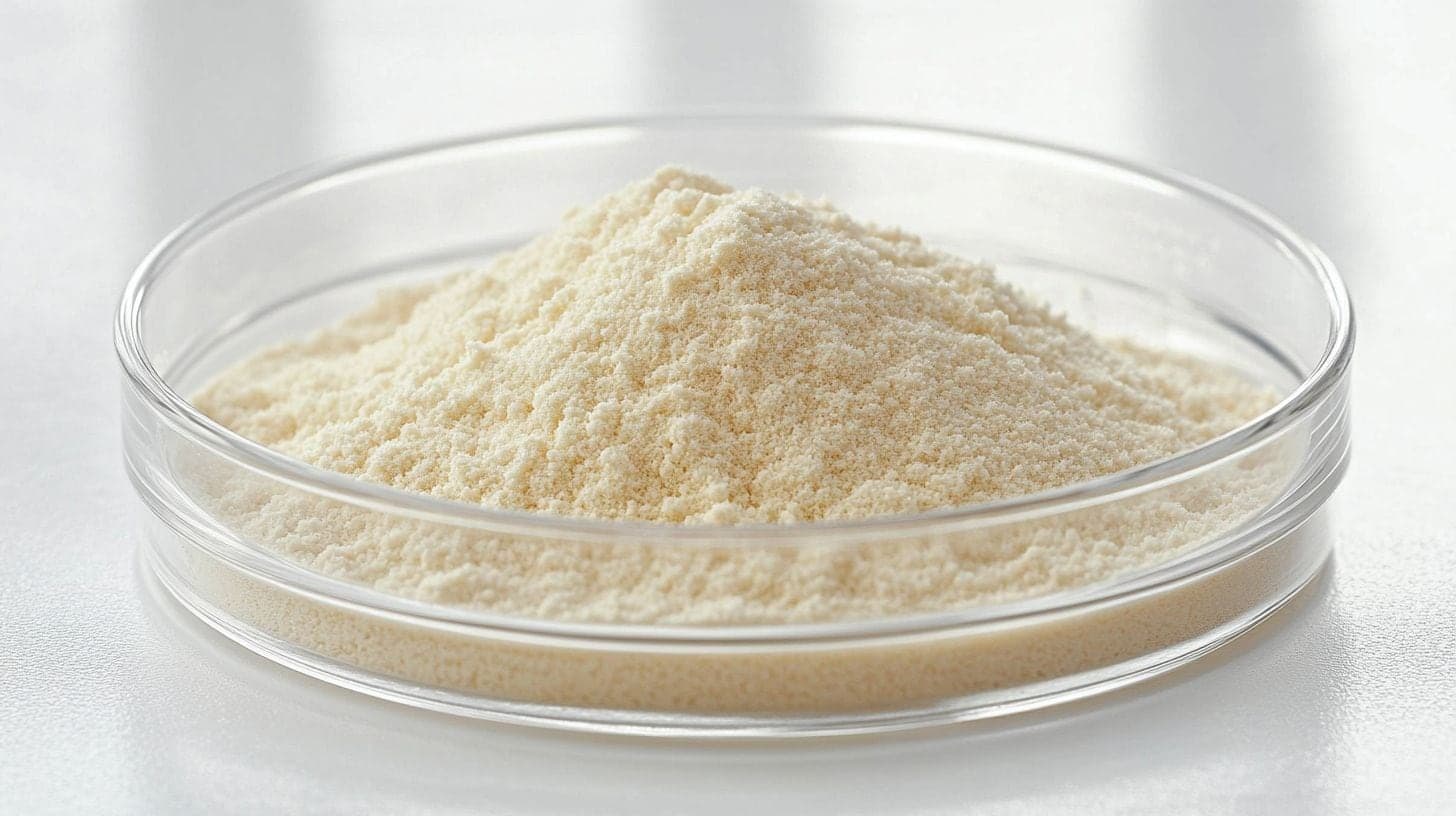
 Illustrative image only. Actual product may vary.
Legionella CYE Agar Base
Also known as:CYE / BCYE · CYE Agar Base · Charcoal Yeast Extract Agar Base · Legionella Agar Base · BCYE Agar Base
For the isolation and enumeration of Legionella species from water and environmental samples, following the addition of BCYE growth supplement and, where required, a selective supplement.
- Category
- Dehydrated Culture Media
- Dissolve per litre
- 25 g
- Pack sizes
- 500 g · 5 kg · 25 kg
Data updated:2026-11-06
Overview
Legionella CYE Agar Base (charcoal yeast extract agar, CYE/BCYE) is the base for isolating Legionella pneumophila: yeast extract supplies growth factors, activated charcoal adsorbs the peroxides and free radicals in the medium that are toxic to Legionella, and the ACES buffer, L-cysteine and ferric pyrophosphate supplement added before use completes BCYE, with antibiotics added when selectivity is needed. Specified by ISO 11731 for cooling towers, hot water systems and hospital water. A base formulation; add supplements per the method.
Principle
Charcoal Yeast Extract Agar was developed by Feeley and co-workers as a primary isolation medium for Legionella pneumophila, and was later improved by the addition of ACES buffer and α-ketoglutarate.¹ʼ² Yeast extract supplies nitrogen, vitamins, and growth factors. Activated charcoal detoxifies the medium by adsorbing inhibitory compounds and decomposing hydrogen peroxide and other toxic oxygen derivatives formed during preparation and incubation. The growth supplement provides the specific requirements of Legionella: L-cysteine, an essential amino acid for the genus, and ferric pyrophosphate as a soluble iron source. ACES buffer maintains the narrow pH range on which growth depends, and α-ketoglutarate stimulates growth. For samples with a high background flora, selective agents such as glycine, vancomycin, polymyxin B, and cycloheximide are added. Legionella colonies are grey-white and show a characteristic ground-glass appearance under a stereomicroscope.³
Directions
Suspend 25 g of powder in 1 L of purified water. Heat with continuous stirring and bring to the boil for 1 minute. Sterilize by autoclaving at 121°C for 15 minutes. Cool to 45-50°C and aseptically add the reconstituted BCYE growth supplement and, for contaminated samples, the selective supplement. Mix well and pour into sterile Petri plates, swirling continuously to keep the charcoal in suspension. Test the finished medium for performance using stable, standard control cultures.
Product highlights
- Manufactured to the standard formulation, 25 g per litre
- Available in 500 g / 5 kg / 25 kg, from laboratory to industrial scale
- COA, specification sheet, and technical data sheet available; samples on request
- Manufactured in Taiwan with reliable supply
Frequently asked questions
01How much powder per litre?
Use 25 g per litre of deionised water; preparation and sterilisation conditions are given on the specification sheet.
02Which organisms is it suitable for?
Pathogens, Gram-negative, Aerobes, Environmental monitoring. See the cultural response table and the specification sheet.
03How is this product prepared?
Suspend 25 g of powder in 1 L of purified water. Heat with continuous stirring and bring to the boil for 1 minute. Sterilize by autoclaving at 121°C for 15 minutes. Cool to 45-50°C and aseptically add the reconstituted BCYE growth supplement and, for contaminated samples, the selective supplement. Mix well and pour into sterile Petri plates, swirling continuously to keep the charcoal in suspension. Test the finished medium for performance using stable, standard control cultures.
04How do I request a bulk quotation, and can you provide a COA?
Yes. This product is available in 500 g, 5 kg, 25 kg. Tell us your application and volume when requesting a quotation; we reply within one working day and can supply the COA, specification sheet, and technical data sheet.
References
- 1. Feeley J. C., Gibson R. J., Gorman G. W., Langford N. C., Rasheed J. K., Mackel D. C. and Baine W. B., 1979. Charcoal-yeast extract agar: primary isolation medium for Legionella pneumophila. J. Clin. Microbiol., 10:437-441.
- 2. Edelstein P. H., 1981. Improved semiselective medium for isolation of Legionella pneumophila from contaminated clinical and environmental specimens. J. Clin. Microbiol., 14:298-303.
- 3. ISO 11731, Water quality — Enumeration of Legionella, International Organization for Standardization, Geneva.