
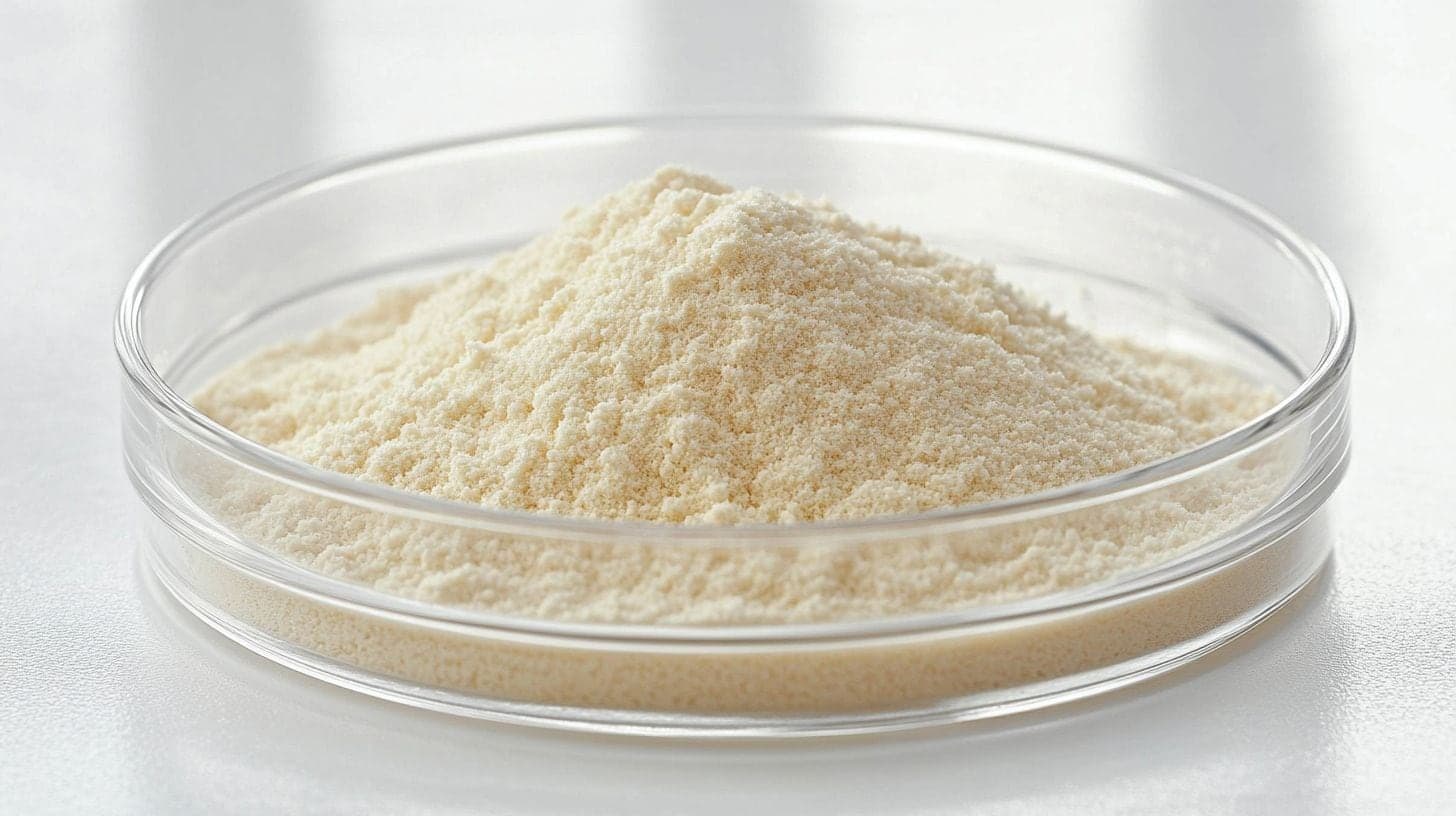
Campylobacter Agar Base
Also known as:Skirrow Campylobacter Agar Base · Campylobacter Selective Agar Base · Blood Agar Base No. 2 (Campylobacter)
For the selective isolation of thermophilic Campylobacter species from food, water, and clinical specimens, following the addition of lysed blood and a selective supplement.
- Category
- Dehydrated Culture Media
- Dissolve per litre
- 39.5 g
- Pack sizes
- 500 g · 5 kg · 25 kg
- Certifications
- ISO 22000
Data updated:2026-11-06
Overview
Campylobacter Agar Base is the base for selective isolation plates for Campylobacter jejuni and C. coli: a Columbia-type nutrient base supports these fastidious organisms, and blood plus an antibiotic supplement (Skirrow, Butzler or Preston formulations) added before use suppress competing flora, with incubation at 42 °C under microaerobic conditions. Used for poultry meat, raw milk and poultry house environments, and applicable to the isolation steps of ISO 10272 and the FDA BAM. A base formulation; add blood and antibiotics per the method.
Principle
The basal medium supports the growth of Campylobacter species when supplemented with blood and antimicrobial agents, as first applied by Skirrow for the isolation of Campylobacter from faeces.¹ Peptone, Beef extract, and yeast extract supply nitrogen, amino acids, vitamins, and growth factors, and sodium chloride maintains the osmotic equilibrium. Lysed blood provides additional nutrients and quenches toxic oxygen derivatives that inhibit these microaerophilic organisms. Selectivity is provided by the antimicrobial supplement, such as the vancomycin, polymyxin B, and trimethoprim combination of Skirrow, or the polymyxin B, rifampicin, trimethoprim, and cycloheximide combination of the Preston formulation.² Incubation under microaerobic conditions at 41.5°C favours thermophilic Campylobacter while suppressing much of the competing flora. Colonies are typically grey, flat, moist, and spreading, or small, round, and convex, sometimes with a metallic sheen.
Directions
Suspend 39.5 g of powder in 1 L of purified water. Heat with continuous stirring and bring to the boil for 1 minute. Sterilize by autoclaving at 121°C for 15 minutes. Cool to 45-50°C and aseptically add 50-70 mL of lysed horse blood and the reconstituted selective supplement. Mix well and pour into sterile Petri plates. Test the finished medium for performance using stable, standard control cultures.
Cultural response
| Test organism | ATCC | Growth |
|---|---|---|
| Campylobacter jejuni | 33291 | good-luxuriant |
| Campylobacter coli | 33559 | good-luxuriant |
| Escherichia coli | 25922 | inhibited |
| Staphylococcus aureus | 25923 | inhibited |
Product highlights
- Food-grade raw materials, produced in an ISO 22000 certified facility
- Manufactured to the standard formulation, 39.5 g per litre
- Performance verified against standard control strains before release (Campylobacter jejuni, Campylobacter coli, Escherichia coli, Staphylococcus aureus)
- Available in 500 g / 5 kg / 25 kg, from laboratory to industrial scale
- COA, specification sheet, and technical data sheet available; samples on request
- Manufactured in Taiwan with reliable supply
Food grade versus laboratory grade
Most culture media suppliers use laboratory-grade raw materials, which are held to lower standards for heavy metal residues, microbial contamination control, and traceability. That is adequate for pure research but not for applications with stricter raw-material requirements. STBIO manufactures with food-grade raw materials throughout, in a facility certified to ISO 22000 food safety management.
- Food microbiology laboratories working to ISO 17025 or equivalent requirements
- Biotech manufacturers exporting fermentation products and needing full raw-material traceability
- Organisations with ESG or compliance audit requirements across their supply chain
- Companies sourcing both Halal and non-Halal products who need one consistent material grade
Frequently asked questions
01How much powder per litre?
Use 39.5 g per litre of deionised water; preparation and sterilisation conditions are given on the specification sheet.
02Which organisms is it suitable for?
Pathogens, Gram-negative, Campylobacter, Campylobacter jejuni, Campylobacter coli, Escherichia coli, Staphylococcus aureus. See the cultural response table and the specification sheet.
03Can it be used for food-grade applications?
Yes. It is made from food-grade raw materials in an ISO 22000 certified facility and is suitable for culturing starters for fermented products that are consumed directly.
04How is this product prepared?
Suspend 39.5 g of powder in 1 L of purified water. Heat with continuous stirring and bring to the boil for 1 minute. Sterilize by autoclaving at 121°C for 15 minutes. Cool to 45-50°C and aseptically add 50-70 mL of lysed horse blood and the reconstituted selective supplement. Mix well and pour into sterile Petri plates. Test the finished medium for performance using stable, standard control cultures.
05How do I request a bulk quotation, and can you provide a COA?
Yes. This product is available in 500 g, 5 kg, 25 kg. Tell us your application and volume when requesting a quotation; we reply within one working day and can supply the COA, specification sheet, and technical data sheet.
References
- 1. Skirrow M. B., 1977. Campylobacter enteritis: a "new" disease. Br. Med. J., 2:9-11.
- 2. Bolton F. J. and Robertson L., 1982. A selective medium for isolating Campylobacter jejuni/coli. J. Clin. Pathol., 35:462-467.