
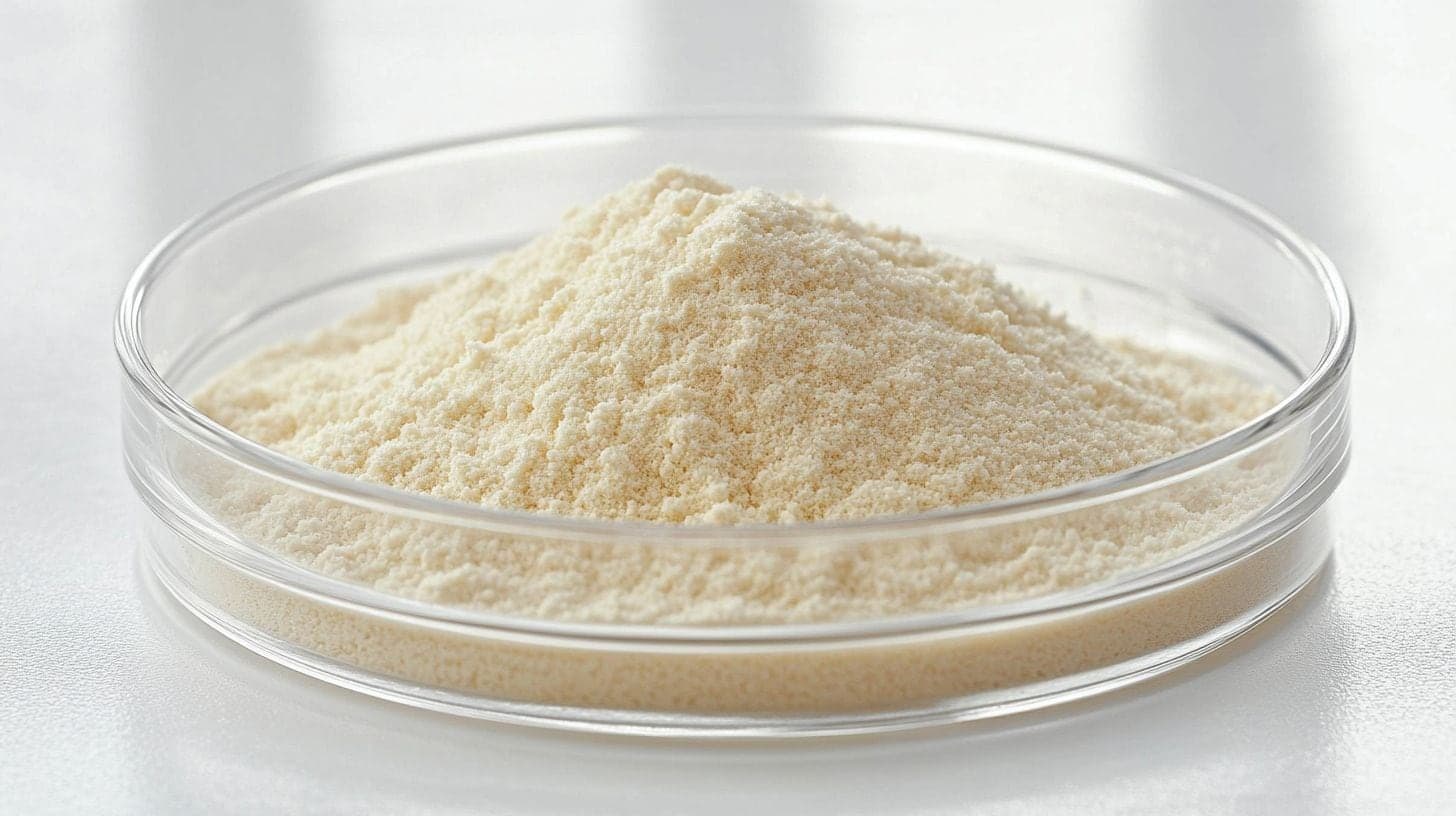
 Illustrative image only. Actual product may vary.
YGC Agar Base
Also known as:YGC · Yeast Extract Glucose Chloramphenicol Agar Base · Yeast Extract Dextrose Chloramphenicol Agar Base · YGC Medium Base
For the enumeration of yeasts and moulds in milk and dairy products, following the addition of chloramphenicol.
- Category
- Dehydrated Culture Media
- Dissolve per litre
- 40 g
- Pack sizes
- 500 g · 5 kg · 25 kg
Data updated:2026-11-06
Overview
YGC Agar Base (yeast extract glucose chloramphenicol agar) is the standard count plate for yeasts and moulds in dairy products: yeast extract and glucose support fungal growth, chloramphenicol added before use suppresses bacteria, and plates are counted after 5 days at 25 °C. Specified by ISO 6611 / IDF 94 for milk and milk products and used in quality control of yogurt, cultured milk drinks and cheese. A base formulation; add chloramphenicol per the method.
Principle
YGC Agar is specified for the colony count of yeasts and moulds in milk and milk products.¹ Yeast extract supplies B-group vitamins, nitrogen, and growth factors, and glucose provides the carbon and energy source. Chloramphenicol inhibits a broad range of bacteria; because it is heat-stable, it can be added before sterilization, which simplifies preparation and ensures uniform distribution in the medium. The slightly acidic to near-neutral pH avoids acid injury and supports the recovery of stressed yeasts and moulds from dairy products.²
Directions
Suspend 40 g of powder in 1 L of purified water. Heat with continuous stirring and bring to the boil for 1 minute. Add 100 mg of chloramphenicol. Sterilize by autoclaving at 121°C for 15 minutes. Avoid overheating. Cool to 45-50°C. Mix well and pour into sterile Petri plates. Test the finished medium for performance using stable, standard control cultures.
Product highlights
- Manufactured to the standard formulation, 40 g per litre
- Available in 500 g / 5 kg / 25 kg, from laboratory to industrial scale
- COA, specification sheet, and technical data sheet available; samples on request
- Manufactured in Taiwan with reliable supply
Frequently asked questions
01How much powder per litre?
Use 40 g per litre of deionised water; preparation and sterilisation conditions are given on the specification sheet.
02Which organisms is it suitable for?
Yeast, Mold, Candida, Aspergillus, Penicillium. See the cultural response table and the specification sheet.
03How is this product prepared?
Suspend 40 g of powder in 1 L of purified water. Heat with continuous stirring and bring to the boil for 1 minute. Add 100 mg of chloramphenicol. Sterilize by autoclaving at 121°C for 15 minutes. Avoid overheating. Cool to 45-50°C. Mix well and pour into sterile Petri plates. Test the finished medium for performance using stable, standard control cultures.
04How do I request a bulk quotation, and can you provide a COA?
Yes. This product is available in 500 g, 5 kg, 25 kg. Tell us your application and volume when requesting a quotation; we reply within one working day and can supply the COA, specification sheet, and technical data sheet.
References
- 1. ISO 6611 | IDF 94, Milk and milk products — Enumeration of colony-forming units of yeasts and/or moulds — Colony-count technique at 25°C, International Organization for Standardization, Geneva.
- 2. Atlas R. M., 2010. Handbook of Microbiological Media, 4th Ed., CRC Press, Boca Raton.