
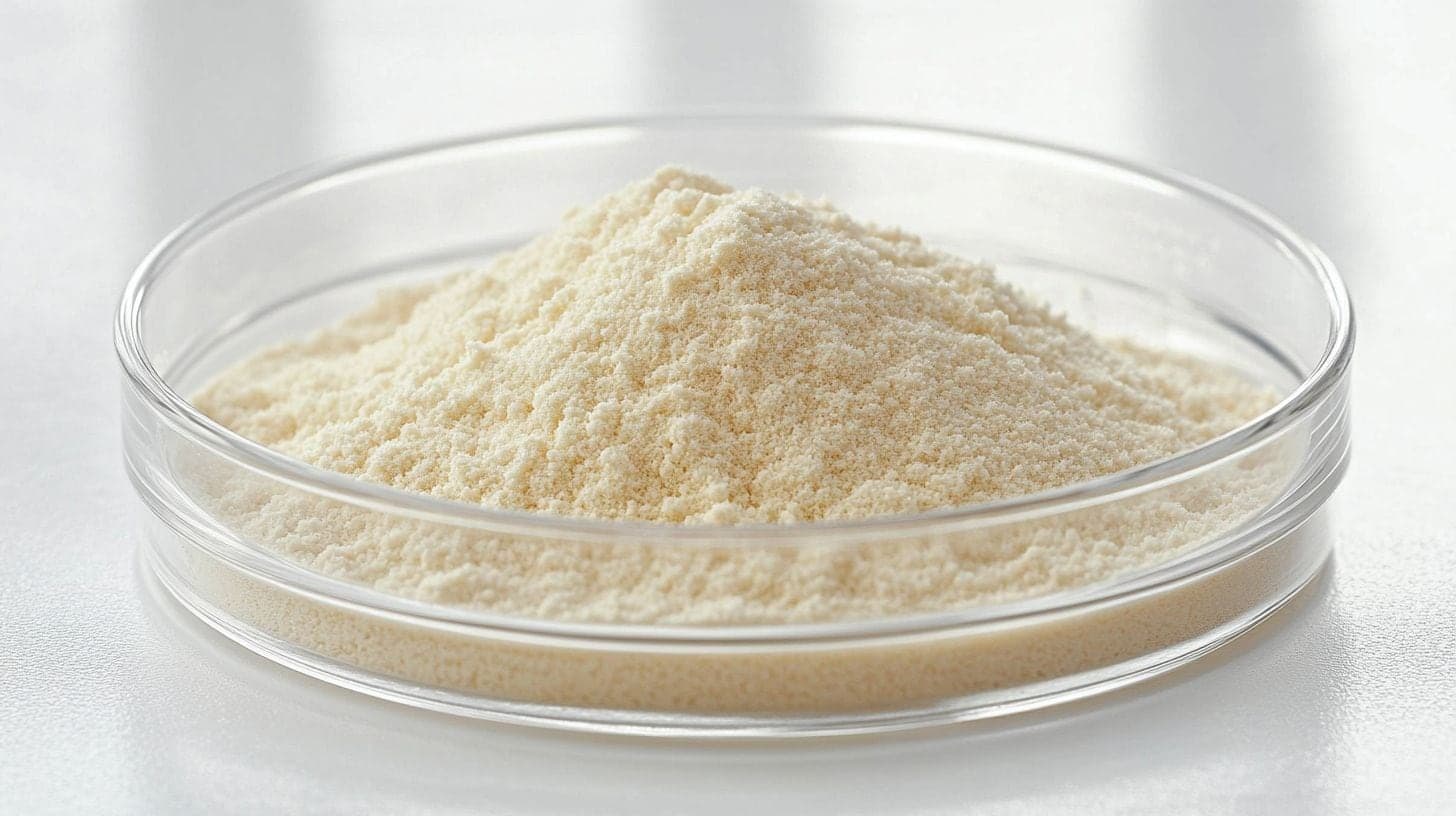
 Illustrative image only. Actual product may vary.
Rose-Bengal Chloramphenicol Agar Base
Also known as:RBC · RBC Agar Base · Rose Bengal Agar Base · Rose Bengal Chloramphenicol Agar
For the selective isolation and enumeration of yeasts and moulds in food and environmental samples, following the addition of chloramphenicol.
- Category
- Dehydrated Culture Media
- Dissolve per litre
- 32.05 g
- Pack sizes
- 500 g · 5 kg · 25 kg
Data updated:2026-11-06
Overview
Rose-Bengal Chloramphenicol Agar Base (RBC) is a selective count plate for yeasts and moulds in food and feed: rose bengal suppresses bacteria and restrains the spread of fast-growing moulds so colonies stay small and countable, and the chloramphenicol supplement added before use suppresses bacteria further. Common in ISO 21527-type methods and in feed and dairy testing. The formulation contains no dichloran and so differs from the DRBC and DG18 of the Taiwan FDA yeast and mould method; prepare those as the method directs. Contains a light-sensitive dye, so store prepared plates in the dark.
Principle
Rose Bengal was introduced into fungal media by Smith and Dawson, who showed that it restricts the size and spread of mould colonies and partially suppresses bacterial growth.¹ Mycological peptone supplies nitrogen, amino acids, and growth factors, glucose provides the carbon and energy source, potassium dihydrogen phosphate buffers the medium, and magnesium sulphate supplies essential ions. Rose Bengal limits the spreading of rapidly growing moulds, so that individual colonies remain small and countable, and it is taken up by fungal colonies, which develop a pink colouration that aids counting. Because rose bengal alone does not fully inhibit bacteria at the near-neutral pH of the medium, chloramphenicol is added as the principal antibacterial agent. The near-neutral pH favours the recovery of stressed yeasts and moulds compared with acidified media.²
Directions
Suspend 32.05 g of powder in 1 L of purified water. Heat with continuous stirring and bring to the boil for 1 minute. Add 100 mg of chloramphenicol. Sterilize by autoclaving at 121°C for 15 minutes. Cool to 45-50°C. Mix well and pour into sterile Petri plates, protecting the medium from light. Test the finished medium for performance using stable, standard control cultures.
Cultural response
| Test organism | ATCC | Growth |
|---|---|---|
| Candida albicans | 10231 | good-luxuriant |
| Saccharomyces cerevisiae | 9763 | good-luxuriant |
| Aspergillus brasiliensis | 16404 | good-luxuriant |
| Escherichia coli | 25922 | inhibited |
| Bacillus subtilis | 6633 | inhibited |
Product highlights
- Manufactured to the standard formulation, 32.05 g per litre
- Performance verified against standard control strains before release (Candida albicans, Saccharomyces cerevisiae, Aspergillus brasiliensis, Escherichia coli, Bacillus subtilis)
- Available in 500 g / 5 kg / 25 kg, from laboratory to industrial scale
- COA, specification sheet, and technical data sheet available; samples on request
- Manufactured in Taiwan with reliable supply
Frequently asked questions
01How much powder per litre?
Use 32.05 g per litre of deionised water; preparation and sterilisation conditions are given on the specification sheet.
02Which organisms is it suitable for?
Yeast, Mold, Candida, Aspergillus, Penicillium, Candida albicans, Saccharomyces cerevisiae, Aspergillus brasiliensis, Escherichia coli, Bacillus subtilis. See the cultural response table and the specification sheet.
03How is this product prepared?
Suspend 32.05 g of powder in 1 L of purified water. Heat with continuous stirring and bring to the boil for 1 minute. Add 100 mg of chloramphenicol. Sterilize by autoclaving at 121°C for 15 minutes. Cool to 45-50°C. Mix well and pour into sterile Petri plates, protecting the medium from light. Test the finished medium for performance using stable, standard control cultures.
04How do I request a bulk quotation, and can you provide a COA?
Yes. This product is available in 500 g, 5 kg, 25 kg. Tell us your application and volume when requesting a quotation; we reply within one working day and can supply the COA, specification sheet, and technical data sheet.
Further reading
- FDA BAM Culture Media Cross-Reference: Which Media Each BAM Chapter Uses and the STBIO EquivalentAerobic plate count, coliforms and E. coli, Salmonella, Listeria monocytogenes, Staphylococcus aureus, Bacillus cereus, Vibrio, Clostridium perfringens, yeasts and moulds and Cronobacter: the media named in each FDA Bacteriological Analytical Manual chapter, matched to Taiwan-made dehydrated media for US laboratories qualifying a second source.
- Which Culture Media Do Taiwan FDA Food Microbiology Methods Specify? Cross-Reference for 21 Announced MethodsAerobic plate count, coliforms, E. coli, Enterobacteriaceae, Salmonella, Staphylococcus aureus, Listeria monocytogenes, lactic acid bacteria, yeasts and moulds, Bacillus cereus, Vibrio parahaemolyticus, Clostridium perfringens and Cronobacter: the media named in each Taiwan FDA (TFDA) announced method, matched to Taiwan-made products.
References
- 1. Smith N. R. and Dawson V. T., 1944. The bacteriostatic action of rose bengal in media used for plate counts of soil fungi. Soil Sci., 58:467-471.
- 2. Jarvis B., 1973. Comparison of an improved rose bengal-chlortetracycline agar with other media for the selective isolation and enumeration of moulds and yeasts in foods. J. Appl. Bacteriol., 36:723-727.