
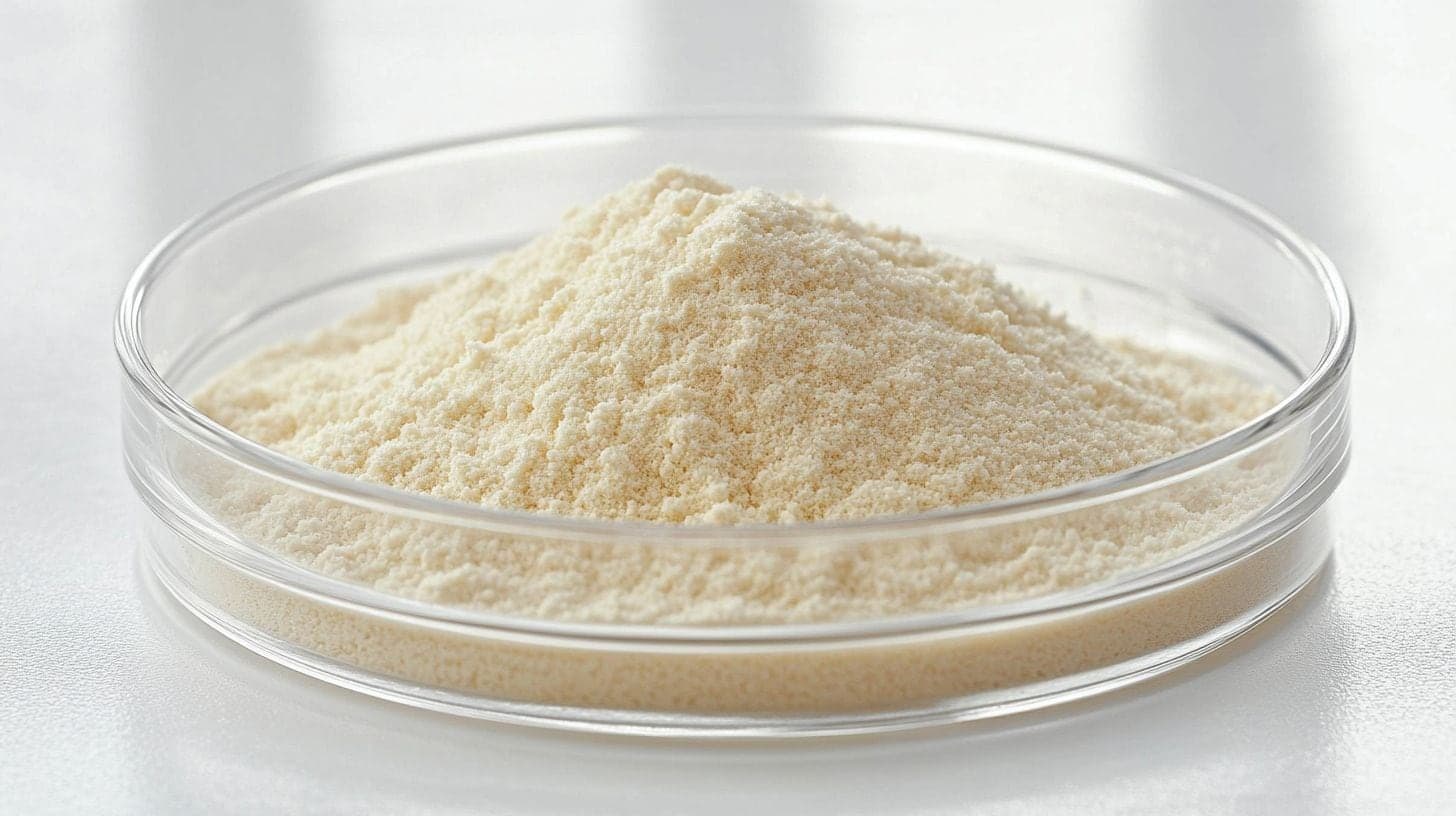
DG18 Agar Base
Also known as:Dichloran Glycerol Agar Base · Dichloran 18% Glycerol Agar Base · DG-18 Agar Base · Dichloran Glycerol (DG18) Selective Medium Base
For the enumeration of xerophilic yeasts and moulds in food and animal feed with a water activity of 0.95 or below, following the addition of glycerol and chloramphenicol.
- Category
- Dehydrated Culture Media
- Dissolve per litre
- 31.5 g
- Pack sizes
- 500 g · 5 kg · 25 kg
- Certifications
- ISO 22000
Data updated:2026-11-25
Overview
Principle
DG18 Agar was developed by Hocking and Pitt for the enumeration of xerophilic fungi from low-moisture foods.¹ Peptone supplies nitrogen, amino acids, and growth factors, glucose provides the carbon and energy source, potassium dihydrogen phosphate buffers the medium, and magnesium sulphate supplies essential ions. Glycerol at 18% reduces the water activity of the medium to approximately 0.955, favouring the growth of xerophilic and xerotolerant fungi that are characteristic of dried foods. Dichloran restricts the spreading of rapidly growing moulds such as Mucor and Rhizopus and limits colony diameter, so that individual colonies can be counted. Chloramphenicol inhibits bacterial growth, and the acidic pH further favours fungi. The medium is specified for the colony count of yeasts and moulds in products with a water activity of 0.95 or below.²
Directions
Suspend 31.502 g of powder in 1 L of purified water and add 220 g of glycerol. Heat with continuous stirring and bring to the boil for 1 minute. Add 100 mg of chloramphenicol. Sterilize by autoclaving at 121°C for 15 minutes. Cool to 45-50°C. Mix well and pour into sterile Petri plates. Test the finished medium for performance using stable, standard control cultures.
Cultural response
| Test organism | ATCC | Growth |
|---|---|---|
| Aspergillus brasiliensis | 16404 | good-luxuriant |
| Saccharomyces cerevisiae | 9763 | good-luxuriant |
| Wallemia sebi | — | good |
| Escherichia coli | 25922 | inhibited |
| Bacillus subtilis | 6633 | inhibited |
Product highlights
- Food-grade raw materials, produced in an ISO 22000 certified facility
- Manufactured to the standard formulation, 31.5 g per litre
- Performance verified against standard control strains before release (Aspergillus brasiliensis, Saccharomyces cerevisiae, Wallemia sebi, Escherichia coli, Bacillus subtilis)
- Available in 500 g / 5 kg / 25 kg, from laboratory to industrial scale
- COA, specification sheet, and technical data sheet available; samples on request
- Manufactured in Taiwan with reliable supply
Food grade versus laboratory grade
Most culture media suppliers use laboratory-grade raw materials, which are held to lower standards for heavy metal residues, microbial contamination control, and traceability. That is adequate for pure research but not for applications with stricter raw-material requirements. STBIO manufactures with food-grade raw materials throughout, in a facility certified to ISO 22000 food safety management.
- Food microbiology laboratories working to ISO 17025 or equivalent requirements
- Biotech manufacturers exporting fermentation products and needing full raw-material traceability
- Organisations with ESG or compliance audit requirements across their supply chain
- Companies sourcing both Halal and non-Halal products who need one consistent material grade
Frequently asked questions
01How much powder per litre?
Use 31.5 g per litre of deionised water; preparation and sterilisation conditions are given on the specification sheet.
02Which organisms is it suitable for?
Yeast, Mold, Aspergillus, Penicillium, Aspergillus brasiliensis, Saccharomyces cerevisiae, Wallemia sebi, Escherichia coli, Bacillus subtilis. See the cultural response table and the specification sheet.
03Can it be used for food-grade applications?
Yes. It is made from food-grade raw materials in an ISO 22000 certified facility and is suitable for culturing starters for fermented products that are consumed directly.
04How is this product prepared?
Suspend 31.502 g of powder in 1 L of purified water and add 220 g of glycerol. Heat with continuous stirring and bring to the boil for 1 minute. Add 100 mg of chloramphenicol. Sterilize by autoclaving at 121°C for 15 minutes. Cool to 45-50°C. Mix well and pour into sterile Petri plates. Test the finished medium for performance using stable, standard control cultures.
05How do I request a bulk quotation, and can you provide a COA?
Yes. This product is available in 500 g, 5 kg, 25 kg. Tell us your application and volume when requesting a quotation; we reply within one working day and can supply the COA, specification sheet, and technical data sheet.
References
- 1. Hocking A. D. and Pitt J. I., 1980. Dichloran-glycerol medium for enumeration of xerophilic fungi from low-moisture foods. Appl. Environ. Microbiol., 39:488-492.
- 2. ISO 21527-2, Microbiology of food and animal feeding stuffs — Horizontal method for the enumeration of yeasts and moulds — Part 2: Colony count technique in products with water activity less than or equal to 0,95, International Organization for Standardization, Geneva.