
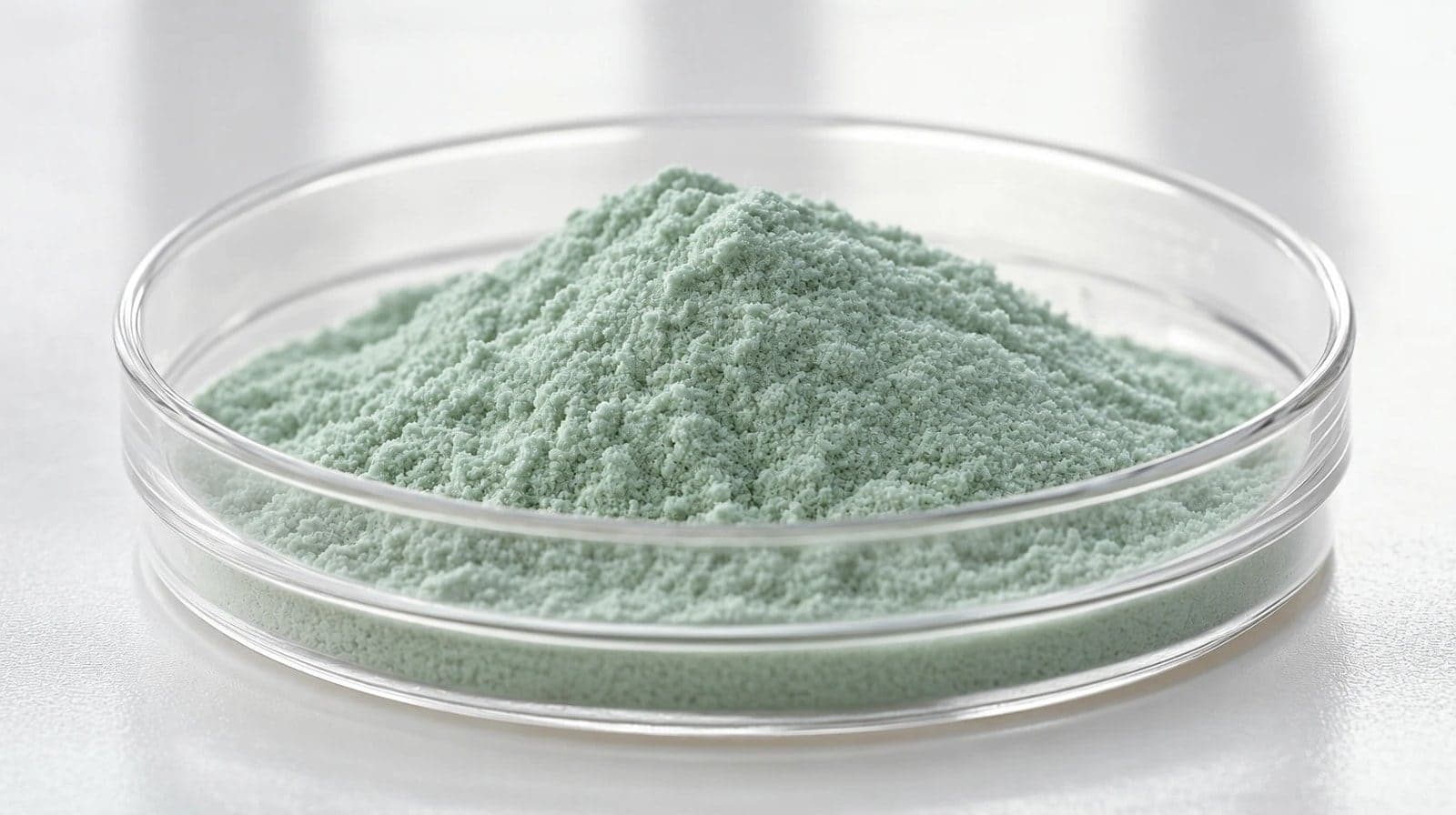
 Illustrative image only. Actual product may vary.
Hektoen Enteric Agar
Also known as:HE
For the selective isolation and differentiation of Gram-negative enteric pathogens, particularly Salmonella and Shigella species, from food, water, and clinical specimens.
- Category
- Dehydrated Culture Media
- Dissolve per litre
- 75.66 g
- Pack sizes
- 500 g · 5 kg · 25 kg
Data updated:2026-11-06
Overview
Hektoen Enteric Agar (HE) is a selective isolation plate for Salmonella and Shigella: bile salts suppress Gram-positive and most non-enteric bacteria, while lactose, sucrose and salicin with bromothymol blue and acid fuchsin let non-fermenting Salmonella grow as blue-green colonies; thiosulfate and ferric ammonium citrate give hydrogen sulfide producers a black centre, and Shigella appear green without one. The Taiwan FDA Salmonella method and the FDA BAM both list it as one of three isolation plates, used alongside XLD and BS to raise recovery.
Principle
Hektoen Enteric Agar was developed by King and Metzger at the Hektoen Institute to improve the recovery of Shigella and Salmonella from enteric specimens.¹ Proteose peptone and yeast extract supply nitrogen, vitamins, and growth factors. The relatively high peptone and carbohydrate content counteracts the inhibitory effect of the bile salts and indicators, allowing better recovery of Shigella, which is suppressed on more inhibitory media. Bile salts inhibit Gram-positive organisms, and sodium chloride maintains the osmotic equilibrium. Lactose, sucrose, and salicin are the fermentable carbohydrates. Organisms that ferment one or more of these sugars produce acid, which reacts with the bromothymol blue and acid fuchsin indicator system to give orange to salmon-pink colonies. Organisms that ferment none of them, including Salmonella and Shigella, form blue-green colonies. Sodium thiosulphate serves as a sulphur source, and ferric ammonium citrate detects hydrogen sulphide, so that H2S-producing organisms such as most Salmonella develop black centres.²
Directions
Suspend 75.665 g of powder in 1 L of purified water. Heat with continuous stirring and bring to the boil for 1 minute to dissolve completely. DO NOT AUTOCLAVE. Cool to 45-50°C. Mix well and pour into sterile Petri plates. Test the finished medium for performance using stable, standard control cultures.
Product highlights
- Manufactured to the standard formulation, 75.66 g per litre
- Available in 500 g / 5 kg / 25 kg, from laboratory to industrial scale
- COA, specification sheet, and technical data sheet available; samples on request
- Manufactured in Taiwan with reliable supply
FDA BAM methods
This product corresponds to a medium used in the chapters of the US FDA Bacteriological Analytical Manual (BAM), the reference methods for FDA regulatory testing. Follow the current online edition of each chapter.
- FDA BAM Chapter 5: SalmonellaBAM Chapter 5Isolation plateNamed in the method as:Hektoen enteric (HE) agar
BAM specifies methods and media formulations; it does not certify brands. Add supplements as the chapter requires, and verify media against reference strains under your quality system.
Frequently asked questions
01Does this medium meet FDA BAM methods?
BAM specifies methods and formulations, not brands. This product corresponds to a medium used in: FDA BAM Chapter 5: Salmonella(BAM Chapter 5): Isolation plate. It is manufactured to the standard formulation and ships with a COA per batch; add supplements as the chapter requires and follow the current online edition.
02How much powder per litre?
Use 75.66 g per litre of deionised water; preparation and sterilisation conditions are given on the specification sheet.
03Which organisms is it suitable for?
Enterobacteriaceae, Gram-negative, Pathogens, Salmonella, Shigella. See the cultural response table and the specification sheet.
04How is this product prepared?
Suspend 75.665 g of powder in 1 L of purified water. Heat with continuous stirring and bring to the boil for 1 minute to dissolve completely. DO NOT AUTOCLAVE. Cool to 45-50°C. Mix well and pour into sterile Petri plates. Test the finished medium for performance using stable, standard control cultures.
05How do I request a bulk quotation, and can you provide a COA?
Yes. This product is available in 500 g, 5 kg, 25 kg. Tell us your application and volume when requesting a quotation; we reply within one working day and can supply the COA, specification sheet, and technical data sheet.
Further reading
- FDA BAM Culture Media Cross-Reference: Which Media Each BAM Chapter Uses and the STBIO EquivalentAerobic plate count, coliforms and E. coli, Salmonella, Listeria monocytogenes, Staphylococcus aureus, Bacillus cereus, Vibrio, Clostridium perfringens, yeasts and moulds and Cronobacter: the media named in each FDA Bacteriological Analytical Manual chapter, matched to Taiwan-made dehydrated media for US laboratories qualifying a second source.
- Which Culture Media Do Taiwan FDA Food Microbiology Methods Specify? Cross-Reference for 21 Announced MethodsAerobic plate count, coliforms, E. coli, Enterobacteriaceae, Salmonella, Staphylococcus aureus, Listeria monocytogenes, lactic acid bacteria, yeasts and moulds, Bacillus cereus, Vibrio parahaemolyticus, Clostridium perfringens and Cronobacter: the media named in each Taiwan FDA (TFDA) announced method, matched to Taiwan-made products.
References
- 1. King S. and Metzger W. I., 1968. A new plating medium for the isolation of enteric pathogens. I. Hektoen enteric agar. Appl. Microbiol., 16:577-578.
- 2. U.S. Food and Drug Administration, Bacteriological Analytical Manual, Chapter 5, Salmonella.