
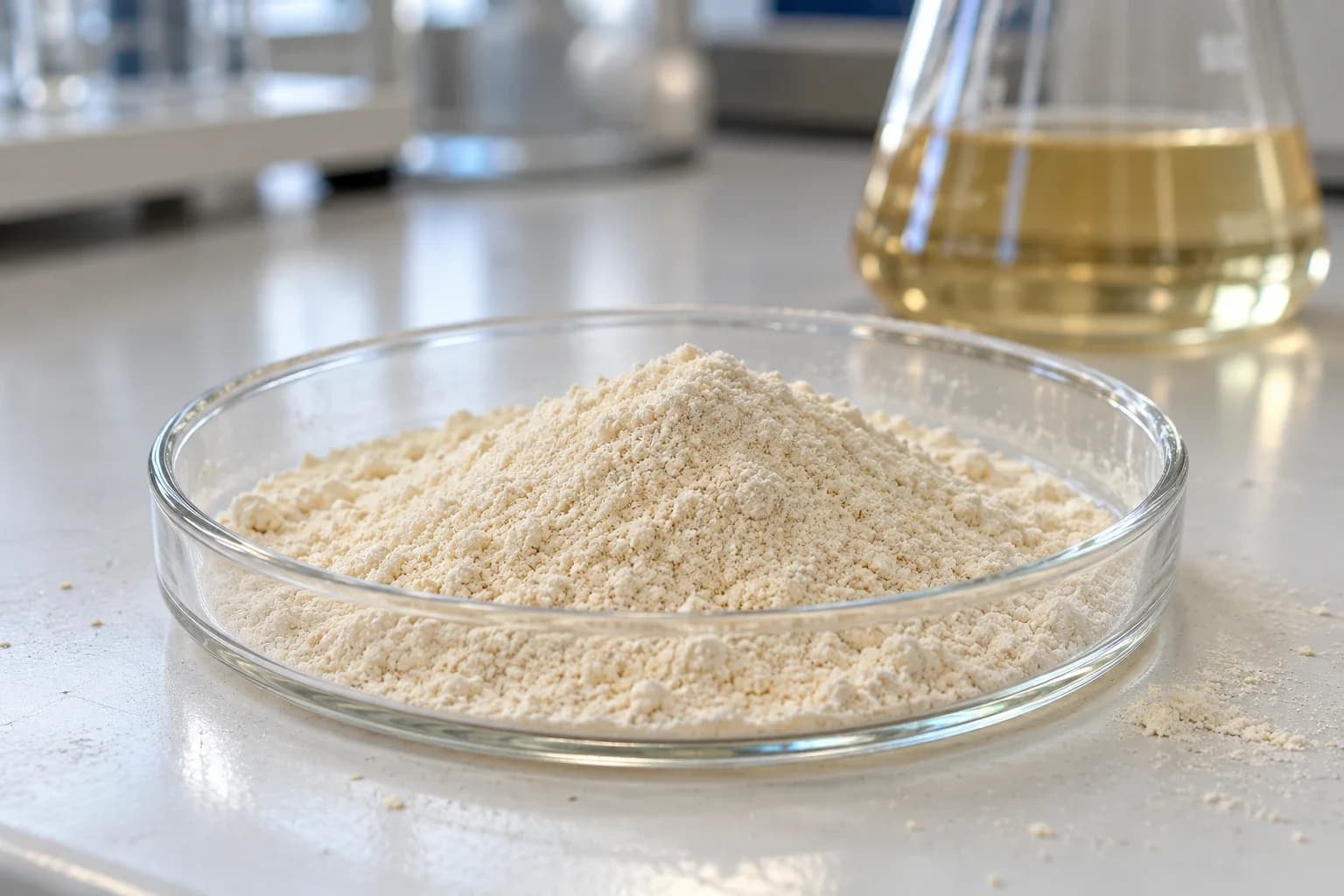
Buffered Sodium Chloride-Peptone Solution pH 7.0
Also known as:Buffered NaCl-Peptone Solution pH 7.0 · Phosphate Buffered Sodium Chloride Peptone Solution pH 7.0 · Peptone Sodium Chloride Buffer pH 7.0 · PSCB · BNPS · BSCP · Buffered Sodium Chloride Peptone Solution · Buffered NaCl-Peptone Solution · Phosphate Buffered Sodium Chloride Peptone Solution
For the preparation of samples and dilutions in the microbiological examination of non-sterile products, in accordance with the harmonized pharmacopoeias.
- Category
- Dehydrated Culture Media
- Dissolve per litre
- 16.1 g
- Pack sizes
- 500 g · 5 kg · 25 kg
- Certifications
- Halal
Data updated:2026-11-06
- Allergens
- Milk
Overview
Buffered Sodium Chloride-Peptone Solution pH 7.0 is the diluent specified for pharmacopoeial microbial limit tests: phosphate buffer holds pH 7.0, sodium chloride makes it isotonic and a small amount of peptone protects the cells. It is used under USP <61>, EP 2.6.12 and the Taiwan Pharmacopoeia for diluting non-sterile product samples and preparing neutraliser solutions (with polysorbate 80 and lecithin added as the product requires). A staple for microbial limit testing in pharmaceutical, cosmetic and dietary supplement plants. Food-grade raw materials, Halal certified.
Principle
Buffered Sodium Chloride-Peptone Solution pH 7.0 is specified in the harmonized pharmacopoeias as a diluent for the preparation of test samples in microbial enumeration tests and tests for specified microorganisms.¹ʼ² The phosphate buffer maintains the pH near neutrality when acidic or alkaline products are suspended, and sodium chloride provides an osmotic environment that protects microbial cells during sample preparation. The low concentration of peptone protects cells against osmotic shock and starvation, improving the recovery of microorganisms without supporting significant multiplication during the short holding period before plating. For products with antimicrobial activity, suitable neutralising agents may be added, and surface-active agents such as polysorbate 80 assist in dispersing poorly soluble or fatty samples.¹
Directions
Suspend 16.1 g of powder in 1 L of purified water. Heat with continuous stirring and bring to the boil for 1 minute. Where required, add a surface-active agent such as polysorbate 80 to aid the dispersion of the sample. Dispense into suitable containers. Sterilize by autoclaving at 121°C for 15 minutes. Test the finished medium for performance using stable, standard control cultures.
Cultural response
| Test organism | ATCC | Growth |
|---|---|---|
| Staphylococcus aureus | 6538 | satisfactory |
| Pseudomonas aeruginosa | 9027 | satisfactory |
| Bacillus subtilis | 6633 | satisfactory |
| Candida albicans | 10231 | satisfactory |
| Aspergillus brasiliensis | 16404 | satisfactory |
Product highlights
- Halal certified, suitable for the Malaysian, Indonesian, and Middle Eastern markets
- Manufactured to the standard formulation, 16.1 g per litre
- Performance verified against standard control strains before release (Staphylococcus aureus, Pseudomonas aeruginosa, Bacillus subtilis, Candida albicans, Aspergillus brasiliensis)
- Available in 500 g / 5 kg / 25 kg, from laboratory to industrial scale
- COA, specification sheet, and technical data sheet available; samples on request
- Manufactured in Taiwan with reliable supply
Frequently asked questions
01How much powder per litre?
Use 16.1 g per litre of deionised water; preparation and sterilisation conditions are given on the specification sheet.
02Which organisms is it suitable for?
Total Plate Count, Yeast & Mold, Staphylococcus aureus, Pseudomonas aeruginosa, Bacillus subtilis, Candida albicans, Aspergillus brasiliensis. See the cultural response table and the specification sheet.
03How is this product prepared?
Suspend 16.1 g of powder in 1 L of purified water. Heat with continuous stirring and bring to the boil for 1 minute. Where required, add a surface-active agent such as polysorbate 80 to aid the dispersion of the sample. Dispense into suitable containers. Sterilize by autoclaving at 121°C for 15 minutes. Test the finished medium for performance using stable, standard control cultures.
04How do I request a bulk quotation, and can you provide a COA?
Yes. This product is available in 500 g, 5 kg, 25 kg. Tell us your application and volume when requesting a quotation; we reply within one working day and can supply the COA, specification sheet, and technical data sheet.
Academic citation
Products from this range have been cited as the culture media source in a peer-reviewed study by a National Taiwan University research team:
Chan et al. (2024). Single-strain probiotics enhance growth, anti-pathogen immunity, and resistance to Nocardia seriolae in grey mullet (Mugil cephalus) via gut microbiota modulation. Animal Microbiome, 6, 67. Springer Nature.
Media attribution: Tryptone Soy Broth, MRS medium, LB broth, beef extract, peptone, yeast extract, agar (STBIO, New Taipei, Taiwan)
Read the full paperUsed in these applications
References
- 1. United States Pharmacopeia, current edition. Chapter <61> Microbiological Examination of Nonsterile Products: Microbial Enumeration Tests, USP-NF, Rockville, MD.
- 2. United States Pharmacopeia, current edition. Chapter <62> Microbiological Examination of Nonsterile Products: Tests for Specified Microorganisms, USP-NF, Rockville, MD.