
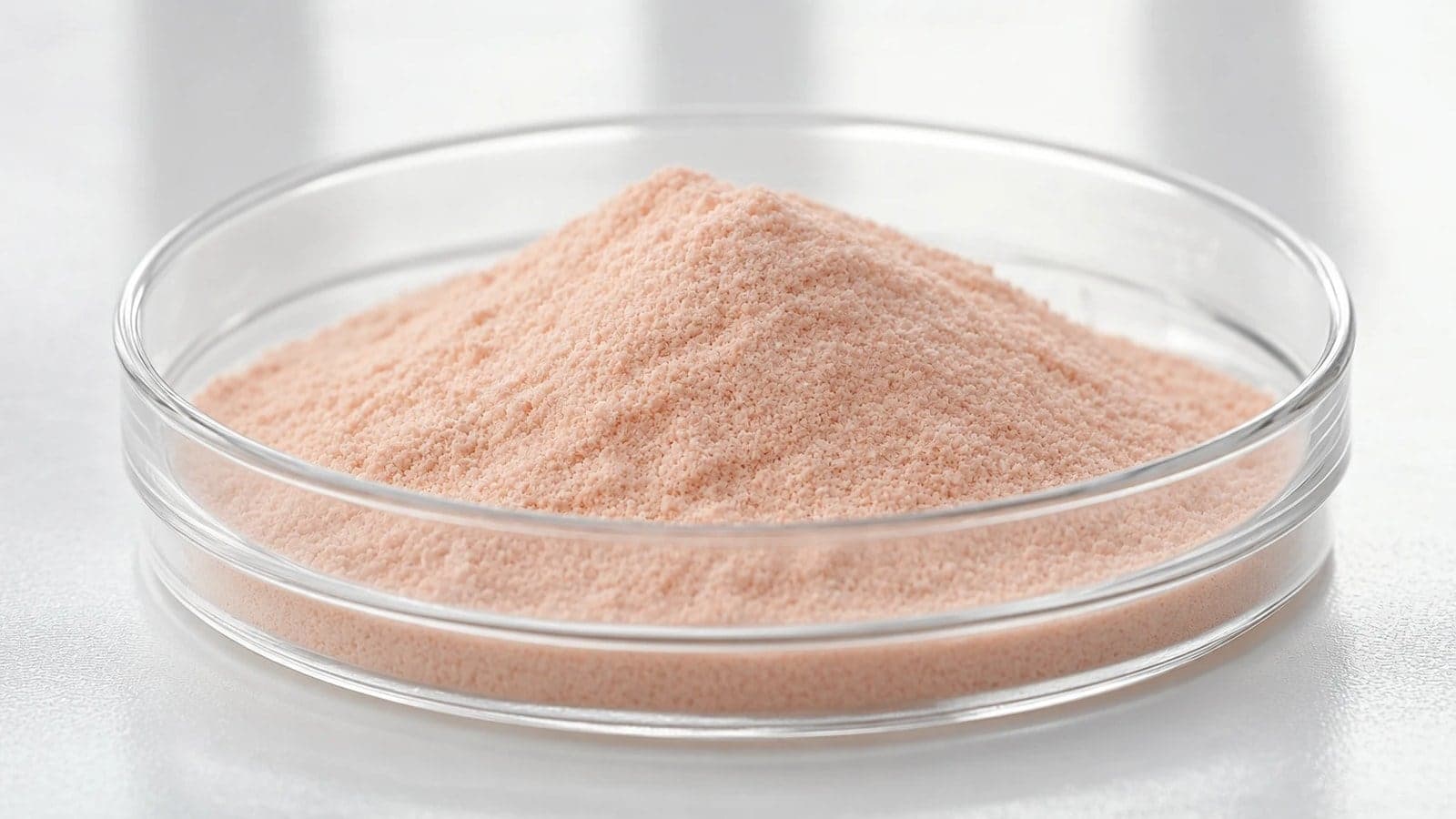
Urea Agar Base (Christensen)
Also known as:Christensen Urea Agar · Christensen's Urea Agar · Urea Agar Base · Christensen Urea Agar Base · Christensen's Urea Agar Base · Urea Agar Christensen
For the differentiation of microorganisms on the basis of urease activity, following the addition of urea.
- Category
- Dehydrated Culture Media
- Dissolve per litre
- 24.01 g
- Pack sizes
- 500 g · 5 kg · 25 kg
- Certifications
- Halal
- Standard methods
- ISO 6579-1
Data updated:2026-11-06
Brand cross-reference:BD Difco Urea Agar Base · Oxoid Urea Agar Base · Merck Urea Agar Base (Christensen)(ISO 6579-1) Brand cross-reference
Overview
Urea Agar Base (Christensen) is the slant medium for the urease test: filter-sterilised urea solution is added after autoclaving, and urease-positive strains split urea into ammonia, raising the pH and turning phenol red to cerise. Proteus is strongly positive within hours, Klebsiella slower, and Salmonella and E. coli negative, which makes it a routine step for excluding Proteus among suspect colonies from isolation plates. A base formulation; add urea as directed. Food-grade raw materials, Halal certified.
Principle
Urea Agar was described by Christensen to detect urease activity in a wider range of organisms than was possible with earlier, more strongly buffered urea media.¹ Peptone supplies nitrogen and growth factors, and glucose provides an energy source that supports the growth of organisms with weak urease activity. Sodium chloride maintains the osmotic equilibrium, and the low concentration of phosphate buffer allows small changes in pH to be detected. Organisms that produce urease hydrolyse urea to ammonia, which raises the pH and changes the phenol red indicator from yellow-orange to pink-red. Strong urease producers such as Proteus species give a positive reaction within a few hours, while weaker producers such as Klebsiella species may require longer incubation. Salmonella does not produce urease, and the medium is used in the biochemical confirmation of Salmonella.²
What biochemical identification media are for
Biochemical identification media reveal whether a strain can use a particular substrate, read through colour change, gas production, or a zone of clearing. They remain the basis of conventional identification and confirmatory quality control. Each medium covers one characteristic, so several are normally read together alongside known positive and negative control strains.
Directions
Suspend 24.01 g of powder in 950 mL of purified water. Heat with continuous stirring and bring to the boil for 1 minute. Sterilize by autoclaving at 121°C for 15 minutes. Cool to 45-50°C and aseptically add 50 mL of a filter-sterilized 40% urea solution. Mix well, dispense into sterile tubes, and allow to set in a slanted position. Test the finished medium for performance using stable, standard control cultures.
Cultural response
| Test organism | ATCC | Growth |
|---|---|---|
| Proteus mirabilis | 12453 | good-luxuriant |
| Klebsiella pneumoniae | 13883 | good-luxuriant |
| Salmonella enterica ser. Typhimurium | 14028 | good-luxuriant |
| Escherichia coli | 25922 | good-luxuriant |
Product highlights
- Halal certified, suitable for the Malaysian, Indonesian, and Middle Eastern markets
- Manufactured to the standard formulation, 24.01 g per litre
- Performance verified against standard control strains before release (Proteus mirabilis, Klebsiella pneumoniae, Salmonella enterica ser. Typhimurium, Escherichia coli)
- Available in 500 g / 5 kg / 25 kg, from laboratory to industrial scale
- COA, specification sheet, and technical data sheet available; samples on request
- Manufactured in Taiwan with reliable supply
FDA BAM methods
This product corresponds to a medium used in the chapters of the US FDA Bacteriological Analytical Manual (BAM), the reference methods for FDA regulatory testing. Follow the current online edition of each chapter.
- FDA BAM Chapter 8: Yersinia enterocoliticaBAM Chapter 8Confirmation / biochemicalNamed in the method as:Christensen's urea agar
BAM specifies methods and media formulations; it does not certify brands. Add supplements as the chapter requires, and verify media against reference strains under your quality system.
Frequently asked questions
01Does this medium meet FDA BAM methods?
BAM specifies methods and formulations, not brands. This product corresponds to a medium used in: FDA BAM Chapter 8: Yersinia enterocolitica(BAM Chapter 8): Confirmation / biochemical. It is manufactured to the standard formulation and ships with a COA per batch; add supplements as the chapter requires and follow the current online edition.
02How much powder per litre?
Use 24.01 g per litre of deionised water; preparation and sterilisation conditions are given on the specification sheet.
03Which organisms is it suitable for?
Enterobacteriaceae, Gram-negative, Salmonella, Proteus mirabilis, Klebsiella pneumoniae, Salmonella enterica ser. Typhimurium, Escherichia coli. See the cultural response table and the specification sheet.
04What are the equivalent brand products and standard methods?
Cross-reference: BD Difco Urea Agar Base, Oxoid Urea Agar Base, Merck Urea Agar Base (Christensen). Standard methods: ISO 6579-1. Formulations may differ slightly between makers; refer to the specification sheet.
05How is this product prepared?
Suspend 24.01 g of powder in 950 mL of purified water. Heat with continuous stirring and bring to the boil for 1 minute. Sterilize by autoclaving at 121°C for 15 minutes. Cool to 45-50°C and aseptically add 50 mL of a filter-sterilized 40% urea solution. Mix well, dispense into sterile tubes, and allow to set in a slanted position. Test the finished medium for performance using stable, standard control cultures.
06How do I request a bulk quotation, and can you provide a COA?
Yes. This product is available in 500 g, 5 kg, 25 kg. Tell us your application and volume when requesting a quotation; we reply within one working day and can supply the COA, specification sheet, and technical data sheet.
Further reading
References
- 1. Christensen W. B., 1946. Urea decomposition as a means of differentiating Proteus and paracolon cultures from each other and from Salmonella and Shigella types. J. Bacteriol., 52:461-466.
- 2. ISO 6579-1, Microbiology of the food chain — Horizontal method for the detection, enumeration and serotyping of Salmonella — Part 1: Detection of Salmonella spp., International Organization for Standardization, Geneva.