
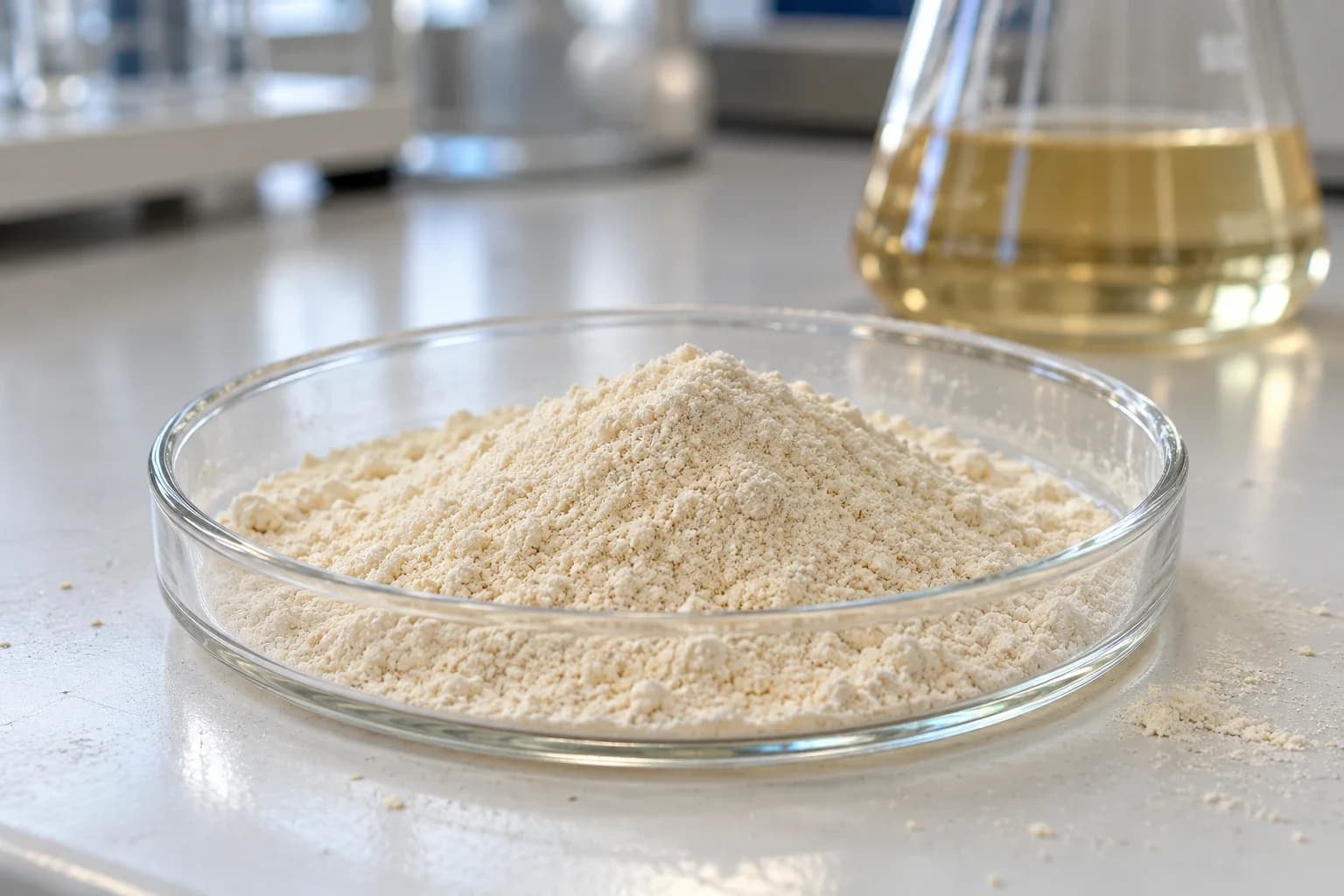
 Illustrative image only. Actual product may vary.
Alkaline Peptone Water
Also known as:APW
- Category
- Dehydrated Culture Media
- Pack sizes
- 500 g · 5 kg · 25 kg
Data updated:2026-11-06
Overview
Alkaline Peptone Water (APW) is the enrichment broth for Vibrio: an alkaline pH 8.5 with 1% NaCl lets alkali-tolerant, salt-loving Vibrio parahaemolyticus and V. cholerae multiply quickly while competing flora are held back; the surface layer is then streaked on TCBS plates. Specified by the Taiwan FDA V. parahaemolyticus method, ISO 21872-1 and the FDA BAM, it is the first step in testing seafood, sashimi and seafood processing plants. Food-grade raw materials.
Choosing a general-purpose or enumeration medium
Plate Count Agar is used for total viable counts in food, water, and environmental samples. Nutrient Broth and Tryptic Soy media are the general-purpose choices for non-fastidious bacteria, with the latter richer and also used for sterility testing and environmental monitoring. Brain Heart Infusion is the richest of the three and suits fastidious organisms such as streptococci. Use the agar form for enumeration and the broth for propagation.
Product highlights
- Available in 500 g / 5 kg / 25 kg, from laboratory to industrial scale
- COA, specification sheet, and technical data sheet available; samples on request
- Manufactured in Taiwan with reliable supply
FDA BAM methods
This product corresponds to a medium used in the chapters of the US FDA Bacteriological Analytical Manual (BAM), the reference methods for FDA regulatory testing. Follow the current online edition of each chapter.
- FDA BAM Chapter 9: VibrioBAM Chapter 9EnrichmentNamed in the method as:Alkaline peptone water (APW)
BAM specifies methods and media formulations; it does not certify brands. Add supplements as the chapter requires, and verify media against reference strains under your quality system.
Frequently asked questions
01Does this medium meet FDA BAM methods?
BAM specifies methods and formulations, not brands. This product corresponds to a medium used in: FDA BAM Chapter 9: Vibrio(BAM Chapter 9): Enrichment. It is manufactured to the standard formulation and ships with a COA per batch; add supplements as the chapter requires and follow the current online edition.
02Which medium should I use for total viable counts?
Total viable counts in food and water normally use Plate Count Agar with the pour-plate method at 30 °C. Follow the incubation conditions specified by the method you are working to.
03How do I request a bulk quotation, and can you provide a COA?
Yes. This product is available in 500 g, 5 kg, 25 kg. Tell us your application and volume when requesting a quotation; we reply within one working day and can supply the COA, specification sheet, and technical data sheet.
Academic citation
Products from this range have been cited as the culture media source in a peer-reviewed study by a National Taiwan University research team:
Chan et al. (2024). Single-strain probiotics enhance growth, anti-pathogen immunity, and resistance to Nocardia seriolae in grey mullet (Mugil cephalus) via gut microbiota modulation. Animal Microbiome, 6, 67. Springer Nature.
Media attribution: Tryptone Soy Broth, MRS medium, LB broth, beef extract, peptone, yeast extract, agar (STBIO, New Taipei, Taiwan)
Read the full paperFurther reading
- FDA BAM Culture Media Cross-Reference: Which Media Each BAM Chapter Uses and the STBIO EquivalentAerobic plate count, coliforms and E. coli, Salmonella, Listeria monocytogenes, Staphylococcus aureus, Bacillus cereus, Vibrio, Clostridium perfringens, yeasts and moulds and Cronobacter: the media named in each FDA Bacteriological Analytical Manual chapter, matched to Taiwan-made dehydrated media for US laboratories qualifying a second source.
- Which Culture Media Do Taiwan FDA Food Microbiology Methods Specify? Cross-Reference for 21 Announced MethodsAerobic plate count, coliforms, E. coli, Enterobacteriaceae, Salmonella, Staphylococcus aureus, Listeria monocytogenes, lactic acid bacteria, yeasts and moulds, Bacillus cereus, Vibrio parahaemolyticus, Clostridium perfringens and Cronobacter: the media named in each Taiwan FDA (TFDA) announced method, matched to Taiwan-made products.