
Peptone, Bacteriological
Also known as:Bacteriological Peptone · Peptone Bacteriological · Bacteriological Grade Peptone
Used as a high-quality nitrogen source in the formulation of dehydrated culture media, and well suited to demanding, high-value applications where consistent growth performance is essential.
- Category
- Peptones & Protein Hydrolysates
- pH (25 °C)
- 5.5 – 7.0
- Appearance
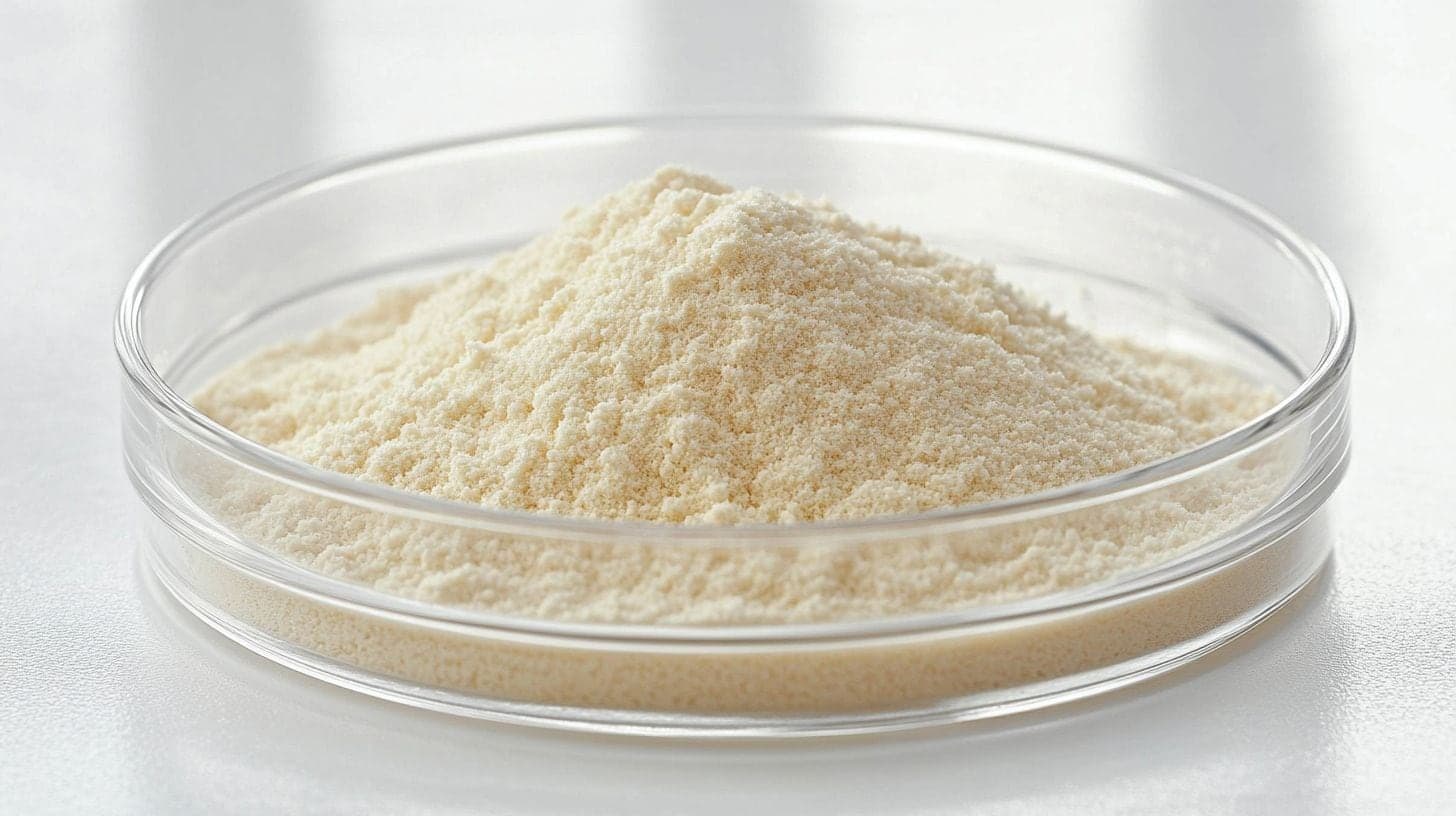
- Beige powder
- Pack sizes
- 500 g · 5 kg · 25 kg
- Certifications
- ISO 22000 · Non-TSE/BSE
Data updated:2026-11-06
- Storage
- Store at 10–30 °C in sealed, dry, clean conditions.
- Shelf life
- 36 months from manufacture date when stored as directed.
Overview
A fine beige powder obtained by enzymatic hydrolysis of selected meat protein, rich in peptides and free amino acids together with essential growth factors. Raw materials are of animal (meat) origin.
Specifications
| Parameter | Specification |
|---|---|
| Appearance | Beige powder |
| Total nitrogen TN | ≥ 10.5 % |
| pH (2 % solution) | 5.5 – 7.0 |
| Loss on drying | ≤ 8.0 % |
| Chlorides (NaCl) | ≤ 2.0 % |
| Total aerobic microbial count | ≤10 000 /g |
| Staphylococcus aureus | Absence / 10 g |
| Salmonella | Absence / 25 g |
| Escherichia coli | Absence / g |
| Coliforms | ≤ 10 /g |
| Yeasts and moulds | ≤ 100 /g |
Release specifications. Actual values are reported on the COA supplied with each batch.
Product highlights
- Food-grade raw materials, produced in an ISO 22000 certified facility
- Available in 500 g / 5 kg / 25 kg, from laboratory to industrial scale
- COA, specification sheet, and technical data sheet available; samples on request
- Manufactured in Taiwan with reliable supply
Food grade versus laboratory grade
Most culture media suppliers use laboratory-grade raw materials, which are held to lower standards for heavy metal residues, microbial contamination control, and traceability. That is adequate for pure research but not for applications with stricter raw-material requirements. STBIO manufactures with food-grade raw materials throughout, in a facility certified to ISO 22000 food safety management.
- Food microbiology laboratories working to ISO 17025 or equivalent requirements
- Biotech manufacturers exporting fermentation products and needing full raw-material traceability
- Organisations with ESG or compliance audit requirements across their supply chain
- Companies sourcing both Halal and non-Halal products who need one consistent material grade
FDA BAM methods
This product corresponds to a medium used in the chapters of the US FDA Bacteriological Analytical Manual (BAM), the reference methods for FDA regulatory testing. Follow the current online edition of each chapter.
- FDA BAM Chapter 18: Yeasts, Molds, and MycotoxinsBAM Chapter 18Diluent ingredientNamed in the method as:0.1% peptone water diluent
BAM specifies methods and media formulations; it does not certify brands. Add supplements as the chapter requires, and verify media against reference strains under your quality system.
Frequently asked questions
01Does this medium meet FDA BAM methods?
BAM specifies methods and formulations, not brands. This product corresponds to a medium used in: FDA BAM Chapter 18: Yeasts, Molds, and Mycotoxins(BAM Chapter 18): Diluent ingredient. It is manufactured to the standard formulation and ships with a COA per batch; add supplements as the chapter requires and follow the current online edition.
02Which organisms is it suitable for?
Total Plate Count. See the cultural response table and the specification sheet.
03Can it be used for food-grade applications?
Yes. It is made from food-grade raw materials in an ISO 22000 certified facility and is suitable for culturing starters for fermented products that are consumed directly.
04Is there a Halal certified version of this product?
Yes. This is the standard version; a Halal certified version is also produced from food-grade raw materials with Halal documentation, for compliant sourcing in Malaysia, Indonesia, and the Middle East.
05How should it be stored, and what is the shelf life?
Store at 10–30 °C in sealed, dry, clean conditions. 36 months from manufacture date when stored as directed.
06How do I request a bulk quotation, and can you provide a COA?
Yes. This product is available in 500 g, 5 kg, 25 kg. Tell us your application and volume when requesting a quotation; we reply within one working day and can supply the COA, specification sheet, and technical data sheet.
Academic citation
Products from this range have been cited as the culture media source in a peer-reviewed study by a National Taiwan University research team:
Chan et al. (2024). Single-strain probiotics enhance growth, anti-pathogen immunity, and resistance to Nocardia seriolae in grey mullet (Mugil cephalus) via gut microbiota modulation. Animal Microbiome, 6, 67. Springer Nature.
Media attribution: Tryptone Soy Broth, MRS medium, LB broth, beef extract, peptone, yeast extract, agar (STBIO, New Taipei, Taiwan)
Read the full paperUsed in these applications
- Total plate countRoutine QC of food, drinking water, and environmental samples
- Semiconductor wastewater biotreatment: media and nitrogen sources for nitrifiers, TMAH degraders and sludge acclimationStandard media and industrial nitrogen sources for culturing bioaugmentation strains and starting or re-seeding biological treatment tanks
Further reading
- FDA BAM Culture Media Cross-Reference: Which Media Each BAM Chapter Uses and the STBIO EquivalentAerobic plate count, coliforms and E. coli, Salmonella, Listeria monocytogenes, Staphylococcus aureus, Bacillus cereus, Vibrio, Clostridium perfringens, yeasts and moulds and Cronobacter: the media named in each FDA Bacteriological Analytical Manual chapter, matched to Taiwan-made dehydrated media for US laboratories qualifying a second source.
- Which Culture Media Do Taiwan FDA Food Microbiology Methods Specify? Cross-Reference for 21 Announced MethodsAerobic plate count, coliforms, E. coli, Enterobacteriaceae, Salmonella, Staphylococcus aureus, Listeria monocytogenes, lactic acid bacteria, yeasts and moulds, Bacillus cereus, Vibrio parahaemolyticus, Clostridium perfringens and Cronobacter: the media named in each Taiwan FDA (TFDA) announced method, matched to Taiwan-made products.