
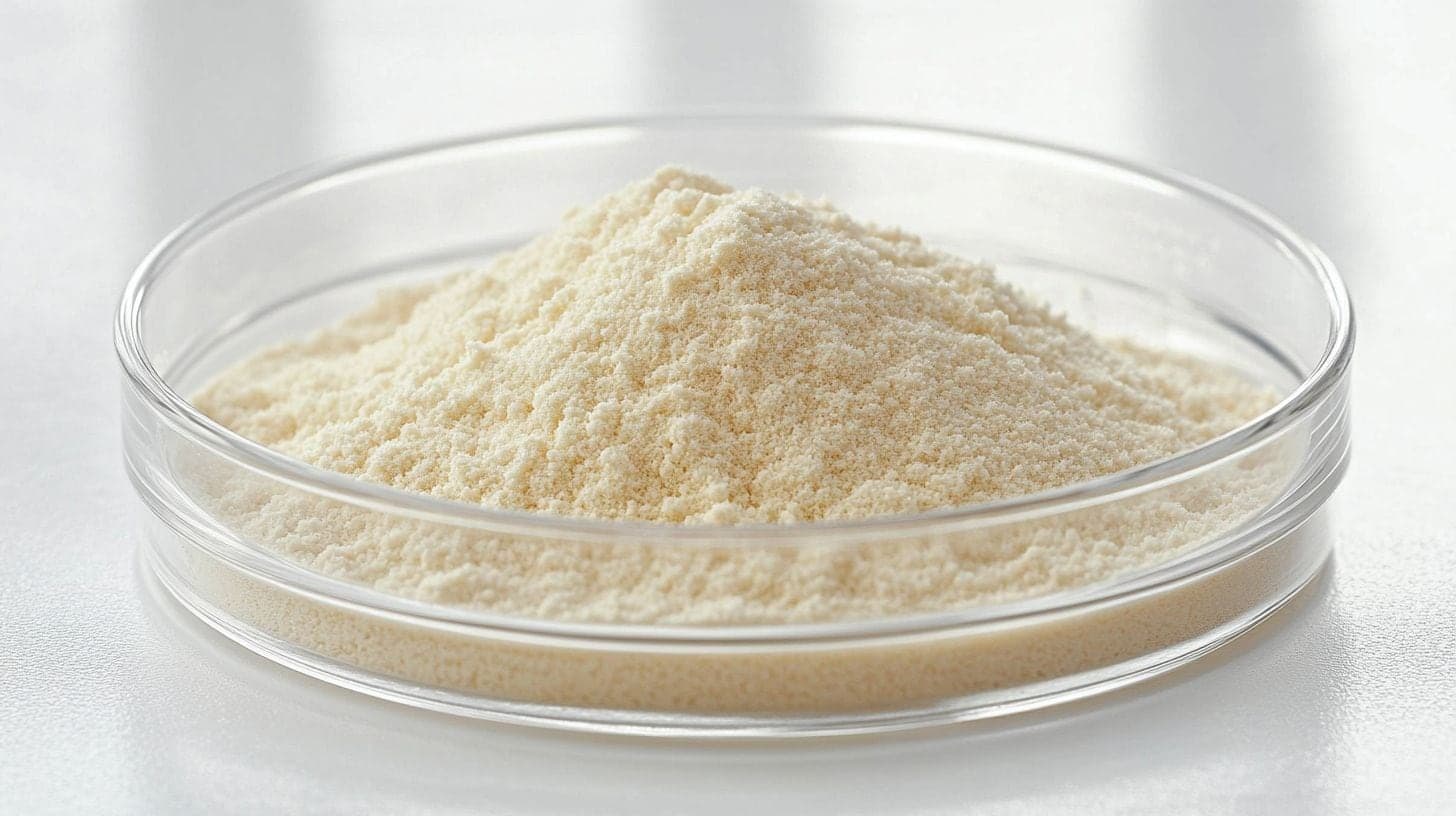
R-2A Agar
Also known as:R2A · R2A Agar · Reasoner's 2A Agar · Reasoner 2A Agar · R2A Medium
For the enumeration of heterotrophic bacteria in treated drinking water and pharmaceutical water systems.
- Category
- Dehydrated Culture Media
- Dissolve per litre
- 18.15 g
- Pack sizes
- 500 g · 5 kg · 25 kg
- Certifications
- Halal
- Standard methods
- APHA 9215·USP <1231> (water)
Data updated:2026-11-07
Brand cross-reference:BD Difco R2A Agar · Oxoid R2A Agar · Merck R2A Agar(APHA 9215、USP <1231> (water)) Brand cross-reference
Overview
R-2A Agar is a low-nutrient medium designed for heterotrophic plate counts in treated drinking water, purified water and pharmaceutical water systems. Standard media are too rich for the slow-growing, oligotrophic bacteria found in water, so they fail to appear; R-2A uses low levels of several nutrient sources with longer incubation (5 to 7 days at 28 °C) for markedly better recovery, and is the standard choice for pharmacopoeial water system monitoring and waterworks testing.
Principle
R-2A Agar was developed by Reasoner and Geldreich as a low-nutrient medium for the recovery of stressed and slow-growing bacteria from treated water.¹ Conventional high-nutrient media favour fast-growing organisms and fail to recover many bacteria adapted to the oligotrophic conditions of treated water; the reduced nutrient level of R2A Agar, combined with lower incubation temperatures and longer incubation times, yields substantially higher heterotrophic counts.² Yeast extract, proteose peptone, and casein acid hydrolysate supply nitrogen, amino acids, and vitamins, and dextrose provides the carbon and energy source. Soluble starch absorbs toxic metabolites, sodium pyruvate assists the recovery of injured cells, dipotassium phosphate buffers the medium, and magnesium sulphate supplies essential ions. The medium is widely used for monitoring pharmaceutical water systems.³
Choosing a general-purpose or enumeration medium
Plate Count Agar is used for total viable counts in food, water, and environmental samples. Nutrient Broth and Tryptic Soy media are the general-purpose choices for non-fastidious bacteria, with the latter richer and also used for sterility testing and environmental monitoring. Brain Heart Infusion is the richest of the three and suits fastidious organisms such as streptococci. Use the agar form for enumeration and the broth for propagation.
Directions
Suspend 18.15 g of powder in 1 L of purified water. Heat with continuous stirring and bring to the boil for 1 minute. Sterilize by autoclaving at 121°C for 15 minutes. Avoid overheating. Cool to 45-50°C and use for the pour plate, spread plate, or membrane filtration technique. Test the finished medium for performance using stable, standard control cultures.
Cultural response
| Test organism | ATCC | Growth |
|---|---|---|
| Escherichia coli | 25922 | good-luxuriant |
| Pseudomonas aeruginosa | 27853 | good-luxuriant |
| Bacillus subtilis | 6633 | good-luxuriant |
Product highlights
- Halal certified, suitable for the Malaysian, Indonesian, and Middle Eastern markets
- Manufactured to the standard formulation, 18.15 g per litre
- Performance verified against standard control strains before release (Escherichia coli, Pseudomonas aeruginosa, Bacillus subtilis)
- Available in 500 g / 5 kg / 25 kg, from laboratory to industrial scale
- COA, specification sheet, and technical data sheet available; samples on request
- Manufactured in Taiwan with reliable supply
Frequently asked questions
01Which medium should I use for total viable counts?
Total viable counts in food and water normally use Plate Count Agar with the pour-plate method at 30 °C. Follow the incubation conditions specified by the method you are working to.
02How much powder per litre?
Use 18.15 g per litre of deionised water; preparation and sterilisation conditions are given on the specification sheet.
03Which organisms is it suitable for?
Total Plate Count, Aerobes, Environmental monitoring, Escherichia coli, Pseudomonas aeruginosa, Bacillus subtilis. See the cultural response table and the specification sheet.
04What are the equivalent brand products and standard methods?
Cross-reference: BD Difco R2A Agar, Oxoid R2A Agar, Merck R2A Agar. Standard methods: APHA 9215, USP <1231> (water). Formulations may differ slightly between makers; refer to the specification sheet.
05How is this product prepared?
Suspend 18.15 g of powder in 1 L of purified water. Heat with continuous stirring and bring to the boil for 1 minute. Sterilize by autoclaving at 121°C for 15 minutes. Avoid overheating. Cool to 45-50°C and use for the pour plate, spread plate, or membrane filtration technique. Test the finished medium for performance using stable, standard control cultures.
06How do I request a bulk quotation, and can you provide a COA?
Yes. This product is available in 500 g, 5 kg, 25 kg. Tell us your application and volume when requesting a quotation; we reply within one working day and can supply the COA, specification sheet, and technical data sheet.
Used in these applications
- Cleanroom and production environment monitoringMedia for settle plates, contact plates, and surface sampling
- Total plate countRoutine QC of food, drinking water, and environmental samples
- Cleanroom and ultrapure water microbial monitoring: settle plates, surfaces and water systemsStandard media for ISO 14698, USP <1231> and USP <61> monitoring
References
- 1. Reasoner D. J. and Geldreich E. E., 1985. A new medium for the enumeration and subculture of bacteria from potable water. Appl. Environ. Microbiol., 49:1-7.
- 2. American Public Health Association, Standard Methods for the Examination of Water and Wastewater, current edition, APHA Press, Washington, D.C.
- 3. United States Pharmacopeia, current edition. Chapter <1231> Water for Pharmaceutical Purposes, USP-NF, Rockville, MD.