
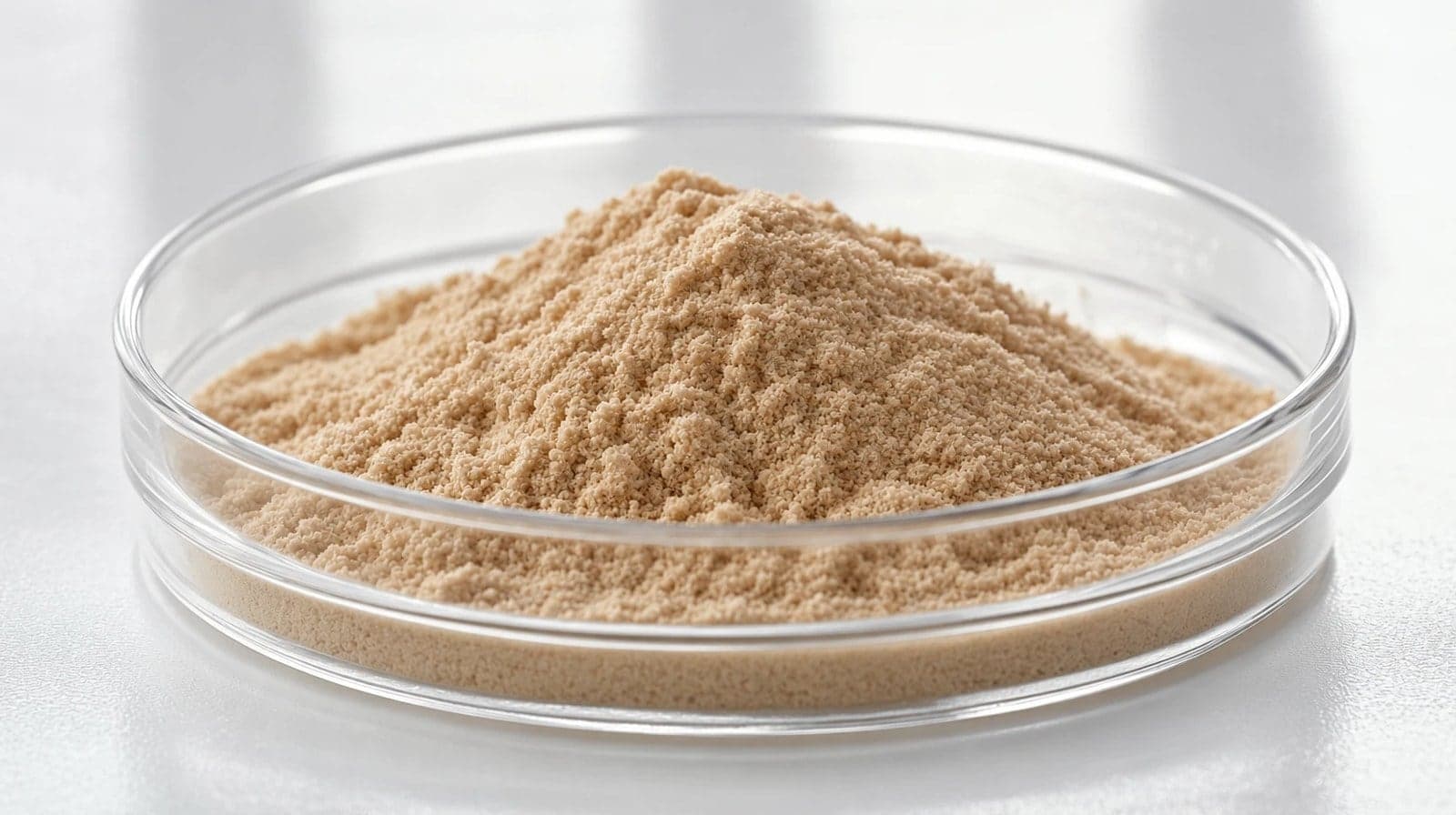
 Illustrative image only. Actual product may vary.
Letheen Broth, Modified
Also known as:Modified Letheen Broth · Modified Tween-Letheen Broth · Modified Tween®-Letheen-Broth · Letheen Broth Base Modified · MTLB
For the cultivation and enumeration of microorganisms in cosmetics and other materials containing preservatives, disinfectants, and quaternary ammonium compounds.
- Category
- Dehydrated Culture Media
- Dissolve per litre
- 42.8 g
- Pack sizes
- 500 g · 5 kg · 25 kg
Data updated:2026-11-06
Overview
Letheen Broth, Modified is a broth (liquid) medium, a selective medium for food and clinical testing that suppresses competing flora and makes target colonies recognisable. Lecithin and polysorbate neutralise preservatives and disinfectants; used in microbiological testing of cosmetics and disinfectants. STBIO manufactures it from food-grade raw materials in an ISO 22000 certified facility, with a COA for every batch.
Principle
Modified Letheen Broth is used to recover microorganisms from cosmetics, disinfectants, and other products containing antimicrobial agents.¹ Peptone, tryptone, beef extract, and yeast extract provide the nitrogen, amino acids, vitamins, and growth factors required for the growth of a wide range of organisms. Sodium chloride maintains the osmotic balance. Lecithin neutralizes quaternary ammonium compounds, while polysorbate 80 neutralizes phenolic and other preservative residues; together they inactivate the antimicrobial agents carried over with the sample, allowing surviving organisms to grow.² Sodium bisulphite acts as a reducing agent that neutralizes certain preservatives and lowers the redox potential of the medium. This neutralizing action makes the medium suitable for sterility and preservative-efficacy testing of cosmetic and pharmaceutical preparations.
How selective media fit into the testing workflow
Pathogen testing normally runs in three stages: a pre-enrichment medium such as Buffered Peptone Water repairs injured cells and raises numbers, a selective enrichment then suppresses competing flora, and finally a selective differential agar isolates the target colonies. Selective agents are typically bile salts, dyes, or antibiotics; differential agents make target colonies develop a characteristic colour or morphology. Choose the combination specified by the method you follow.
Directions
Suspend 42.8 g of powder in 1 L of purified water. Heat with continuous stirring and bring to the boil for 1 minute. Dispense into tubes or flasks. Sterilize by autoclaving at 121°C for 15 minutes. Test the finished medium for performance using stable, standard control cultures.
Cultural response
| Test organism | ATCC | Growth |
|---|---|---|
| Staphylococcus aureus | 6538 | Good |
| Salmonella enterica subsp. | enterica serotype Typhi | 25-100 |
Product highlights
- Manufactured to the standard formulation, 42.8 g per litre
- Performance verified against standard control strains before release (Staphylococcus aureus, Salmonella enterica subsp.)
- Available in 500 g / 5 kg / 25 kg, from laboratory to industrial scale
- COA, specification sheet, and technical data sheet available; samples on request
- Manufactured in Taiwan with reliable supply
Frequently asked questions
01Can selective media be autoclaved?
Not always. Some media containing dyes or selective inhibitors lose their selectivity if overheated and should only be heated until fully dissolved, without autoclaving. Follow the preparation instructions for this product, and contact us if you are unsure.
02How much powder per litre?
Use 42.8 g per litre of deionised water; preparation and sterilisation conditions are given on the specification sheet.
03Which organisms is it suitable for?
Staphylococcus aureus, Salmonella enterica subsp.. See the cultural response table and the specification sheet.
04How is this product prepared?
Suspend 42.8 g of powder in 1 L of purified water. Heat with continuous stirring and bring to the boil for 1 minute. Dispense into tubes or flasks. Sterilize by autoclaving at 121°C for 15 minutes. Test the finished medium for performance using stable, standard control cultures.
05Is there a Halal certified version of this product?
Yes. This is the standard version; a Halal certified version is also produced from food-grade raw materials with Halal documentation, for compliant sourcing in Malaysia, Indonesia, and the Middle East.
06How do I request a bulk quotation, and can you provide a COA?
Yes. This product is available in 500 g, 5 kg, 25 kg. Tell us your application and volume when requesting a quotation; we reply within one working day and can supply the COA, specification sheet, and technical data sheet.
Used in these applications
- Cleanroom and production environment monitoringMedia for settle plates, contact plates, and surface sampling
- Fill media for beverage and food pipeline cleaning verificationAfter CIP, confirm with liquid media that the line is actually clean
- Cleanroom and ultrapure water microbial monitoring: settle plates, surfaces and water systemsStandard media for ISO 14698, USP <1231> and USP <61> monitoring
References
- 1. Association of Official Analytical Chemists, Official Methods of Analysis of AOAC International, current edition.
- 2. Atlas R. M., 2010. Handbook of Microbiological Media, 4th Ed., CRC Press, Boca Raton.