
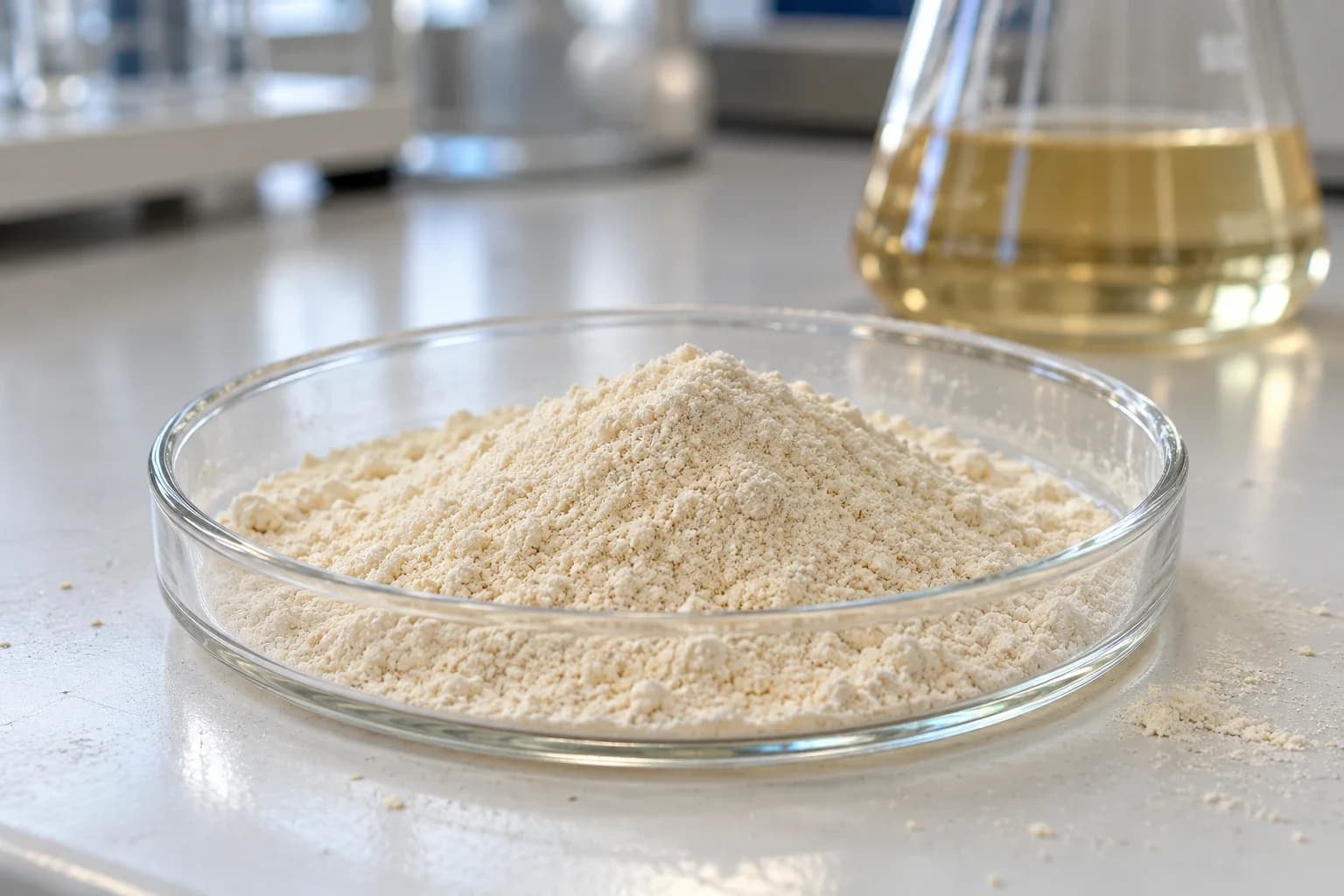
Potato Mannitol Dextrose Broth
Also known as:PMD
Potato Mannitol Dextrose Broth is a specialized, nutrient-rich liquid medium used primarily to cultivate and propagate fungi, yeasts, and mushroom mycelium. It is a variation of standard Potato Dextrose Broth that incorporates mannitol as an additional specific carbon source.
- Category
- Dehydrated Culture Media
- Dissolve per litre
- 39 g
- Pack sizes
- 500 g · 5 kg · 25 kg
- Certifications
- Halal
Data updated:2026-11-06
Overview
Potato Mannitol Dextrose Broth is a broth (liquid) medium, a selective medium for food and clinical testing that suppresses competing flora and makes target colonies recognisable. It is used to cultivate acetic acid bacteria and other mannitol-utilising strains. STBIO manufactures it from food-grade raw materials in an ISO 22000 certified facility, with a COA for every batch. This is the Halal-certified version.
Principle
Potato PEPTONE: Acts as the base, supplying essential starches, vitamins, and nitrogen that promote the luxuriant growth of fungi. Dextrose: Serves as a highly accessible primary carbohydrate and energy source to stimulate rapid fungal growth. Mannitol: Acts as a secondary carbon and energy source, which is frequently utilized for specific metabolic studies or for encouraging the growth of certain beneficial soil bacteria and specialized fungal strains. [1, 2, 3]
How selective media fit into the testing workflow
Pathogen testing normally runs in three stages: a pre-enrichment medium such as Buffered Peptone Water repairs injured cells and raises numbers, a selective enrichment then suppresses competing flora, and finally a selective differential agar isolates the target colonies. Selective agents are typically bile salts, dyes, or antibiotics; differential agents make target colonies develop a characteristic colour or morphology. Choose the combination specified by the method you follow.
Directions
Suspend g of the medium in 1000 mL of distilled water. Heat with frequent agitation and boil to dissolve the medium completely. Sterilize by autoclaving at 121°C for 15 minutes. If suppression of bacterial growth is required, adjust the pH to approximately 3.5 after sterilization using sterile tartaric acid (or lactic acid). Note: Do not reheat the medium after acidification, as this impairs its performance.
Product highlights
- Halal certified, suitable for the Malaysian, Indonesian, and Middle Eastern markets
- Manufactured to the standard formulation, 39 g per litre
- Available in 500 g / 5 kg / 25 kg, from laboratory to industrial scale
- COA, specification sheet, and technical data sheet available; samples on request
- Manufactured in Taiwan with reliable supply
Frequently asked questions
01Can selective media be autoclaved?
Not always. Some media containing dyes or selective inhibitors lose their selectivity if overheated and should only be heated until fully dissolved, without autoclaving. Follow the preparation instructions for this product, and contact us if you are unsure.
02How much powder per litre?
Use 39 g per litre of deionised water; preparation and sterilisation conditions are given on the specification sheet.
03How is this product prepared?
Suspend g of the medium in 1000 mL of distilled water. Heat with frequent agitation and boil to dissolve the medium completely. Sterilize by autoclaving at 121°C for 15 minutes. If suppression of bacterial growth is required, adjust the pH to approximately 3.5 after sterilization using sterile tartaric acid (or lactic acid). Note: Do not reheat the medium after acidification, as this impairs its performance.
04How do I request a bulk quotation, and can you provide a COA?
Yes. This product is available in 500 g, 5 kg, 25 kg. Tell us your application and volume when requesting a quotation; we reply within one working day and can supply the COA, specification sheet, and technical data sheet.