
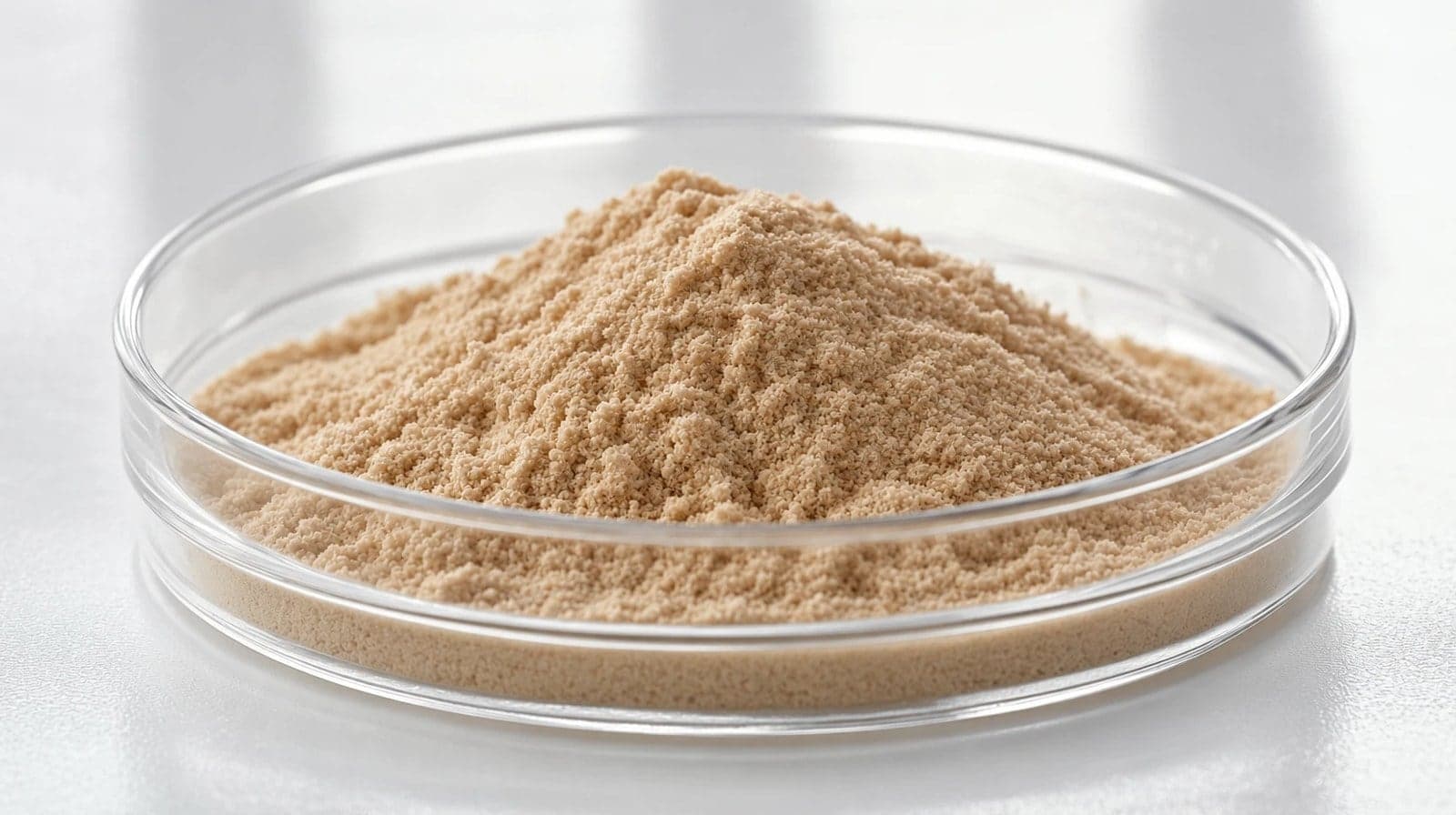
Reinforced Clostridial Medium w/o Agar
Also known as:RCM · Reinforced Clostridial Medium without Agar · RCM without Agar · Reinforced Clostridial Broth · RCB · Reinforced Clostridial Medium (Agar-free)
For the cultivation and enrichment of Clostridium species and other anaerobic organisms.
- Category
- Dehydrated Culture Media
- Pack sizes
- 500 g · 5 kg · 25 kg
- Certifications
- ISO 22000
Data updated:2026-11-06
- Allergens
- Milk
Overview
Reinforced Clostridial Medium w/o Agar is an agar (solid) medium, intended for anaerobes and nutritionally demanding organisms. It is rich and reduced, used to cultivate and count clostridia and other anaerobes. STBIO manufactures it from food-grade raw materials in an ISO 22000 certified facility, with a COA for every batch.
Principle
Reinforced Clostridial Medium, described by Hirsch and Grinsted, is a nutritionally rich medium for the cultivation, enrichment, and enumeration of clostridia and other anaerobic and facultatively anaerobic organisms.¹ Meat extract, peptone, and yeast extract supply nitrogen, amino acids, vitamins, and the growth factors required by these demanding organisms, allowing growth to be initiated from a small inoculum. Dextrose serves as the carbon and energy source, sodium chloride maintains the osmotic equilibrium, and sodium acetate buffers the medium against the organic acids produced during fermentation. Soluble starch acts as a protective colloid, adsorbing toxic metabolites. L-Cysteine hydrochloride functions as a reducing agent, lowering the redox potential of the medium to the level required for the growth of strict anaerobes.² This formulation contains no agar and is intended for use as a liquid medium for enrichment and propagation. Growth is indicated by turbidity, and gas production by clostridia may be observed as bubbles within the medium.
Media for anaerobes and fastidious organisms
Anaerobes and fastidious organisms require media containing reducing agents, blood, or infusion components, together with an anaerobic incubation environment. Some formulations need heat-labile supplements such as blood, serum, or antibiotics added after sterilisation; follow the preparation instructions for the timing and method.
Directions
Suspend 37.5 g of powder in 1 L of purified water. Heat with continuous stirring and bring to the boil for 1 minute. Dispense into tubes or flasks. Sterilize by autoclaving at 121°C for 15 minutes. Avoid overheating. Cool and inoculate as soon as possible after preparation. Incubate under anaerobic conditions. Test the finished medium for performance using stable, standard control cultures.
Product highlights
- Food-grade raw materials, produced in an ISO 22000 certified facility
- Available in 500 g / 5 kg / 25 kg, from laboratory to industrial scale
- COA, specification sheet, and technical data sheet available; samples on request
- Manufactured in Taiwan with reliable supply
Food grade versus laboratory grade
Most culture media suppliers use laboratory-grade raw materials, which are held to lower standards for heavy metal residues, microbial contamination control, and traceability. That is adequate for pure research but not for applications with stricter raw-material requirements. STBIO manufactures with food-grade raw materials throughout, in a facility certified to ISO 22000 food safety management.
- Food microbiology laboratories working to ISO 17025 or equivalent requirements
- Biotech manufacturers exporting fermentation products and needing full raw-material traceability
- Organisations with ESG or compliance audit requirements across their supply chain
- Companies sourcing both Halal and non-Halal products who need one consistent material grade
Frequently asked questions
01Which organisms is it suitable for?
Anaerobes, Gram-positive, C. perfringens, C. botulinum, C. butyricum. See the cultural response table and the specification sheet.
02Can it be used for food-grade applications?
Yes. It is made from food-grade raw materials in an ISO 22000 certified facility and is suitable for culturing starters for fermented products that are consumed directly.
03How is this product prepared?
Suspend 37.5 g of powder in 1 L of purified water. Heat with continuous stirring and bring to the boil for 1 minute. Dispense into tubes or flasks. Sterilize by autoclaving at 121°C for 15 minutes. Avoid overheating. Cool and inoculate as soon as possible after preparation. Incubate under anaerobic conditions. Test the finished medium for performance using stable, standard control cultures.
04How do I request a bulk quotation, and can you provide a COA?
Yes. This product is available in 500 g, 5 kg, 25 kg. Tell us your application and volume when requesting a quotation; we reply within one working day and can supply the COA, specification sheet, and technical data sheet.
References
- 1. Hirsch A. and Grinsted E., 1954. Methods for the growth and enumeration of anaerobic spore-formers from cheese, with observations on the effect of nisin. J. Dairy Res., 21:101-110.
- 2. Atlas R. M., 2010. Handbook of Microbiological Media, 4th Ed., CRC Press, Boca Raton.