
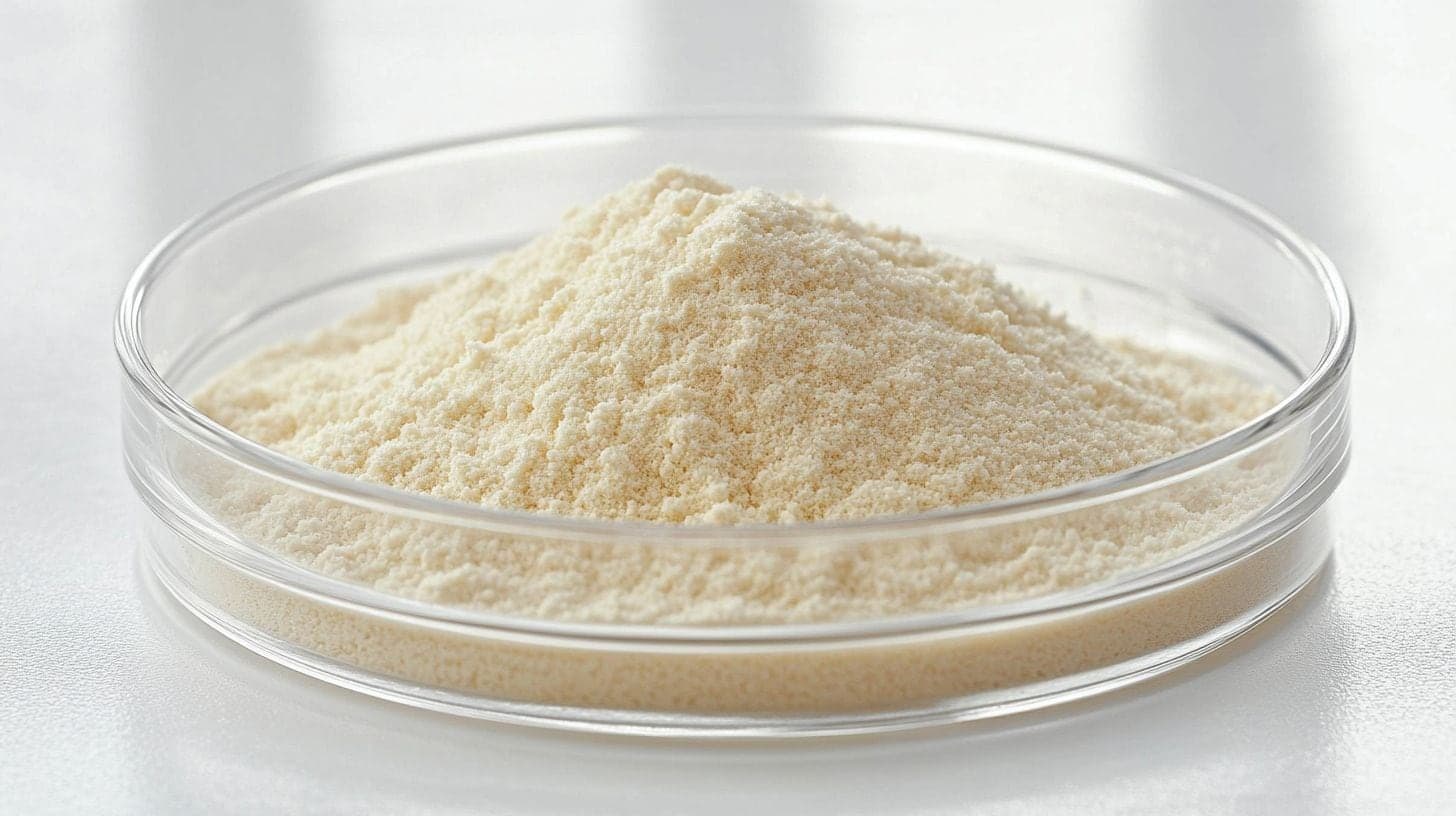
Nutrient Agar H
Also known as:NA
For the cultivation and maintenance of non-fastidious microorganisms, and for general laboratory purposes.
- Category
- Dehydrated Culture Media
- Dissolve per litre
- 23 g
- Pack sizes
- 500 g · 5 kg · 25 kg
- Certifications
- Halal
- Standard methods
- ISO 11133 (general purpose)
Data updated:2026-11-06
Brand cross-reference:BD Difco Nutrient Agar · Oxoid Nutrient Agar · Merck Nutrient Agar(ISO 11133 (general purpose)) Brand cross-reference
- Allergens
- Milk
Overview
Nutrient Agar H is the Halal-certified version of nutrient agar, for cultivating, counting and maintaining non-fastidious bacteria and for enumerating organisms in water, sewage and sanitary samples. It contains no carbohydrate and no inhibitors. Made from food-grade raw materials with Halal documentation.
Principle
Nutrient Agar is one of the earliest standardised general-purpose media and remains widely used for the cultivation of organisms that are not nutritionally demanding.¹ Beef extract supplies water-soluble nutrients, including vitamins, carbohydrates, organic nitrogen compounds, and salts, and peptone provides nitrogen, amino acids, and peptides. Agar acts as the solidifying agent. The medium contains no selective agents or added carbohydrate and supports the growth of a wide range of non-fastidious bacteria. It is used for the maintenance of stock cultures, the preparation of slants, purity checks, and the demonstration of colony morphology and pigmentation.²
Choosing a general-purpose or enumeration medium
Plate Count Agar is used for total viable counts in food, water, and environmental samples. Nutrient Broth and Tryptic Soy media are the general-purpose choices for non-fastidious bacteria, with the latter richer and also used for sterility testing and environmental monitoring. Brain Heart Infusion is the richest of the three and suits fastidious organisms such as streptococci. Use the agar form for enumeration and the broth for propagation.
Directions
Suspend 23 g of powder in 1 L of purified water. Heat with continuous stirring and bring to the boil for 1 minute. Sterilize by autoclaving at 121°C for 15 minutes. Cool to 45-50°C. Mix well and pour into sterile Petri plates or dispense into tubes for slants. Test the finished medium for performance using stable, standard control cultures.
Product highlights
- Halal certified, suitable for the Malaysian, Indonesian, and Middle Eastern markets
- Manufactured to the standard formulation, 23 g per litre
- Available in 500 g / 5 kg / 25 kg, from laboratory to industrial scale
- COA, specification sheet, and technical data sheet available; samples on request
- Manufactured in Taiwan with reliable supply
FDA BAM methods
This product corresponds to a medium used in the chapters of the US FDA Bacteriological Analytical Manual (BAM), the reference methods for FDA regulatory testing. Follow the current online edition of each chapter.
- FDA BAM Chapter 14: Bacillus cereusBAM Chapter 14Confirmation / biochemicalNamed in the method as:Nutrient agar
BAM specifies methods and media formulations; it does not certify brands. Add supplements as the chapter requires, and verify media against reference strains under your quality system.
Frequently asked questions
01Does this medium meet FDA BAM methods?
BAM specifies methods and formulations, not brands. This product corresponds to a medium used in: FDA BAM Chapter 14: Bacillus cereus(BAM Chapter 14): Confirmation / biochemical. It is manufactured to the standard formulation and ships with a COA per batch; add supplements as the chapter requires and follow the current online edition.
02Which medium should I use for total viable counts?
Total viable counts in food and water normally use Plate Count Agar with the pour-plate method at 30 °C. Follow the incubation conditions specified by the method you are working to.
03How much powder per litre?
Use 23 g per litre of deionised water; preparation and sterilisation conditions are given on the specification sheet.
04Which organisms is it suitable for?
Aerobes. See the cultural response table and the specification sheet.
05What are the equivalent brand products and standard methods?
Cross-reference: BD Difco Nutrient Agar, Oxoid Nutrient Agar, Merck Nutrient Agar. Standard methods: ISO 11133 (general purpose). Formulations may differ slightly between makers; refer to the specification sheet.
06How is this product prepared?
Suspend 23 g of powder in 1 L of purified water. Heat with continuous stirring and bring to the boil for 1 minute. Sterilize by autoclaving at 121°C for 15 minutes. Cool to 45-50°C. Mix well and pour into sterile Petri plates or dispense into tubes for slants. Test the finished medium for performance using stable, standard control cultures.
07Is there a non-Halal version?
Yes. This is the Halal certified version; an equivalent standard version is also available.
08How do I request a bulk quotation, and can you provide a COA?
Yes. This product is available in 500 g, 5 kg, 25 kg. Tell us your application and volume when requesting a quotation; we reply within one working day and can supply the COA, specification sheet, and technical data sheet.
Academic citation
Products from this range have been cited as the culture media source in a peer-reviewed study by a National Taiwan University research team:
Chan et al. (2024). Single-strain probiotics enhance growth, anti-pathogen immunity, and resistance to Nocardia seriolae in grey mullet (Mugil cephalus) via gut microbiota modulation. Animal Microbiome, 6, 67. Springer Nature.
Media attribution: Tryptone Soy Broth, MRS medium, LB broth, beef extract, peptone, yeast extract, agar (STBIO, New Taipei, Taiwan)
Read the full paperUsed in these applications
Further reading
References
- 1. American Public Health Association, Standard Methods for the Examination of Water and Wastewater, current edition, APHA Press, Washington, D.C.
- 2. MacFaddin J. F., 1985. Media for Isolation-Cultivation-Identification-Maintenance of Medical Bacteria, Williams & Wilkins, Baltimore.