
Sporulation Medium 74195
Also known as:Sporulation Medium · Bacillus Sporulation Medium
Used as a nutrient source in fermentation processes involving endospore-forming bacteria such as Bacillus species.
- Category
- Dehydrated Culture Media
- Pack sizes
- 500 g · 5 kg · 25 kg
- Certifications
- ISO 22000 · Halal · Non-GMO · Animal-free
Data updated:2026-11-06
- Storage
- Store at 10–30 °C in sealed, dry, clean conditions.
- Shelf life
- When stored in sealed containers, at ambient temperature in dry and clean conditions, the expected shelf life is 2 years.
- Allergens
- Soy
Overview
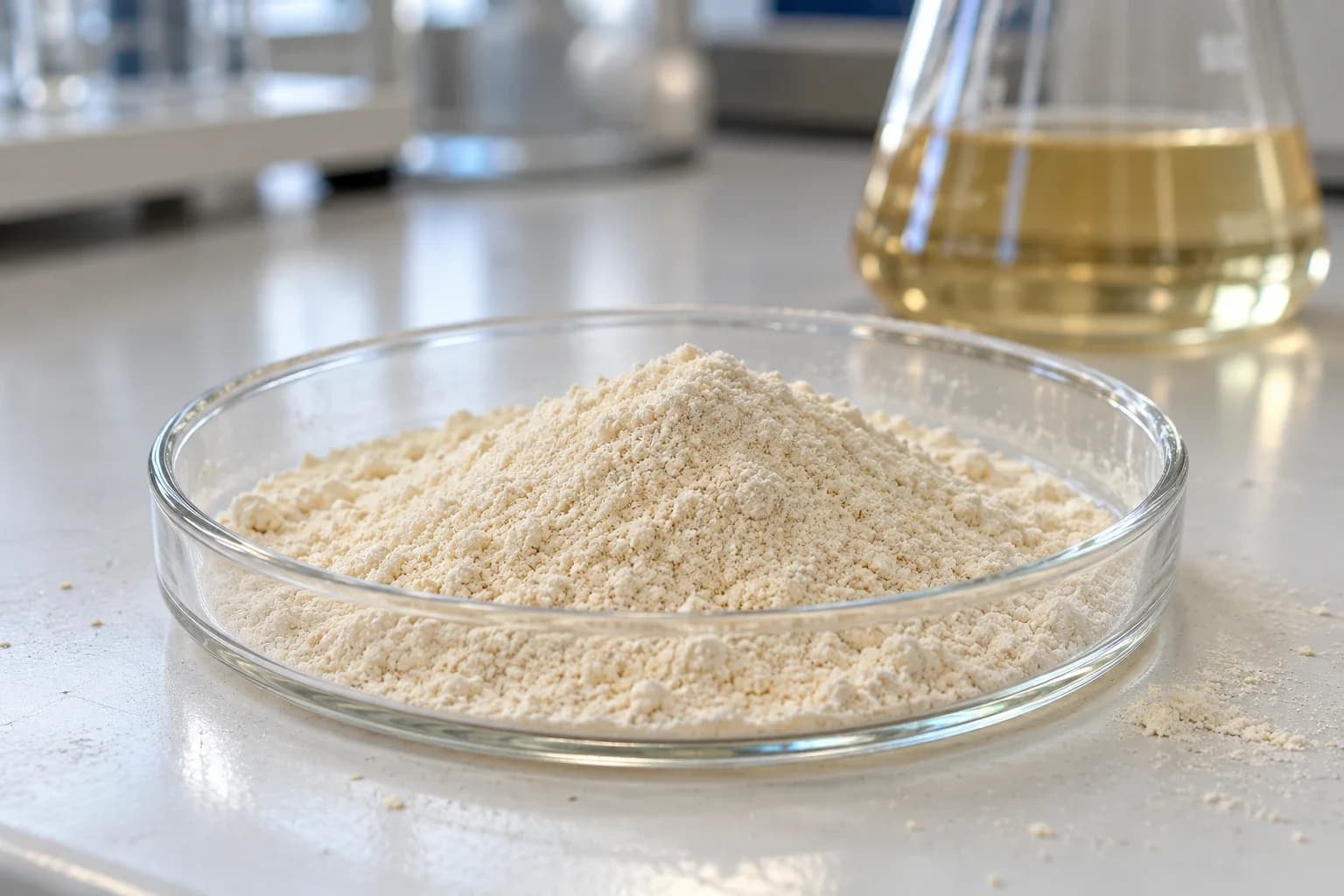
A fine beige, water-soluble powder produced by blending selected soy peptone and yeast peptone. It provides readily assimilable peptides and amino acids, together with minerals and growth factors. Animal-free; raw materials are of plant (soy) and microbial (yeast) origin.
What a sporulation medium is for
For Bacillus subtilis, B. natto, B. coagulans and other probiotic, biofertilizer and biopesticide strains, the active ingredient is the spore rather than the vegetative cell, so product value depends on spore count and conversion rate. Too rich a medium gives vegetative growth without sporulation; too lean a medium lowers the total count. A sporulation medium lets the culture multiply fully early on and then shift into sporulation at the right point. STBIO's sporulation range is designed around this, with the carbon-to-nitrogen ratio and the trace minerals sporulation requires built into the formulation. A range of soy and yeast peptones is also available for formulating your own production medium.
Product highlights
- Food-grade raw materials, produced in an ISO 22000 certified facility
- Non-GMO, Animal-origin-free (AOF)
- Available in 500 g / 5 kg / 25 kg, from laboratory to industrial scale
- COA, specification sheet, and technical data sheet available; samples on request
- Manufactured in Taiwan with reliable supply
Food grade versus laboratory grade
Most culture media suppliers use laboratory-grade raw materials, which are held to lower standards for heavy metal residues, microbial contamination control, and traceability. That is adequate for pure research but not for applications with stricter raw-material requirements. STBIO manufactures with food-grade raw materials throughout, in a facility certified to ISO 22000 food safety management.
- Food microbiology laboratories working to ISO 17025 or equivalent requirements
- Biotech manufacturers exporting fermentation products and needing full raw-material traceability
- Organisations with ESG or compliance audit requirements across their supply chain
- Companies sourcing both Halal and non-Halal products who need one consistent material grade
Frequently asked questions
01What usually causes a low sporulation rate?
Most often the nitrogen source is excessive or carbon remains plentiful late in the run, so cells never enter starvation; other causes are insufficient manganese or other trace elements, low dissolved oxygen, or harvesting too early. Check the C:N ratio and harvest timing first.
02Can the formulation be adjusted for our strain or fermenter scale?
Yes. Sporulation conditions differ from strain to strain, and the formulation can be adjusted to your strain and fermenter scale. Share your strain and current fermentation conditions with us to discuss, or request a sample to compare first.
03Which organisms is it suitable for?
B. subtilis, B. natto, Bacillus coagulans. See the cultural response table and the specification sheet.
04Is it free of animal-derived components?
Yes. This product is animal-origin-free, suitable for animal-free formulations and Halal requirements; a declaration is available on request.
05Is the raw material non-GMO?
Yes. The raw material is non-GMO; the supplier declaration can be provided with the COA.
06Can it be used for food-grade applications?
Yes. It is made from food-grade raw materials in an ISO 22000 certified facility and is suitable for culturing starters for fermented products that are consumed directly.
07How should it be stored, and what is the shelf life?
Store at 10–30 °C in sealed, dry, clean conditions. When stored in sealed containers, at ambient temperature in dry and clean conditions, the expected shelf life is 2 years.
08How do I request a bulk quotation, and can you provide a COA?
Yes. This product is available in 500 g, 5 kg, 25 kg. Tell us your application and volume when requesting a quotation; we reply within one working day and can supply the COA, specification sheet, and technical data sheet.